Don't repot your flowers carelessly in spring; without understanding the basics, you'll only harm the roots and the plants
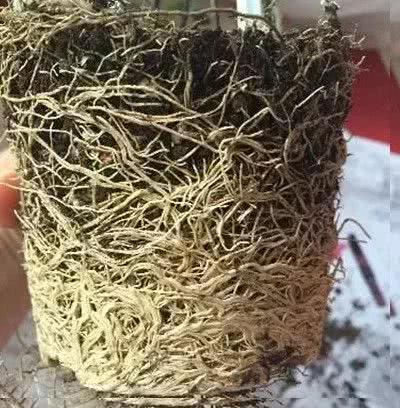
Some of the plants we grow at home grow very fast, and many gardening enthusiasts think about repotting them so they'll grow even faster. But somehow, after repotting, the plant just declines and dies. Actually, this isn't the plant's own problem - it's caused by our incorrect repotting methods. So today let's talk about what we need to pay attention to when repotting flowers.
Why do potted plants need repotting and soil changing in spring?
Because the old soil has fewer nutrients and has become compacted and impermeable, and the old pot lacks space, and so on, this seriously affects the plant's rapid growth in spring and its ability to accumulate nutrients to produce flower buds!
Repotting. Changing soil. Potting up
Repotting: The timing should vary according to the different types of flowers. Perennial flowers such as chrysanthemums, daylilies, Chinese evergreen (Aglaonema), and clivia should be repotted in late autumn or early winter, after the plant stops growing, that is, during the dormant period; while evergreen flowers can be repotted in early summer or the rainy season, or after the flowering period. Absolutely avoid: repotting when the flower is just forming buds or blooming.
Specific method: First stop watering so the potting soil becomes dry and only slightly moist, then tip the pot over and gently shake out the soil. If the soil is hard to separate from the pot wall, insert a stick of appropriate thickness into the drainage hole and gently push out the plant and soil, so the plant comes out of the pot with its original soil. Then cut off the old roots, rotten roots, and dead roots, and thin out part of the overly dense roots. Note that the cuts should be smooth and slanted downward to help the wounds heal and new roots sprout.
But for large potted perennial woody plants or plants with an overly large canopy, you can change the soil without changing the pot - that is, dig out a ring of soil around the pot wall and fill in new potting soil. But try to avoid damaging the root system, so as not to affect growth and flowering.
Changing soil: Potting soil is made by mixing loam (usually garden soil), organic matter (commonly leaf mold and peat soil; leaf mold can be made by collecting fallen leaves, garbage, weeds and other organic waste, piling it up and composting it), and additives (coarse sand, vermiculite, charcoal bits, chaff ash, etc.).
If you're planting succulent flowers, such as gem plant (Graptopetalum), cactus, aloe, snake plant (Sansevieria), etc., which require loose, airy, well-draining soil, you can use 1 part loam, 6 parts organic matter, 2 parts sand or vermiculite, 0.5 part charcoal bits, 0.5 part plant ash, plus an appropriate amount of bone meal, mixed together. For flowers that prefer acidic soil, such as camellia, gardenia, and Aglaia odorata, you can use 2 parts loam, 6 parts organic matter, 2 parts sand, or 4 parts peat soil and 1 part sawdust, mixed for use.
Potting up: When potting up flowers, choose a suitable clay pot, earthen pot, or plastic flower pot according to the size of the plant. If using a new clay pot or earthen pot, it's best to soak it in water for 1-2 days first to remove the firing residue and alkali; if using an old flower pot, it's best to scrape and wash it clean. Fill in the prepared potting soil to a thickness equal to about 1/4 of the pot's depth, then press down lightly. Then plant the plant in the center of the pot, until it is 3cm below the pot rim, to allow for watering. After adding the soil, shake the pot a few times to make the potting soil compact.
Then water thoroughly and deeply, until water seeps out from the drainage hole. Finally, place the potted flower in a windless, semi-shaded area or under a shade shed for care. Afterward, depending on the soil moisture and weather conditions, water once a day or every other day, and also spray water mist on the leaves and branches until the plant survives, then it can be moved to a sunny, well-ventilated place.
Repotting precautions
1. During the making of flower pots, the bottom hole often has a large upward-facing rim. If this rim is not removed, it will affect drainage during the rainy season. It should be knocked off when repotting. When potting up, a piece of plastic window screen can be used as a bottom liner, which does a good job of preventing insects.
2. The root ball taken out when repotting must have its outer layer of old roots trimmed off with a sharp garden trowel, and the surface of the root fibers should also be loosened with the trowel. Otherwise, the roots will curl up crookedly around the pot wall without spreading out, making the plant susceptible to drought, waterlogging, cold, and heat changes, and the plant will not develop well.
3. When repotting with new soil, the potting soil must be pressed firm, to avoid hollows appearing in the soil after watering, which would affect the roots' absorption of water. And you must leave a watering rim, so that the pot isn't so full of soil that there's no place to hold water.
4. Watering must be thorough - this is a very important point in growing flowers. The first watering after repotting is best done by the soaking method: put the potted flower into a basin of water, and wait until the potting soil dries to the point where the surface turns white before watering again, following the principle of "don't water unless it's dry."