How to implement green pest and disease control in tea gardens? Technical plan for Xishuangbanna Prefecture
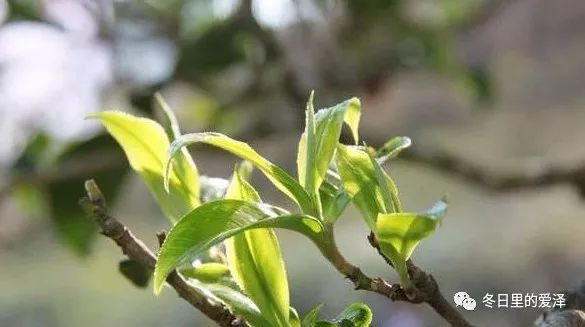
Green pest and disease control technology for tea gardens in Xishuangbanna Prefecture
Nowadays, no matter what crop is planted, people emphasize green health, safety and pollution-free production, etc. Today we will talk about green pest and disease control technology for tea in Xishuangbanna Prefecture, and let us look at the concept and main technical features of green control technology.
1 Concept of green control technology
Green control refers to the process of safely controlling harmful organisms within the range of the target yield and benefit of the crop by optimizing and integrating biological, ecological, physical and other technologies and using toxic pesticides in limited amounts. This technology emphasizes using non-chemical pesticide methods as much as possible to control the occurrence of tea pests and diseases, so as to significantly reduce the amount of chemical pesticides, avoid excessive pesticide residues in agricultural products, avoid human and livestock poisoning accidents, and protect the agricultural ecological environment. It is an important measure for implementing the plant protection policy of "prevention first, integrated control" and for developing high-quality, high-yield, high-efficiency, ecological and environmentally friendly agriculture.
2 Main technologies of green control
2.1 Agricultural control. Agricultural control refers to the method of applying a series of cultivation and management techniques to create conditions favorable for crop growth and unfavorable for the occurrence of harmful organisms, and to directly or indirectly eliminate or suppress harmful organisms.
2.1.1 Applying organic fertilizer. Carry out scientific balanced fertilization, with base fertilizer mainly based on organic fertilizer, and apply less or no chemical fertilizer. After tea picking stops, complete deep soil plowing in December, with a depth of more than 20 cm. At the same time as deep plowing, apply 15000 kg of farmyard manure and 1350 kg of special organic fertilizer for tea per hm2, in order to improve soil structure, increase soil fertility, promote plant growth, and enhance its ability to resist pests and diseases.
2.1.2 Plowing and loosening the soil. During the tea growing season, after the earlier tea picking, the soil is continuously trampled by people, causing soil compaction and poor air permeability, and rainwater does not easily penetrate to the lower soil layers. Intertillage should be carried out in May, with a depth of about 10 cm. This can not only improve soil air permeability, but also prepare for water storage in the coming rainy season. With the arrival of the rainy season, combined with high temperatures, weeds in tea gardens grow luxuriantly. From June to September, weed control and green manure incorporation should be carried out 4 times to prevent weeds from competing for water and fertilizer and to promote robust plant growth. After tea picking is completed, plow the soil deeply to expose pests and diseases on the soil surface or bury them deeply in the soil, eliminate pests and diseases in the soil, and reduce the number of pest and disease occurrences.
2.1.3 Reasonable pruning and cleaning of the field. Moderate pruning can strengthen the vigor of tea trees and promote tea tree growth, and at the same time can cut off branches and leaves carrying pests and diseases to achieve a certain pest and disease control effect. In this area, the suitable height for large-leaf varieties should be controlled at 90 cm. After tea picking stops, tea trees 80 cm tall can be pruned 2-3 cm above the previous cut, while tea trees more than 90 cm tall should be deeply pruned, cutting off poor branches such as chicken-claw branches, pest- and disease-carrying branches, dead branches and weak branches. At the same time, clear weeds, dead branches and fallen leaves from the field, and bury them deeply or burn them in a centralized manner to eliminate overwintering sites for pests and diseases and reduce the initial infection sources of pests and diseases in the field. When closing the garden, use 450 mL of Nash 778 stock solution per hm2, add 500 g each of high-quality urea and monopotassium phosphate, dilute 1500 times and spray, which can enhance plant resistance and reduce the occurrence of pests and diseases.
2.1.4 Replacing control with picking. Pests such as the small green leafhopper, pink citrus rust mite, tea aphid, tea leaf roller and tea thrips have strong tenderness preference and mainly damage tender shoots. These pests can be removed in large numbers, including insects and eggs, along with tea picking, and then burned in a centralized manner or buried deeply, which can effectively reduce the pest population in tea gardens and achieve a certain control effect.
2.1.5 Establishing ecological tea gardens. An ecological tea garden refers to a tea garden in which tea trees are the main species in the same tea garden, and through the implementation of three-dimensional compound cultivation, a good ecological environment with multiple coexisting species is artificially created, so that tea tree growth and the tea garden ecosystem are harmoniously unified and the sustainable and healthy development of tea production is realized. Survey research shows that the number of natural enemies in ecological tea gardens is higher than in monoculture tea gardens. Therefore, planting other plants in or around the tea garden can not only reduce light intensity, lower temperature and increase air humidity for the tea garden, promote high yield and high quality of tea, and more importantly, the biodiversity of the tea garden is conducive to the habitat and reproduction of natural enemy insects, giving full play to the role of natural control factors and reducing pest damage. In addition, some tree species also have a repellent effect on pests, such as camphor tree, Hainan yellow rosewood, Burma padauk and Indian rosewood. The Plant Protection Station of Xishuangbanna Prefecture investigated tea gardens under 4 different planting models and found that the ratios of beneficial insects to pests in the tea gardens were in the following order: camphor-tea intercropping > fir-pine intercropping > lampstand tree intercropping > pure tea garden; the damage degree of Lepidoptera larvae was in the following order: fir-pine intercropping > pure tea garden > lampstand tree intercropping > camphor-tea intercropping. The repellent effect of camphor tree on insects was obvious, and Lepidoptera larvae basically caused no damage in camphor-tea intercropped tea gardens. It can be seen that camphor tree can be planted as a high-quality tree species for repelling pests in tea gardens. When selecting other tree species for mixed planting with tea, attention should be paid to selecting tree species that are symbiotic and mutually beneficial with tea trees, have few pests and diseases, have no identical pests and diseases, and have certain economic benefits, and avoid planting too densely; a shading degree of 40% is appropriate.
2.2 Physical control
2.2.1 Using colored boards and sex attractants for trapping and killing. By utilizing the color tropism of pests, sticky pest-colored boards are set up in tea gardens to trap and kill small pests such as leafhoppers, leafminers, whiteflies, thrips and aphids. Generally, 225 colored boards are placed per hm2, with the lower edge of the colored board 5-10 cm above the canopy surface. Survey results show that the dominant pest species in tea gardens in the Menghai tea area is the small green leafhopper. Yellow boards and green boards have a significant trapping and killing effect on the small green leafhopper and black citrus whitefly; blue boards have a significant trapping and killing effect on thrips, and can greatly reduce the damage of the small green leafhopper, black citrus whitefly and thrips in tea gardens. This technology has low cost (the value of sticky pest boards is 675-1125 yuan/hm2), is easy to operate and has a long control effect, and can effectively reduce the number of pesticide applications and the amount applied. However, because yellow sticky pest boards also kill natural enemies to some extent, the yellow boards should be removed in time during the winter garden-closing period to avoid harming natural enemies. In addition, tea tussock moth sex pheromone lures can be placed in demonstration areas to trap and kill male tea tussock moths, causing an imbalance in the sex ratio of the pest population, preventing normal mating and achieving the purpose of reducing the tea tussock moth population.
2.2.2 Using solar-frequency vibrating insect-killing lamps for trapping and killing. By utilizing the light tropism of pests, frequency vibrating insect-killing lamps are set up in tea gardens to trap and kill tea garden pests. Survey results show that frequency vibrating insect-killing lamps have trapping and killing effects on insects of Coleoptera, Lepidoptera, Homoptera and others, and can trap and kill pests such as moths, leaf beetles, longhorn beetles, leafhoppers and whiteflies, with especially obvious trapping and killing effects on Lepidoptera pests. According to statistics, their control effect on tea tussock moth, tea tortrix and tea geometrid can reach 60%-80%, but the trapping and killing effect on tea leafhoppers is poor. Frequency vibrating insect-killing lamps also trap and kill natural enemies, but the number is relatively small, so they are relatively safe for natural enemies. For certain pests that are not sensitive to phototaxis, during the use of insect-killing lamps, high-efficiency and low-toxicity pesticides can also be selected for combined control 2-3 times, which can effectively control pest damage. Using this method can significantly control tea garden pests and reduce the amount of chemical pesticides applied, thereby obtaining significant economic, social and ecological benefits.
2.3 Biological control. The method of using beneficial organisms or the metabolites of organisms to control harmful organisms.
2.3.1 Protecting natural enemies. According to surveys, natural enemy species in tea gardens include birds, spiders, hoverflies, assassin bugs, earwigs, mantises, ladybugs, scorpionflies, parasitic wasps and others. These natural enemies should be protected and not captured or harmed. By planting trees and nectar plants in or around tea gardens, tea garden biodiversity can be increased to attract natural enemies to inhabit and reproduce and to eliminate pests. When using chemical pesticides, high-efficiency, low-toxicity and low-residue pesticides should be selected as much as possible, and pesticide application should avoid the peak activity period of natural enemies to reduce harm to natural enemies as much as possible.
2.3.2 Raising chickens for pest control. When chickens are raised in tea gardens, as the chickens forage, weeds, grass seeds, insects and eggs in the tea garden will be pecked and eaten by the chickens, playing a role in biological weed and pest control. At the same time, the manure excreted by the chickens increases soil fertility and makes tea trees grow vigorously. However, attention should be paid to the fact that the density of chickens raised in tea gardens should be low; otherwise, it will lead to soil compaction in the tea garden and affect tea growth.
Kairui Agrochemical Consulting Friendly Reminder
This article is for reference only. Farmer friends, please choose scientific planting and management methods according to the environment of your region and in combination with local soil and climate conditions. We will continue to provide more agricultural input information. Thank you for your attention!
Contact us
Phone: 18703851750
QQ:2587071907
WeChat: kairuinong
Official website: www.kairuinong.cn>
Email: [email protected]
To learn more agrochemical information and agricultural technology, please follow the public account "Kairui Agrochemical Information"