Key Technical Points for Standardized Cultivation of White Pumpkin Seeds
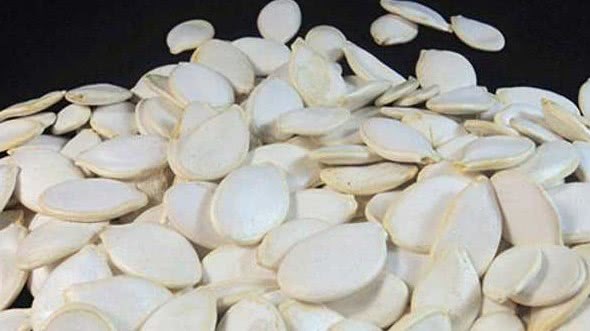
White pumpkin seeds are the seeds of seed pumpkins, rich in protein and fat, with high nutritional value, and are mostly processed into shelled seeds or cooking oil. White pumpkin seeds are cultivated in various parts of China, but the quality varies greatly. In order to increase the planting area and improve the quality of white pumpkin seeds, the standardized cultivation techniques for white pumpkin seeds are shared as follows.
I. Growth Habits
Climatic conditions: A frost-free period of more than 110 days and accumulated temperature above 2300 deg C. It prefers high temperatures and little rain. Summers should not be too rainy or foggy; continuous rain and fog affect the fruit-setting rate and have a great impact on later growth.
Soil conditions: Sandy loam, loam, and acidic black loess soil can all be used for cultivation. White pumpkin seeds have strong drought resistance and are afraid of waterlogging, so soil with high terrain, good drainage, good permeability, and no easy waterlogging should be selected.
II. Variety Selection
Select semi-vining excellent varieties with strong low-temperature tolerance, fast growth, and high fruit-setting rate, such as Ruifeng No. 9.
III. Land Preparation and Base Fertilizer Application
Before land preparation, apply 2 kg of 5% phoxim granules and 2 kg of 25% carbendazim per mu to disinfect the soil. Apply 5000 kg of high-quality organic fertilizer, 40 kg of phosphate fertilizer, 15 kg of urea, and 20 kg of potassium sulfate per mu. Combine with fertilization and deep plow 25-30 cm, then harrow finely and level. Draw lines at a row spacing of 130 cm to make ridges, with a ridge height of 15-20 cm, a ridge surface width of 80 cm, and a furrow width of 50 cm.
IV. Sowing
From April 10 to April 25, sow on sunny days from 10:00-16:00. The sowing rate per mu is 400-500 g. Before sowing, sun-dry the seeds for 1 day to improve the germination rate. Plant two rows of white pumpkin seeds on the ridge surface, with a hole spacing of 50 cm and 2 seeds per hole. Use deep planting with shallow covering; the hole depth after sowing should be 5-8 cm from the ground. Then cover with plastic film 120 cm wide and 0.012 mm thick. After emergence, let the seedlings grow inside the holes for a period to prevent late frost damage after emergence or seedling scorching during high temperatures at noon. Generally, about 2000 holes are sown per mu.
V. Post-Sowing Management
After the late frost, break the film to release the seedlings. 2-3 days before releasing the seedlings, first cut a small opening in the film above the seedlings for ventilation and hardening. When releasing the seedlings, select 1 strong seedling with plump cotyledons and dark green leaves per hole and release it outside the film; the rest may be left unreleased, and then seal the film opening tightly with wet soil. When the vine is 50 cm long, press the vine with wet soil and prune the lateral vines at the base and at each node, then press once more every 4-5 nodes thereafter. Because high-temperature growth affects the fruit-setting rate of white pumpkin seeds, artificial pollination is needed. Before 9:00 every morning, pick freshly opened male flowers, remove the corolla to expose the stamens, and gently smear them on the stigmas of female flowers. One male flower can pollinate 3-4 female flowers. Keep 2 fruits per plant; after the second fruit sets, pinch off the growing tip 6-8 leaves ahead of the fruit. When the fruit grows to the size of an egg, apply 15 kg per mu of nitrogen-phosphorus-potassium compound fertilizer. Promptly remove old leaves, yellow leaves, diseased leaves, and damaged leaves; when removing leaves, keep short stems. Remove side buds and tendrils emerging from leaf axils as early as possible. Leaf removal, tendril pinching, and pruning should be done at noon on sunny days.
VI. Harvesting and Drying
Harvesting
1. Harvest time: Beginning in early September, when many small wart-like protrusions appear and the fingernail cannot penetrate the rind, it can be harvested.
2. Method of knocking open the pumpkins: Use an iron shovel to cut off the vines. It is best to keep the fruit stalk and throw the pumpkins into one row to facilitate later seed extraction. Begin stacking the pumpkins for about 10 days; in this way, the seeds become plumper, increasing test weight and yield.
3. Harvest method: Use a white pumpkin seed separator for seed extraction, and feed the pumpkins into the machine with a four-foot fork. Remember to check the weather forecast when extracting seeds; it is best to do it in fine weather to facilitate drying.
Drying
1. Use the screen-window drying method: A rack needs to be built; seeds dried this way are of good quality.
2. Use the tarpaulin drying method: Before drying this way, clean the tarpaulin thoroughly to avoid dirty boards. Do not leave the seeds on the tarpaulin too long. In fine weather, do not turn the seeds within two days. Wait until the seeds have formed a skin, then use a wooden multi-tooth rake to turn and dry them to avoid slipping boards. When drying, be sure to avoid frozen boards.
3. Drying standard: Drying is very critical. Moisture less than 9%, no dirty boards, no slipping boards, no frozen boards, no shriveled seeds, and impurities less than 0.4%. In this way, a good price can be obtained, but frozen boards must be avoided. Buyers are very averse to frozen boards, and the price difference is very large.
VII. Treatment of Straw
After finishing the seed extraction, wait until the vines are dry, then use a four-wheel tractor with a deep-loosening plow to gather the white pumpkin vines to the edge of the field. After the fire prevention period has passed, burn them clean so as not to affect farming the next year. Or, if time permits and after the vines are thoroughly dry, directly use combined tillage in one operation, but be sure to watch the weather. This can also achieve straw return to the field.
VIII. Pest and Disease Control
The main insect pests are aphids and whiteflies. The main diseases are powdery mildew, gray mold, and viral disease.
Powdery Mildew
Control method: Spray 30% kresoxim-methyl and boscalid suspension concentrate at 1000 times dilution, or 25% ethirimol sulfonate at 800 times dilution, or 10% Score water-dispersible granules at 1500-2000 times dilution. Spray once every 10 d, 3-4 times.
Viral Disease
Control method: Spray 20% moroxydine hydrochloride wettable powder at 500 times dilution or 5% jun du qing wettable powder at 400 times dilution, once every 7-10 d, 3-4 times.
Gray Mold
Control method: Spray 50% procymidone wettable powder at 1000-1500 times dilution or 10% Score wettable powder at 1000 times dilution once every 7 d; 40% pyrimethanil suspension concentrate at 1000 times dilution, spray 2-3 times consecutively.
Aphids
Control method: Spray 2.5% deltamethrin emulsifiable concentrate at 2000-3000 times dilution, or 10% imidacloprid wettable powder at 2000-3000 times dilution, or 3% acetamiprid emulsifiable concentrate at 1000-1500 times dilution.
Whiteflies
Control method: 1.8% abamectin emulsifiable concentrate at 1500 times dilution; or 2.5% cyhalothrin at 3000 times dilution, or 25% buprofezin at 1000-1500 times dilution, or 10% imidacloprid wettable powder at 1500-2000 times dilution.