My Epiphyllum has reached its flowering season but still shows no buds - is it male?
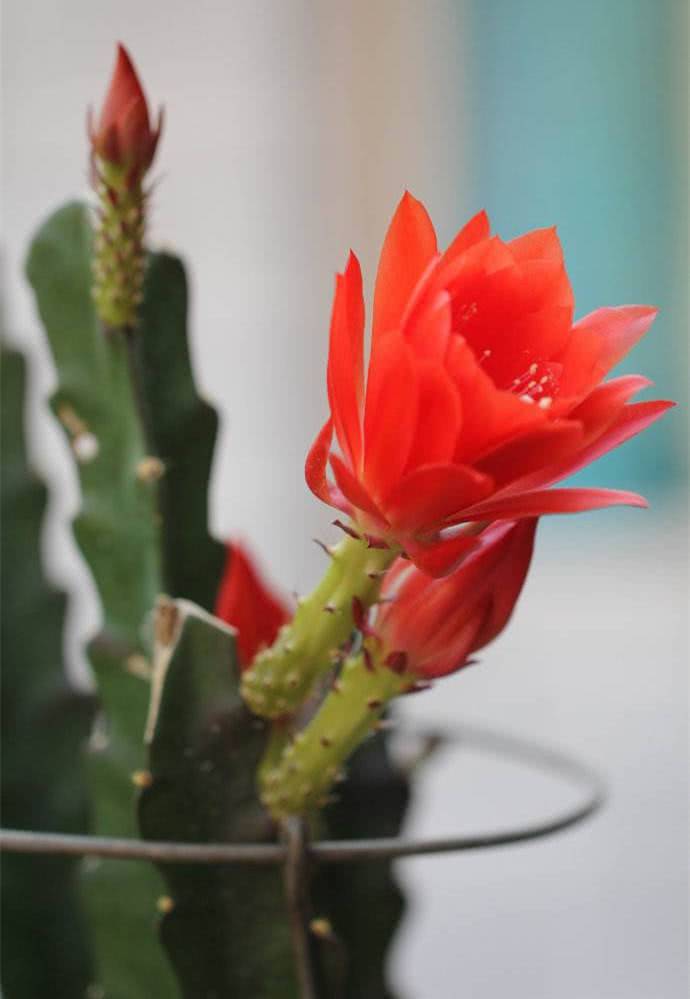
Many people love the Epiphyllum (orchid cactus). When growing it, its flowering season is usually around May to June each year, but this situation often happens: when the flowering season arrives, no buds appear for a long time. Is it a "male" Epiphyllum you are growing? Not at all - it may be that the problems below have arisen in its care.
1. Check whether the spot where it is grown is too shady
Although the Epiphyllum is not a sun-loving plant, in spring and autumn it is best to give it full-day sun, which benefits its growth. In fact, as long as it is not exposed to harsh sun on summer afternoons, giving it sun at other times is no problem. March to April is the key period; full sun can make the new branches develop sturdy and lay a good foundation for flower bud differentiation.
2. Check whether watering and fertilizing are excessive when grown in a pot
The Epiphyllum, like the night-blooming cereus and the Christmas cactus, is a succulent plant - it is just that they look a bit rougher. So when watering, you must follow the watering standards for succulents. It has strong drought resistance, and withholding water appropriately can promote flowering.
Then there is the issue of fertilizing. Spring is the vigorous growth period of the Epiphyllum, and at this time you need to manage water and fertilizer well. For fertilizing, it is best to use a humic acid organic nutrient solution, which can promote roots and improve the soil environment, and its rich phosphorus also promotes flowering.
But you should note that in other seasons you cannot water and fertilize as much as in spring, otherwise, with water and fertilizer out of control and too heavy, it will put its attention into growing branches, and far fewer flower buds will differentiate, making it very easy for it not to bloom.
3. Check whether it has gone a long time without pruning
Another reason the Epiphyllum does not bloom is long-term lack of pruning. When water and fertilizer are sufficient, it will keep sprouting new branches. Apart from keeping several sturdy branches in different positions, the rest must be continually removed - remove each one as soon as you find it - only then can flowering be guaranteed.
If the Epiphyllum you are growing does not bloom, you had best check the three problems above. Especially for an Epiphyllum you have grown for many years that still does not bloom, then it must be that something has gone wrong in its care. You had best check it. Thank you.