What to Do When Leaves Turn Yellow? A Few Tips to Make Leaves Glossy and Green
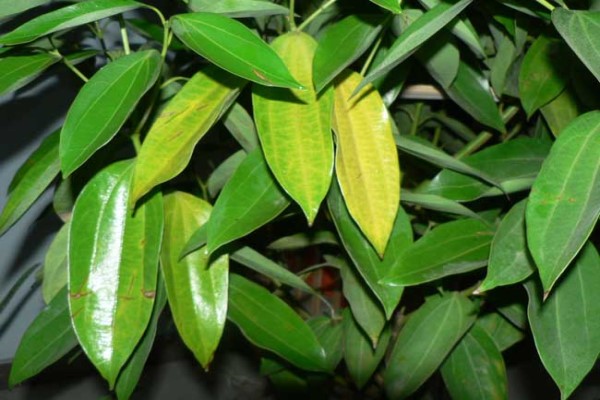
Too much watering
Symptoms: When watered too much, the tender leaves or leaf tips of the flower will turn yellow first, the tender leaves will look dull overall, and new shoots will shrivel.
Solution: Place the flower in a sunny, well-ventilated spot so that the excess water in the pot evaporates as quickly as possible.
Too little watering
Symptoms: When watered too little, the old leaves will turn yellow first, with the yellowing moving from bottom to top, and the yellowing leaves often begin to dry out and wither from the leaf edges.
Solution: Water promptly, avoid direct sunlight, and avoid excessively high temperatures until it recovers.
Lack of light
Symptoms: If the plant cannot get light for a long time, then the leaves of the whole plant will turn yellow, become limp, and then fall off.
Solution: Place the plant in a sunny spot until it recovers.
Sunburn
Symptoms: If overly strong sunlight shines on the plant, it may scorch the plant, the leaf margins and leaf tips will turn yellow and dry up, and yellow spots will appear on the parts directly exposed to sunlight.
Solution: Cut off the severely scorched leaves, then move the plant to a shady place until it recovers.
Lack of nitrogen fertilizer
Symptoms: If the plant lacks nitrogen fertilizer, then the whole plant will appear light green, the old leaves will turn yellow first, and the new leaves will turn yellow right after, with the yellowing moving from bottom to top.
Solution: Supplement nitrogen fertilizer. Inorganic fertilizers include urea, ammonium nitrate, etc.; organic fertilizers include fermented urine and manure fertilizer, and decomposed bean dregs fertilizer.
Lack of phosphorus fertilizer
Symptoms: If phosphorus fertilizer is lacking, the old leaves of the plant will begin to turn yellow first, and then the new leaves will also turn yellow; the whole plant will appear dark green or purplish red, lacking luster.
Solution: Supplement phosphorus fertilizer. Inorganic fertilizers include ammonium phosphate, white phosphorus fertilizer, etc.; organic fertilizers include animal bone ash, bone charcoal, etc.
Lack of potassium fertilizer
Symptoms: If the plant lacks potassium fertilizer, the old leaves of the plant will turn yellow, the leaf margins and leaf tips will turn yellow, dry up and scorch from bottom to top, and the leaf surface will become uneven.
Solution: Apply plant ash or the chemical fertilizer potassium chloride at the bottom of the flower pot.
Lack of calcium fertilizer
Symptoms: Plants lacking calcium usually show curled and yellowing young leaves.
Solution: Crush eggshells and soak them in water, let them ferment for about 1 week, then dilute with water and use it to water the flowers.
Lack of iron
Symptoms: When a plant lacks iron, the effect on the young leaves is more serious and the effect on the old leaves is relatively mild, often showing as the mesophyll of the young leaves turning yellow and forming a network pattern.
Solution: You can use ferrous sulfate diluted with water to water the flowers.
Alkaline soil
Symptoms: When the soil is alkaline, the plant often shows the old leaves and the areas between the leaf veins turning from green to yellow first.
Solution: You can water the flowers with ferrous sulfate solution or fermented rice water, or replace the soil with soil rich in organic matter.
That is all from Huahua on the reasons for yellowing leaves~
Has everyone found the reason why the flowers in your home have turned yellow?
Get to work and fix it right away!