Growing roses like this in spring: master 3 little tips and they will fill the pot within 1 year
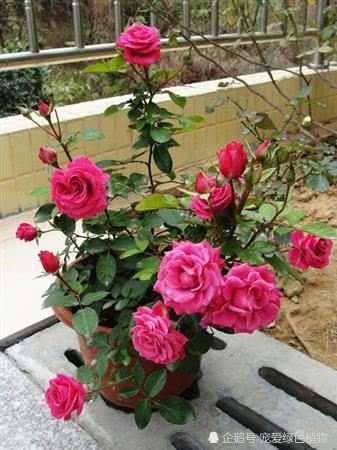
A few days ago I saw a flower friend reply, saying, how do you grow roses, and why do they bloom so well? How long have you been growing your roses? Actually, what I want to say is that I have only been growing roses for exactly one year. I also started getting into roses last spring, and by this spring it has been exactly one year. Counting it up, I am still a novice at growing flowers. I cannot say my flower-growing skills are all that strong; I just sum up some small experiences along the way.
Those of us who have grown roses all know that when growing roses, the environment must first of all be well ventilated. A ventilated growing environment for roses is like people not being able to lack oxygen. If the environment is not ventilated, then the roses definitely cannot be grown well. So below, the editor will share with everyone what other points should be noted in the process of caring for roses.
1. Watering
When watering roses, we should follow one principle: "If you do not water, then do not water at all; if you water, water thoroughly." You definitely must not just do whatever you feel like. We can water roses in stages. At first, water a little less, then come back and water some more, repeating back and forth 3-4 times, making sure to water thoroughly.
We definitely must not let roses lack water too severely, otherwise it will affect their growth and the flowers will not be brightly colored later. As you keep growing a rose seedling, its leaves will be gone before you know it.
2. Fertilizing
Actually, roses bloom continuously entirely because of fertilizing. Fertilizing roses is divided into root fertilizing and foliar topdressing. The ratio of nitrogen:phosphorus:potassium needed by roses is 1:1:2 or 1:1:3. During the blooming period, the fertilizer ratio roses need is 3:1:3. Fertilize after flowering to ensure the nutrients needed for the next bloom. After early autumn, apply more phosphorus and potassium fertilizer and less nitrogen fertilizer. We also need to fertilize before and after pruning roses. When doing foliar topdressing, spray evenly and thoroughly. Do not spray on rainy or cloudy days. It is best to choose a sunny, windless evening.
3. Light
Roses have very high light requirements. Generally, 4-5 hours is basically still acceptable. With any less, the flowers will bloom very few and be nothing much to look at, or they simply will not bloom at all, the branches will be slender and weak, they will be prone to disease, and the flower color will not be bright. Light is like people's food. If the light is not good, roses also cannot grow well. So your roses must have sufficient light time.