A shocking behind-the-scenes exposé of Chinese zisha teapots
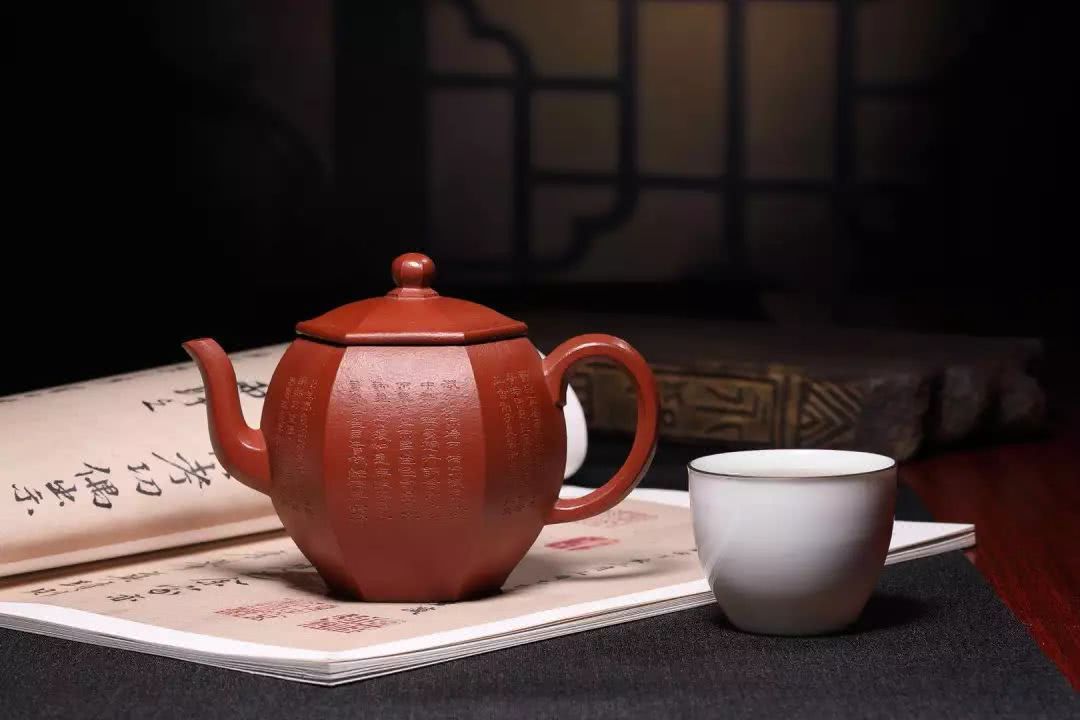
Zisha culture has a long and profound history, spanning more than 2,000 years to date. The refined and meticulous craftsmanship, the simple yet exquisite artistic forms, and the deep, substantial cultural heritage have made zisha teapots one of the most sought-after collectibles in today's collection circles, with extremely high artistic value and appreciation potential.
Chinese literati and scholars of every dynasty have adored zisha, and in China the zisha teapot is even honored as "the foremost of tea vessels." During the Ming and Qing dynasties, zisha teapots even became tribute items used as imperial wares. Today, zisha teapots have long since broken free of the restriction of being reserved for the royal family and have made their way onto the tea tables of ordinary households - zisha as a teapot has become the most elegant and noble charm within tea ceremony culture.
Emperor Qianlong was so fond of tea that he even uttered these golden words: "A court cannot go a single day without its sovereign, and a sovereign cannot go a single day without tea." As the saying goes: "A good horse deserves a good saddle, and good tea deserves a good pot." In China, a land abundant in fine tea, for Chinese people who love drinking good tea, owning a good teapot is only natural.
People who enjoy tasting tea all like to buy tea utensils, and today's tea utensil industry is growing ever more advanced, occupying a competitive share of the market. Good tea utensils can brew a fine bowl of tea, especially Yixing zisha teapots - the tea brewed with one is wonderfully fragrant, refreshing to the heart, and endlessly memorable.
Hello everyone, I am the shopkeeper
56 years old, a native of Yixing, Jiangsu, and a veteran zisha teapot craftsman of most of a lifetime
Now that I am older and in poor health, I have not gone down to the workshop for the past few years; nowadays I mainly do business in genuine zisha. I have signed contracts with several excellent zisha teapot craftsmen in Yixing, and the mineral material is processed from authentic zisha mined from local mines.I do not know how to use the internet. My daughter and son-in-law supply some brick-and-mortar stores in Shanghai, and they also help me sell through WeChat Moments.
I have always firmly believed that helping teapot enthusiasts buy authentic, good zisha teapots is itself a way to cultivate the mind and body and to accumulate blessings and virtue. In addition, I also hope to help everyone understand zisha and fall in love with zisha.
In ancient times, zisha was by no means an ordinary craft material; it carried the Chinese cultural tradition of the unity of Zen and tea. Making zisha teapots is not merely a skill, but also a share of blessing and a share of devotion.To be honest, I hope you will choose my zisha works not simply because of business, but even more because I cannot stand the current zisha market where the genuine and the fake are mixed together.
I hope you can add my WeChat to learn more about zisha teapots and avoid buying fake zisha
[Teaching you to appreciate teapots]
Zisha teapot making
First, the clay materialThe clay material must be purple clay dug out from the mineral layer, and the finest portion needs to be extracted, with the mixed impurities removed; then a sharp knife is needed, used for carving textures; there is also the rectangular compass, used to make circular clay sheets, as well as the body-hollowing tool, the line reamer, the name needle, and so on.
Step two: makingYou must have the model of the Yixing zisha teapot in your mind. After designing the model, you truly enter the making process. You need to knead with your hands, mixing the clay and sand together and kneading out the model in your mind, with special attention to the seams. For a round-bodied teapot shape, the "hollowing the body" method can be used; for a square teapot, the "panel-fitting" method can be used. Making the spout, handle, and lid requires care, and finally you can add some carving or appliqué decoration to the body to enhance its beauty.
Step three: firingAfter the finished teapot is dried in the shade, it is loaded into a tunnel kiln for firing.
Step four: inspectionThe follow-up work! After it is finished, you should repeatedly check whether the teapot has cracks or damaged spots. After inspection, it can be waxed and polished to make it even smoother and brighter.
The forming of zisha teapots
I. Forming methods of zisha teapotsThere are several kinds: hand-made (body-hollowing), semi-hand-made (mold), slip casting, jiggering, and press molding. Among these, hand-forming is the traditional production method. The key to the crafting skill lies in hollow forming and the fine finishing of the blank surface. So-called fine finishing refers to using bamboo strips, the bright needle, cutting tools, and other special tools made from these materials to finely level, trim, and smooth the surface of the spout, body, and lid, as well as the inside of the teapot, after the neck, foot, spout, and handle have been attached. This is one of the keys to making a zisha teapot a work of craft art.
II. Its function lies inThe fired zisha clay particles vary in size, so during forming the surface of the blank appears uneven. In the fine finishing process, the above tools are used to level the blank and press the raised particles downward, making the blank surface flat and smooth. At this time, a relatively fine skin layer forms on the outer surface of the blank. This skin layer is a layer of delicate clay slurry (which becomes crystalline after firing), while the inner wall, although also struck when beating the clay sheets, is usually only briefly worked, so the clay particles are relatively loose. After firing, the product surface takes on a pear-skin texture, while the loose interior shows a certain porosity.
III. Zisha teapot shapes are distinctive and diverseIn order not to let it degenerate into ordinary glazed pottery, and for historical reasons, its surface is not glazed. To achieve the craft effect of zisha whereby "when released from the hand its luster can mirror the face, and when taken from the kiln its quality compares to solid copper," the blank must be handled so that the vessel's structure is rigorous, the outline full, the lines distinct, and the ribbed textures clear, achieving the production requirements of pearl-like roundness and jade-like smoothness and of being integrated as a whole - all of which must be obtained through fine finishing after forming. At the same time, fine finishing is also an important means of increasing the viscosity of the blank.
Methods for selecting zisha teapots
Clay materialFirst, from the perspective of craftsmanship, as one of the tea utensils for daily use, the zisha teapot is made with very meticulous craftsmanship. The red clay used to make a good zisha teapot has a dark red color and a coarse yet smooth quality; the trade saying "the color is not garish, the texture is not greasy" means exactly this. Here we can often see teapots whose entire body is brightly colored; this kind of zisha is generally an artificial imitation, mostly a fake teapot, using artificial surface-luster techniques.
Touching the teapotWhen selecting a zisha teapot, in addition to the above method of looking at the clay material, you can also touch it. Touching the teapot here means gently stroking the body of the zisha teapot. Generally, a good zisha teapot has a very coarse yet smooth body; if you feel carefully, you can even feel the sandy texture.
Looking at the teapot:After you have appraised the clay material and touched the teapot body, you can also use tools to appraise the zisha teapot. So how do you appraise it? You can use a magnifying glass to carefully observe the teapot body. Because the pottery clay used to fire zisha teapots contains quartz components, when you look at the zisha teapot with a magnifying glass against the light, you can see golden glimmers inside.
Listening to the soundEveryone has a different method for examining zisha teapots. Some friends like to listen to the sound of the zisha teapot rubbing, that is, gently rubbing or tapping the body with the lid. If the sound is dull, then the firing craftsmanship of this teapot is certainly not good. A truly good zisha teapot, when tapped and rubbed, gives off a metallic "clang clang" sound.
Checking the tightnessWhat does checking the tightness mean? The simple method is to test how tightly the lid and body of the zisha teapot fit together. Generally, a good zisha teapot fits together very snugly. A simple method is to press the index finger tightly over the air hole on the zisha teapot lid, then tip the teapot over and see whether water flows out where the lid meets the body. If not a drop flows out, it is a good teapot. Another method is to seal the spout of the zisha teapot with a finger, then turn the teapot upside down. If the lid does not fall off, it proves that the teapot's tightness is very high.
To learn more about zisha teapots, add WeChat
[Teaching you to appreciate teapots]
Why use a zisha teapot to drink tea
1、A zisha teapot has a small spout and a tight lid, and its inner wall is relatively rough, which can prevent the aroma from dissipating. The longer a zisha teapot is used, the more tea stain accumulates on the inner wall, so after brewing tea leaves the tea liquor becomes ever richer. With long-term use of a zisha teapot, even if no tea leaves are placed in it and only boiling water is poured in, it still gives off an inviting tea fragrance - something ordinary tea utensils cannot do.
2、When brewing tea with a zisha teapot, it is not easy to burn your hand when lifting and holding it. The linear expansion coefficient of a zisha teapot is slightly higher than that of a porcelain teapot, and since it has no glaze, there is no problem of glaze stress; a zisha teapot has excellent ability to adapt to sudden changes in heat and cold. Even after being steamed at a high temperature of over 100 degrees and then quickly plunged into sub-zero ice and snow, it will not burst.
3、A zisha teapot is unglazed inside and out, keeping tiny pores; it has good breathability but does not let water through, and it also has a strong adsorption capacity - something ordinary teapots cannot compare with. It can preserve the aromatic oils in tea leaves that volatilize when heated to form a delicate fragrance, increase the late-stage acidity of the tea liquor, and play an astringent and sterilizing role. This is the reason behind the saying "in the height of summer it does not sour even overnight."
Craft
"Craft" means craftsmanship, which is further divided into "forming craft" and "making craft." Forming craft is further divided into the most primitive "full hand," that is, completely hand-made, and the "semi-hand," which uses molds to shape the form.
Among the various forming crafts, full hand is the best, and semi-hand is second, because the physical property of zisha clay's double-pore structure is formed during the process of beating the clay sheets. A fully hand-made teapot is beaten and patted all along before it is shaped, and this process is the reorganization of the zisha pores.
Hand-made by a master of arts and crafts
Form
When it comes to form, one saying must be mentioned: square is not one single style, and round has no single appearance. The stone gourd ladle teapots made by 1,000 people actually come in 1,000 appearances. The reason lies in this: first, zisha teapots are handcrafted, so it is very hard to make identical pieces. Second, every craftsman, or even the same craftsman at different stages of creation, has a different understanding of the same teapot form.
Whether it is a plain undecorated vessel or a floral vessel, if you can read from the zisha a spirit of square containing round and round containing square, such a teapot is surely of the highest grade!
Display of some works
As the saying goes
Vast is the world of mortals, three cups of wine; a thousand autumns and ten thousand endeavors, one pot of tea
The old shopkeeper assures you
1
Insist on selling only genuine zisha
A gentleman loves wealth but obtains it in the proper way. From the day I began learning the craft, I have carefully followed my master's teachings, insisting on selling only genuine zisha and never selling fakes to seek exorbitant profits. A craftsman should cherish his reputation as he cherishes his own life
2
Insist on telling the truth
As for the question of product prices. This old man does not accept the saying "good goods are never cheap." Especially in the zisha industry, many zisha teapots double in price once they are given labels like "senior craftsman" or "purely hand-made." But in fact, many friends end up deceived because of this. I am no master, but this old man has made teapots for 30 years, and in terms of skill I am better than quite a few "masters." The original intention of my running this shop was to restore the price of zisha
3
Insist on selling good goods
A good zisha teapot mainly depends on two aspects: first, good material; second, good craftsmanship. And whether the craftsmanship is good or bad depends entirely on the craftsman's mindset. "Slow work yields fine results" - slowness is also an attitude. In pursuit of perfect craftsmanship, we must pay more in time cost, and I believe those who truly love zisha teapots will understand this mindset.
Private customization
To set your mind at ease;
We will publish the newest zisha teapots we have made on WeChat;
Before shipping, we can first show you photos on WeChat;
Be sure to follow us in time and share the charm of zisha teapots on WeChat
[Teaching you to appreciate teapots]
Do things with a clear conscience, and be a person who fulfills his duty
They are all zisha teapots made in our own home
100% genuine, 100% authentic zisha