Potted asparagus fern too delicate and hard to grow? A few tricks to solve it easily
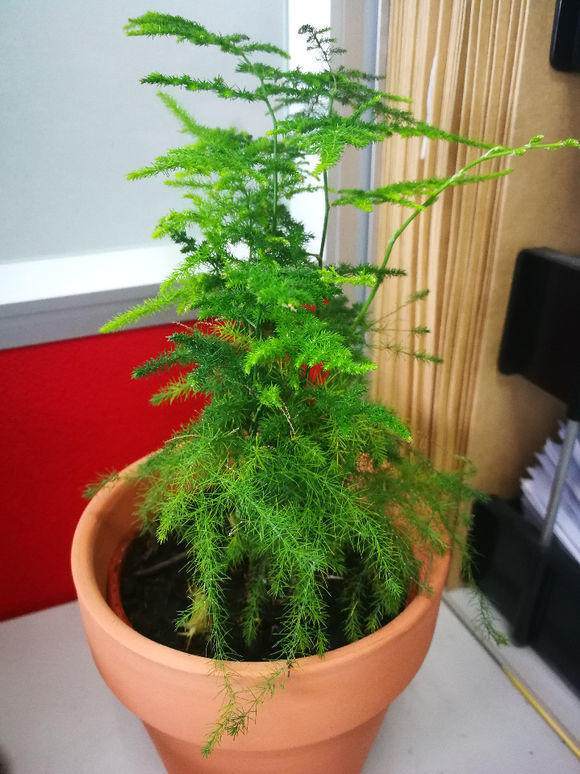
Asparagus fern is a very common indoor foliage plant, but any flower lover who has grown it knows that asparagus fern is very delicate, and its cultivation and management are quite particular. If you are not careful, it can easily wither and die. Among these, a few tricks are very key. Let us tackle this delicate little thing together.
Trick one: watering
Anyone who can grow asparagus fern lush and green and "perfectly obedient" must be an expert at watering. That is because, with this potted asparagus fern, if you water too much, it easily causes root rot and yellowing and falling leaves; if you water too little and the growing medium is too dry, it easily causes yellow leaf tips and falling leaves.
Therefore, when flower lovers water asparagus fern, the amount and frequency of watering should be controlled according to the weather, growth condition and state of the growing medium. Do not water when it is not dry; when you do water, water thoroughly, and do not give "halfway water". In winter, control the amount of watering, and when watering, make sure the water temperature is basically the same as the ambient temperature to prevent the roots from freezing and dying.
Trick two: cultivation
For potted asparagus fern, it is recommended to use a mix of 1 part leaf mold, 2 parts garden soil and 1 part river sand as the growing medium, and when planting, add a small amount of solid compound fertilizer or decomposed poultry manure as base fertilizer.
After cultivating asparagus fern well, it needs to be placed in a semi-shaded environment for care. If watered too much, or if the soil is too sticky and heavy with poor drainage, the leaf tips will scorch yellow and fall off, and growth will be affected. In hot summer, besides watering the growing medium, you must also frequently spray water on the leaves to increase air humidity. After winter begins, the amount of watering can be appropriately reduced.
In addition, during the vigorous growth season of asparagus fern, apply dilute liquid fertilizer once or twice a month. Never apply concentrated fertilizer, otherwise the branches and leaves will wither and yellow. After the asparagus fern has taken shape, the amount of fertilizer can be reduced to avoid leggy growth that affects the beauty of the plant shape, and pay attention to appropriate pruning. When cultivating indoors, it is best to place the asparagus fern in a spot with diffused scattered light.
Trick three: fruiting
Sowing and propagation is the main method for obtaining a larger quantity of asparagus fern seedlings, but first you must, through good cultivation and management, make it flower and fruit normally in order to obtain mature seeds. Potted asparagus fern generally flowers only after 4-5 years of cultivation. If management is poor, even if it flowers, it cannot fruit.
To make asparagus fern fruit, on the one hand flower lovers need to strengthen fertilizer and water management, and on the other hand prevent flower drop. The preventive measures are: do not move the flowerpot during the flowering period. If the flowerpot must be moved, pay attention to the direction, so that the light-facing side of the asparagus fern keeps facing the light. If the light direction is disordered, it will cause flower drop. At the same time, during the flowering period, apply additional phosphorus and potassium fertilizer to facilitate normal flowering and fruiting.