Plant one pot of this flower, and when it blooms, it is the whole of spring
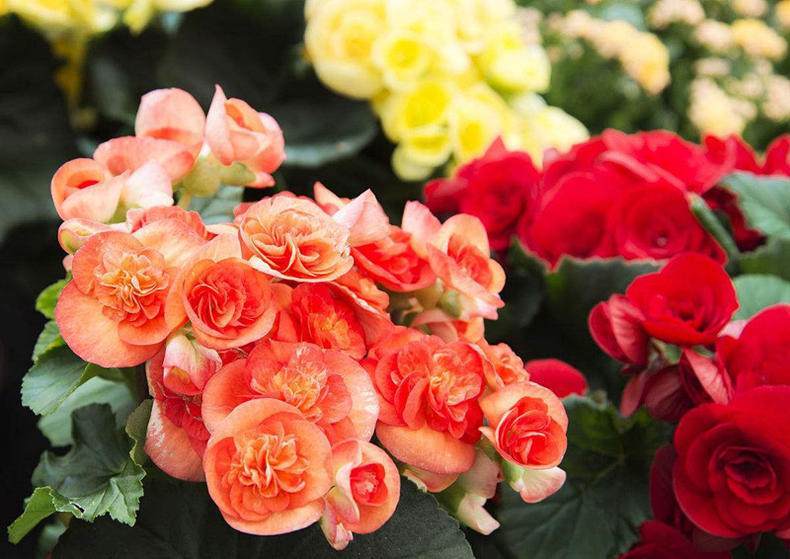
Tuberous begonia, also known as camellia begonia, has large and brilliantly colored flowers, combining the posture, color and fragrance of famous flowers such as roses, camellias, peonies and carnations. It is used to decorate living rooms and display windows, delicate and charming, and moreover, this tuberous begonia, as soon as it blooms, you feel that the whole of spring has arrived.
Tuberous begonia prefers a warm, humid and semi-shaded environment. It is not tolerant of high temperatures; when the temperature exceeds 30°C, the stems and leaves wither and drop off, and the tubers may even rot. It grows best in fertile, loose and well-drained slightly acidic potting soil, generally with an optimal pH value of 5.5-6.5.
Tuberous begonia likes water and fertilizer. Generally, the potting soil needs to be kept moist at all times, and once it dries out, it should be watered to replenish moisture. To maintain soil fertility, sufficient base fertilizer can be applied before planting, or a special compound granular fertilizer for flowers can be applied once a week, or a dilute liquid fertilizer can be watered on once a week. After the Start of Autumn, watering can be reduced and fertilizing stopped, so that the plant gradually enters a dormant state.
Tuberous begonia is a shallow-rooted flower, so the potting medium must have good drainage. Water less during the sprouting stage and keep the potting soil slightly dry; the suitable growth temperature is 16-21°C. In summer, in addition to watering, foliar misting should also be carried out. During the flowering period, watering should be appropriately reduced, and heavy rain washing over the plants must be avoided, while an organic liquid fertilizer for flowers should be applied 1-2 times. In November, the aboveground stems and leaves gradually turn yellow and drop off; the tubers can be dug out and, after drying, stored indoors at 10°C
Tuberous begonia is commonly propagated by sowing and cuttings. For sowing, indoor pot sowing can be used; the suitable germination temperature is 20-22°C, and germination occurs 14-21 days after sowing. From sowing to flowering, potted varieties take 150-160 days. For cuttings, in June-July, select robust shoots with terminal buds, 10 cm in length; after insertion they heal and root in 20-24 days, and can bloom in the same year.
When caring for tuberous begonia, if hot and rainy weather occurs, stem rot and root rot are very likely to develop. Gardeners should control the room temperature and watering, and spray 25% carbendazim wettable powder at 250 times dilution for prevention and control.