Succulent leaf cutting propagation in spring: control humidity and light well, and with simple care they will fill the pot
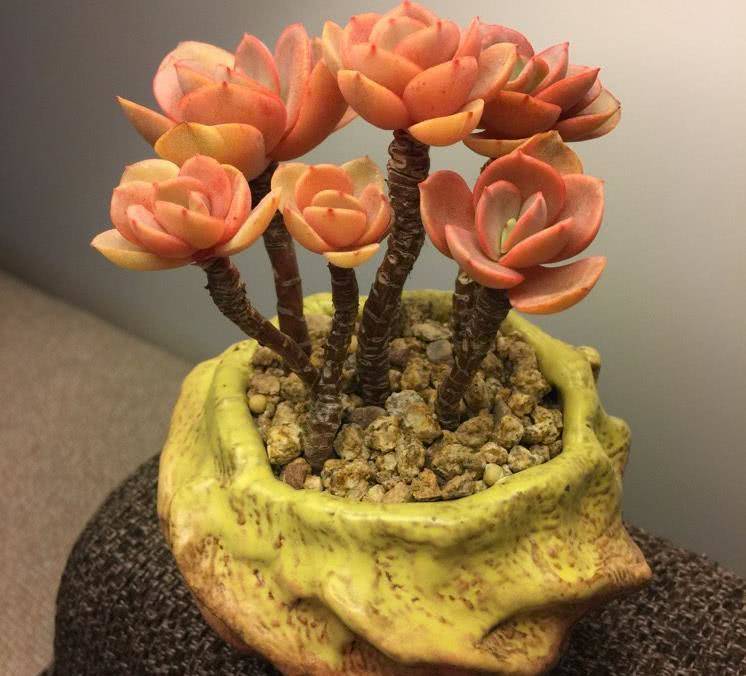
In spring you absolutely must do leaf cuttings, because spring is the best season of the year for leaf cuttings. The temperature is good, the humidity is good, the light is good. In this season (especially during the rainy season), even if you just casually pick off a leaf and toss it on a stone slab, it can stubbornly grow little roots and burst out with little pups. You do not even have to worry about anything related to leaf cuttings, you only need to focus on arranging the display.
Spring and autumn have the highest success rate for leaf cuttings. You can also do leaf cuttings in summer, but you need to pay attention to ventilation and cooling. Winter is extremely unsuitable for leaf cuttings, as they easily turn to water. The best temperature for leaf cuttings is between 20 and 28 degrees, and the best humidity is 60% to 80%. In this environment they will grow at the fastest speed. For small buds, water is always more useful than fertilizer. Once the leaf has grown roots, you can keep the soil moist. The speed at which leaf cuttings sprout varies depending on the variety and environment, generally around 10 to 20 days. If more than two months pass and they still have not sprouted, as long as the leaf is healthy, do not give up and keep waiting, so for one round of leaf cuttings you must be sure to collect a large number of leaves and do them at the same time.
First is selecting the leaves used for leaf cuttings. Specifically, you need to achieve these points: for succulent varieties whose leaves can grow buds on their own, such as Sedum hispanicum and Sedum pachyphyllum, whose leaves are very small, they generally cannot be leaf-propagated and are instead stem-propagated. For types like Aeonium arboreum 'Zwartkop' whose leaves are relatively thin, the success rate of leaf cuttings is very low. So under normal circumstances, the characteristics of leaves that can be used for leaf cuttings are mainly thick leaves and large leaves. The leaves must be chosen from mature, healthy, fully developed ones, must not have insect damage, and you must not choose yellowing leaves. Of course, newly grown tender leaves are also no good.
Before doing leaf cuttings, we must choose the soil well. Generally speaking, the mix we choose is peat, vermiculite, and perlite; this kind of soil has sufficiently good air permeability. Before leaf cuttings, the soil surface should be level, and the soil can be slightly moist, which can speed up leaf sprouting. Many beginners mistakenly think that leaf cuttings means inserting the bottom of the leaf straight into the soil. This idea is completely wrong. True leaf cuttings means placing the leaf flat on the soil, with the upturned part of the leaf facing up, imitating as much as possible the situation of leaves falling in the wild.
To sum up, for succulents such as Echeveria 'Red Edge' (Hongbian Yueying), Echeveria chihuahuaensis (Jiwawa), Sedum pachyphyllum (Qianfoshou), and Sedum rubrotinctum (Hongzhiyu), it is not easy for leaf cuttings to produce multiple heads, while Echeveria 'Lichu' (Chulian), Echeveria glauca (Lanshilian), Graptopetalum paraguayense (Jilongyue), and Graptopetalum 'White Peony' (Baimudan) have a very high chance of multiple heads. The leaves of common varieties have a high chance of sprouting and producing seedlings, with tenacious vitality, so perhaps this is exactly why they are common. Once leaf-cutting seedlings are about the same size, you can consider transplanting them, which makes later management easier. For example, White Peony can be transplanted once it is the size of a coin. When transplanting, try to move it together with roots and soil and do not damage the root system. There is no need to trim the roots of small seedlings.
Of course, for friends who for various reasons definitely cannot do leaf cuttings, choosing plants that have already been cultivated is also a good option. To me, leaf cuttings are a very magical thing, the happiness of watching leaves slowly take root, sprout, and grow; sharing seedlings with friends around you. The subtle feeling of mutual influence between plants and people, and between people and people. Life itself is a kind of miracle.
This is a gathering place for succulent lovers, sharing succulent care tips. You are welcome to follow and exchange ideas.