What are the effects and uses of Spatholobus suberectus? A detailed explanation
I. Morphological characteristics
Its most distinctive feature is that its stem contains a substance that other similar legume plants do not have. When its stem is cut, its woody part turns reddish-brown, and then a bright red sap flows out, very much like chicken blood, so people call it Spatholobus suberectus (chicken blood vine).
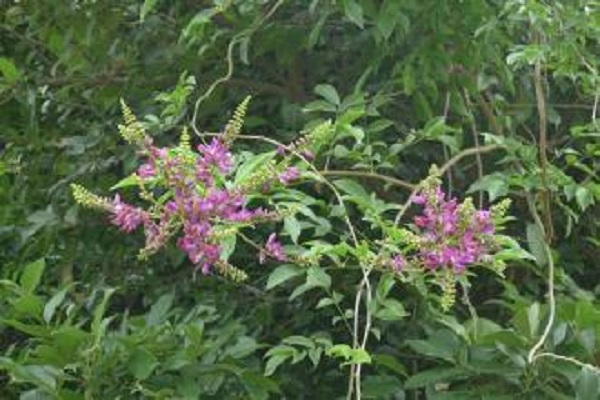
Its main root is brown, and when cut it is purple. Its stem is somewhat green, with lenticels on it. The leaves are elliptical, generally 6-13 cm long and 3-6 cm wide. The tepals of the female and male flowers are very similar, and both are very large, with pedicels 7-15 mm long. Its fruit is spherical, generally 5-10 cm in diameter. Its blooming period is in May and June, and the flowers are very gorgeous; the fruit ripens in September, and in severe winter it is generally semi-evergreen, so it is very popular.
II. Medicinal value
Its taste is rather bitter, with a little sweetness, and its nature is relatively warm; it can activate blood circulation and regulate menstruation. If one has rheumatism, or numbness in the hands and feet, or paralysis of the body, or if women have irregular menstruation, obstructed meridians, painful menstruation, or absence of menstruation, it can all be used. If treating joint pain caused by rheumatism, it can be taken together with Radix Paeoniae Rubra, Astragalus membranaceus, Angelica sinensis, Salvia miltiorrhiza, and so on. If used for women's menstrual problems, it can be consumed together with Leonurus japonicus, Cyperus rotundus, and so on.
In addition, it also has good effects in hematopoiesis, coagulation, lowering blood pressure, anti-cancer, and metabolic regulation.