What are the effects and functions of Pyracantha? Read this article to understand
I. Morphological Introduction
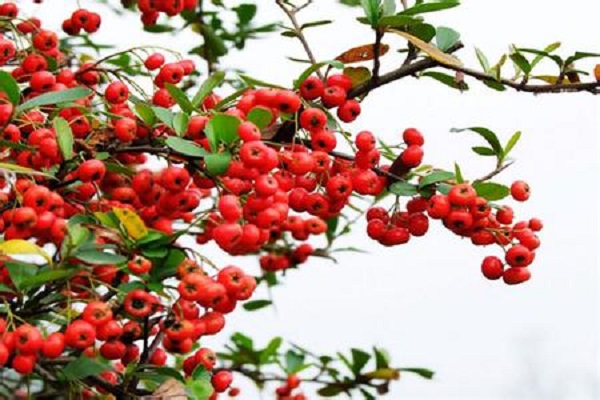
It generally grows in areas south of the Yellow River in China, and can also be seen in the southwestern region. Its fruit grows very densely, so it is also called fire torch fruit. It is green all year round, can grow to 3 m tall, and its side branches are relatively short, as are its petioles. The diameter of the flower is about 1 cm, and the flower is generally white and nearly round in shape. The fruit is spherical, about five mm in diameter, and generally red. It blooms from March to May and fruits from August to November.
II. Effects and Functions
1. Its fruit is also a kind of traditional Chinese medicine. It can be used to stop bleeding and relieve food stagnation, and can be used to treat enteritis or digestive problems. Moreover, it also has a significant effect on postpartum abdominal pain in women.
2. Its root can also be used as medicine. It can clear heat and help cool the blood, and is a very important medicinal material. It is often used for orthopedic diseases, such as sprains, waist and leg pain, etc., and also has a relieving effect on hepatitis and women's menstrual problems.
3. Its leaves also have effects. Its best aspect is clearing heat and detoxifying, and it can be used as an externally applied medicine to help treat hemorrhoids.
III. Precautions
The general dosage is one liang for the fruit, 0.5-1 liang for the root, and for the leaves, external use in an appropriate amount is sufficient. Although it is non-toxic, it is not suitable for everyone. Attention should be paid to this issue when using it. The dosage required for different diseases is inconsistent, so people who are unfamiliar with it should consult a doctor before use. This is the safest approach.