Deadline looms for demolition of illegal factories on farmland; six in Yunlin and Changhua still stand
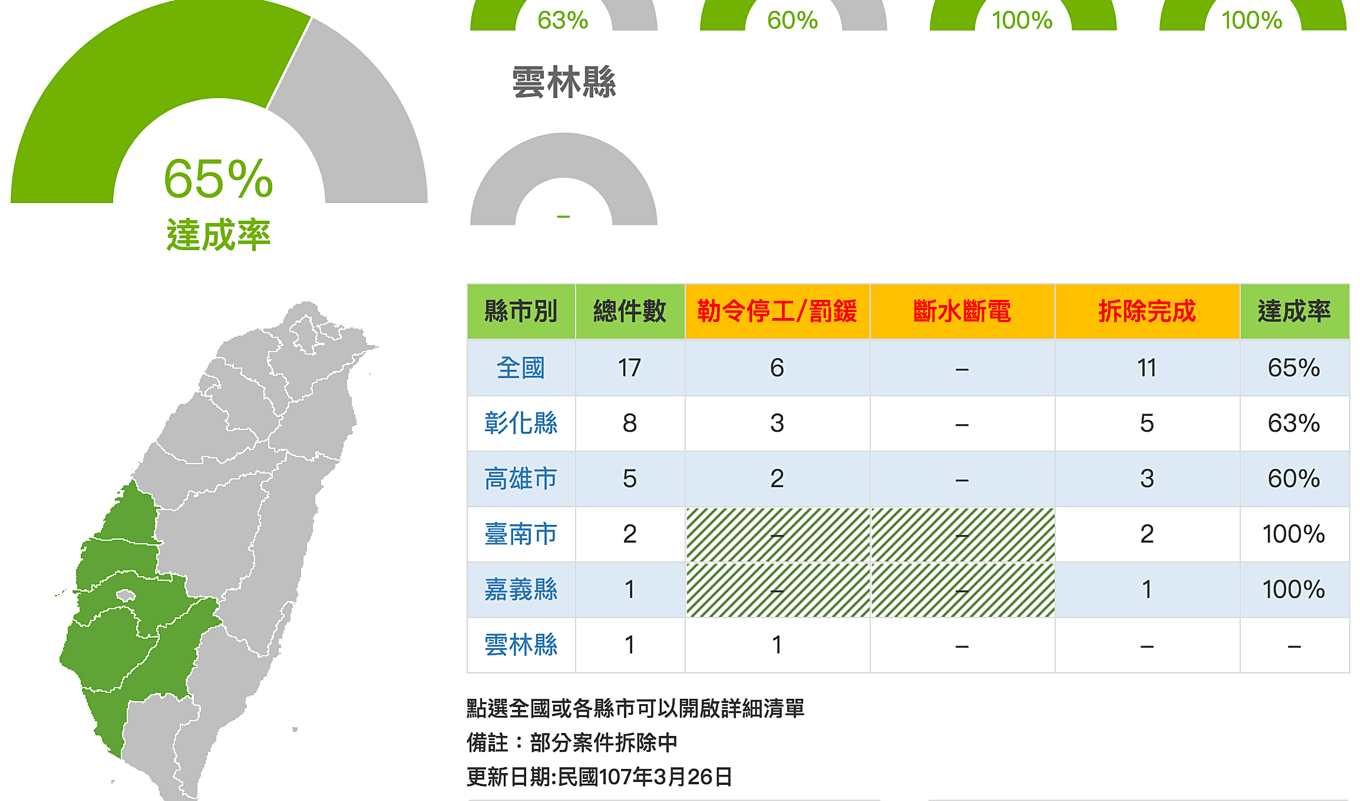
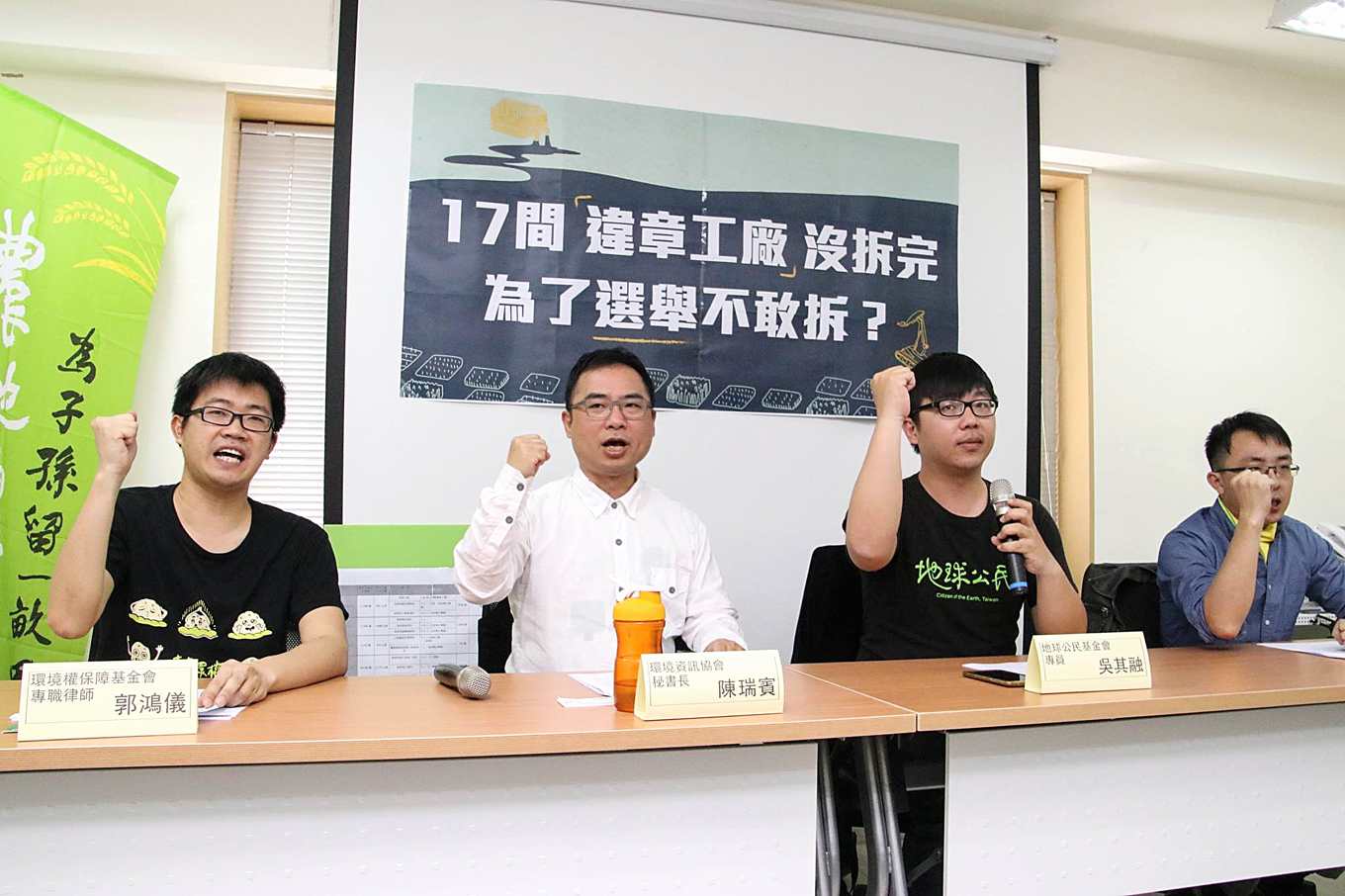
A cross-ministerial task force combining the Council of Agriculture, the Ministry of Economic Affairs and other agencies used last year's May 20 date to draw the line on illegal factories on farmland and set March of this year as the final demolition deadline. After the first wave of violators was published, local governments began carrying out demolitions one after another; with the final cutoff now less than a week away, 6 of the 17 factories remain undemolished, and their illegal existence could be extended indefinitely. Environmental groups held a press conference today, calling on the relevant agencies to complete the demolitions as soon as possible and at the same time allocate sufficient budget and dedicated staff to handle the cases, so that the slogan "report and demolish immediately" does not fall flat.
Differences in legislative density highlight sharply divergent attitudes of local governments toward illegal structures
On the legal front, Guo Hongyi, a full-time lawyer at the Environmental Rights Protection Foundation, said that existing regulations range from soft approaches such as guidance, improvement within a deadline and temporary factory registration to tough measures such as cutting off water and power, fines and forced demolition, but enforcement has not kept pace.
Why did the problem arise? Guo Hongyi believes the authority and responsibility for handling illegal structures lies with local governments, and the focus must be on local regulations. From the regulatory perspective on handling illegal factories on farmland, this can be divided into two major aspects: "regulations related to unregistered factories" and "regulations on violations of land use and building management." As for unregistered factories, the legislative density of local governments across Taiwan is very weak, and many counties and cities have no relevant regulations to handle them at all; even when illegal factories are treated from the perspective of "illegal structures," the strength of self-governance ordinances varies from place to place, and some have only guidance measures, all of which highlights the "sharply divergent attitudes of county and city governments in handling illegal structures."
Handling illegal structures according to schedule; environmental groups raise three demands: allocate manpower, report and demolish immediately, and deal with medium- and high-pollution cases first
Therefore, in the face of the increasingly rampant problem of illegal factories on farmland, Tang Linxiang believes that all ministries and agencies should take part in joint on-site inspections and enforcement against illegal farmland factories, while adjusting manpower allocation, increasing the number of inspection and reporting staff, and making work on illegal factories routine. Wu Qirong suggested that the central government should establish a dedicated legal entity responsible for handling illegal-structure matters, and that local agricultural authorities should also face the issue together; while allocating manpower, environmental protection, water resources and agriculture units should all be included in the process to improve the efficiency of handling illegal structures.
How to establish a routine, systematic mechanism for handling illegal structures is currently the focus of environmental groups, and in the end the various groups put forward three demands. These include implementing the May 20 report-and-demolish-immediately policy and not letting elections delay the demolition of illegal structures; requiring local governments to allocate sufficient budget and assigning a fixed number of inspection and reporting staff in both the agriculture and economic development bureaus, with all ministries and agencies coordinating joint inspection manpower; and demanding that the Ministry of Economic Affairs immediately halt its guidance program for illegal factories and give priority to relocating, moving and demolishing medium- and high-pollution factories.
In response, Chen Ruibin concluded that even a model farmland plot of 15 or 20 years can be destroyed by a single pollution incident; in an era when corporate social responsibility (CSR) is increasingly valued, pollution not only brings food safety problems, but manufacturing exports lacking legitimate production conditions will also be affected, so the government should face the problem as soon as possible and stop letting the crisis spread.
Council of Agriculture: If demolitions are not completed, the cross-ministerial group will discuss immediately and extend a hand to local governments
In response to the appeals of environmental groups, Cai Shengfu, director-general of the Council of Agriculture's Planning Department, said frankly that the cross-ministerial group will take a stance of encouragement and push local governments to carry out the demolition of illegal structures, since it has taken more than ten or twenty years to make even this much progress. If the deadline passes without demolitions being completed, the cross-ministerial group will convene another meeting and provide local governments with the necessary manpower to finish the work, and only then will it further propose a second wave of demolition targets, hoping to "walk step by step" and making steady, orderly progress the priority.