What to Do When a Rubber Plant Develops Black Spots? Causes and Control Methods
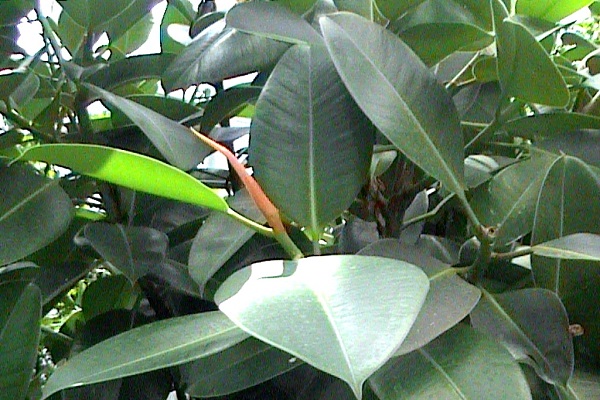
1. Anthracnose
It is very prone to anthracnose. Generally speaking, this disease occurs on both sides of the leaves, and at first the symptom is small brownish-green dots appearing on the leaf surface. As the symptoms deepen, they turn into round or oval spots. The edges of these spots are dark brown, the centers are lighter in color, and small black dots appear on them. If the condition becomes more severe, the leaves will wither and drop off easily.
Generally speaking, this disease occurs between June and August, because there is more rain and the air is more humid during this season. If you are not sure whether this is the cause, you can identify it by observing the leaf surface. If you really cannot identify it, you can also wet it and then squeeze it. If a pink gelatinous substance appears, that means the black spots are caused by this pathogen.
Once it is confirmed to be this cause, we can first cut off the diseased leaves and then destroy them. After that, take care not to let water accumulate in the soil, and make sure ventilation is good. In the early stages, we can use liquids that treat this disease, such as anthracnose thiram or zineb.
2. Gray Spot Disease
Gray spot disease is also a major cause of black spots, and it generally occurs on the leaves as well. At the beginning, it appears as gray spots, and only later does it become somewhat irregular in shape. The edges of these spots are blackish-brown, and the insides are generally grayish-white. When the condition becomes relatively severe, the leaves will begin to dry up, and some black powdery substance will appear.
Generally, a major reason this disease appears is that the plant has wounds, so we need to reduce damage to it. To deal with it, simply cut off the affected leaves and then use substances such as carbendazim for treatment.