Christmas cactus grafting method you'll get at a glance, blooms explode and no root rot
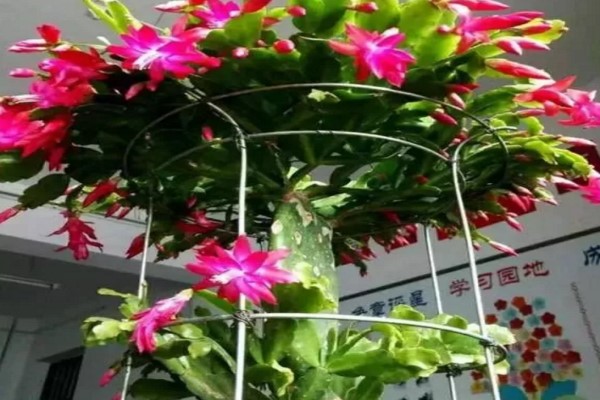
Grafting Christmas cactus onto cactus
1. First, choose a cactus that is more than 1 year old. The yellow-spined cactus is most suitable for grafting with Christmas cactus, and the survival rate is very high. If you don't have one, you can also use other varieties instead.
2. If you want to graft at the top, use a sterilized knife to make a horizontal cut at the top.
3. After cutting, you will see that the cut surface is divided into two parts. The outer ring is the epidermis, and the middle is the pith. The best position to insert the Christmas cactus is between the epidermis and the pith. Inserting it in this position makes the wound heal faster.
4. Use a knife to cut into the cambium, not too wide, and roughly the same width as the Christmas cactus scion being inserted. This way the grafting wound is smaller and recovery is faster.
5. Prepare the Christmas cactus cuttings, each segment with 2~3 leaf segments. Do not use new leaves or leaves that are too old. Healthy leaves from the middle part are best.
6. Use a sterilized blade to shave the bottom of the leaf, just exposing a tiny bit of the white part. Try to do it in one cut.
7. Insert the Christmas cactus leaf into the cut, and try to make the midline of the leaf line up with the areole of the cactus. The areole is the growth point of the cactus, so this makes survival easier. After inserting, secure it with a toothpick or clip.
8. At the top, besides inserting horizontally, you can also insert vertically. Use a knife to cut a slit about 1.5 cm deep above the areole, put the scion in, and then secure it.
9. If you want to graft a multi-layered Christmas cactus, you can also cut and graft on the side of the cactus pad. First wipe the grafting position with alcohol to disinfect it.
10. Use the tip of the knife to cut a small inverted triangular opening, insert the scion, and then secure it well.
11. Do not water the cactus right after grafting. Stop watering for 10 days. If after more than ten days the Christmas cactus leaves have not wilted, it means the grafting was successful.
12. The picture below shows a Christmas cactus grafted by a flower friend, a comparison between the first graft and more than three months later. It grew very fast.
Precautions for grafting Christmas cactus
1. Be sure to pay attention during the grafting process: the knife, scion, and cut all need to be sterilized. Many flower friends fail at grafting and the cactus wound rots because they did not do a good job of disinfecting beforehand.
2. It is best to graft on a sunny morning. Cloudy and rainy days will cause slow wound healing, infection, and other problems, and they must not be exposed to rain.
That's all for the little knowledge about grafting.
Isn't it simple and easy to learn?
If you like it, why not give it a try!