Use this kind of soil for your plants, and you will never worry about root rot or yellow leaves again, and your flowers will grow like crazy.
Garden soil
Garden soil is the most common soil. It includes vegetable garden soil, orchard soil, and soil from residential areas or park green belts, all of which belong to garden soil.
What are the advantages of garden soil?
Garden soil has been used to cultivate plants year after year, so its water retention and fertility are both decent, making it a good choice for growing flowers.
What are the disadvantages of garden soil?
If you use only garden soil to grow flowers, over time the soil tends to become compacted; when you water too much, it easily accumulates water and causes root rot.
Leaf mold soil
If you want to dig up leaf mold soil, you can basically find it in the mountains or under large trees. Leaf mold soil is soil that has been naturally decomposed and fermented.
What are the advantages of leaf mold soil?
Leaf mold soil has good water and air permeability and high fertility.
What are the disadvantages of leaf mold soil?
Leaf mold soil dug from the wild contains many pathogens and insect eggs. Using it directly for plants easily causes pests and diseases, so it must be disinfected before use.
Pine needle soil
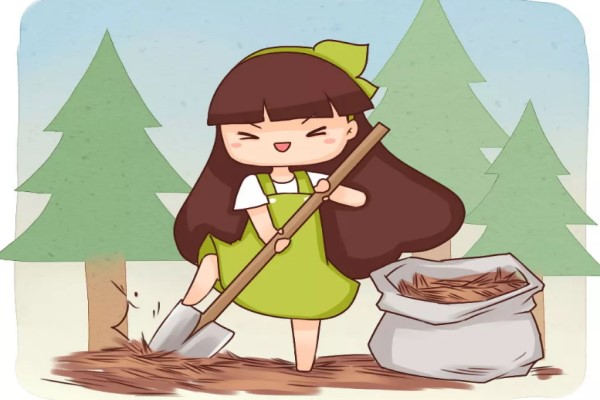
Under the large pine trees in the mountains or in park green belts, there is a layer of pine needle soil covering the ground. When digging, first push aside the undecomposed pine needles on the surface, then dig out the yellow-brown, soft soil underneath. Do not dig too deep, or you will reach garden soil.
What are the advantages of pine needle soil?
Pine needle soil has strong water and air permeability and long-lasting fertility.
What are the disadvantages of pine needle soil?
Pine needle soil has relatively poor water retention.
Peat soil
Peat soil refers to soil such as river mud and pond mud. If there is a fish pond or river or lake near your home, you do not need to buy nutrient soil. Hurry and dig some to grow flowers!
What are the advantages of peat soil?
Peat soil is very rich in nutrients, has many soil pores, and has very good water and air permeability.
What are the disadvantages of peat soil?
If you use only peat soil to grow flowers, it can also cause soil compaction.
Coconut coir
Coconut coir cannot be made at home or dug up in the wild; it needs to be bought with money. It is made from coconut shell fiber, and many plant lovers have used coconut coir.
What are the advantages of coconut coir?
Soft and airy, and cheap.
What are the disadvantages of coconut coir?
Coconut coir has no nutrients, so it needs to be used together with other soils.
Vermiculite
Vermiculite is a mineral. It is not very common and needs to be bought with money.
What are the advantages of vermiculite?
Vermiculite has relatively strong water absorption and can provide water to flowers for a longer time, maintaining soil moisture.
What are the disadvantages of vermiculite?
After vermiculite absorbs water, it expands, which may affect the air permeability of the soil.
River sand
River sand is mostly found on riverbanks. Its particles are relatively round, fairly clean, and have no smell. River sand is usually mixed into soil or used for rooting cuttings.
What are the advantages of river sand?
River sand has good water and air permeability and can prevent root rot.
What are the disadvantages of river sand?
River sand has very few nutrients.
Clay pebbles
Clay pebbles, as the name suggests, are ceramic granules. They need to be bought with money. Many plant lovers use clay pebbles to line the bottom of pots or cover the pot surface.
What are the advantages of clay pebbles?
Placed at the bottom of a pot, clay pebbles can prevent water accumulation and root rot and improve soil air permeability; spread on the pot surface, they can beautify the pot surface and also prevent insects from laying eggs in the soil.
What are the disadvantages of clay pebbles?
Clay pebbles have no nutrients.
What soil should be used for succulents?
Succulent root rot is largely caused by poor soil air permeability, which smothers the roots of the succulents. Therefore, when mixing soil, it must be sufficiently airy. You can mix peat soil, sand, and coconut coir at a ratio of 7:10:3, letting the succulent roots breathe freely and burst out of the pot!
What soil should be used for cacti?
Cacti and cactus balls are very drought tolerant. If the soil is compacted and you water too much, root rot becomes very likely, so loose soil with good air permeability is very important. Mix garden soil, leaf mold soil, and river sand at a ratio of 2:3:3, and your cacti will grow more and more vigorously!
What soil should be used for acid-loving flowers?
Azaleas, camellias, and gardenias are all acid-loving flowers. When choosing soil, make sure the soil is acidic. You can mix peat soil and river sand at a ratio of 6:4, or mix leaf mold soil, pine needle soil, and river sand at a ratio of 4:3:3, then appropriately add some bone meal or cake fertilizer.
What soil should be used for foliage plants?
Plants such as pothos and spider plants are grown for their leaves, so you need to choose fertile, loose soil to make the leaves grow lush and green! Mix leaf mold soil, garden soil, river sand, and chicken manure evenly at a ratio of 1:1:1:1, and your plants will burst out of the pot, with leaves so green they shine!
What soil should be used for large plants?
Plants such as the happiness tree and Radermachera sinica are relatively large in size and have well-developed root systems. Once the soil becomes compacted, root rot is very easy, so ensuring soil air permeability is very important. Mix garden soil, river sand, and sheep manure pellets at a ratio of 3:1:1, and your plants will grow like crazy!
The advantages and disadvantages of common soils,
and the soil mixing methods for various flowers,
have you plant lovers remembered them?
If you find them useful,
then share them with your friends!