How to Fertilize Cymbidium goeringii? A Detailed Guide to the Correct Method
I. Precautions for Fertilizing
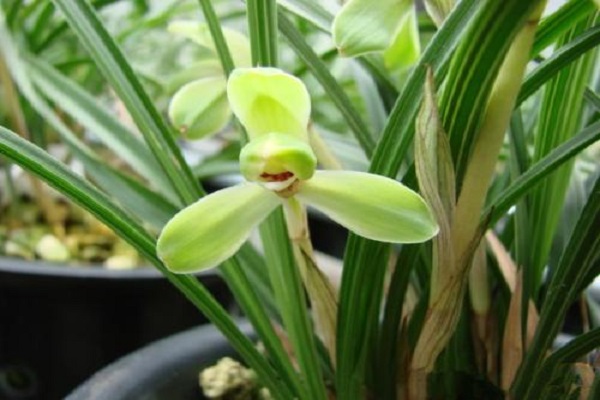
It is a relatively popular traditional flower in our country, with rather small blooms that are usually green or brownish-yellow. It prefers slightly acidic soil, so when adding fertilizer, be careful not to disrupt the soil's pH value. Follow the rule of small doses and frequent applications.
It is best to fertilize it on a sunny day at 15 to 30 degrees Celsius. If it is cloudy or raining, fertilization should be temporarily stopped. Take special care to use organic fertilizer, and it must be fully decomposed before it can be used. If spraying fertilizer on the leaves, pay attention to the dosage and do not use too much.
II. What Fertilizer to Apply
When fertilizing it, pay attention to a sufficient balance of phosphorus, nitrogen and potassium, as well as the uptake of trace elements, and be careful not to apply too much ferrous sulfate. The fertilizer should be uniform and effective, and able to provide what it needs for growth. It is best to use a flower fertilizer that has the effect of resisting disease erosion and extending the flowering period. Friends who do not know how to mix it can go and buy this special flower fertilizer for this flower.
III. Frequency of Fertilizing
It has two fertilization routes: one through the soil, and the other through the leaves. It grows rather slowly, so generally only a small amount of fertilizer is needed. In spring and autumn, when it grows relatively quickly, apply alum fertilizer water once a week, and it must be decomposed; no fertilizer is needed during high temperatures or severe winter. It is best to use organic fertilizer. Foliar fertilization can supplement other trace elements, and once every half month is best during the peak growing season. If its leaves are very glossy, it means it is not lacking fertilizer; if they are rather dull, then it needs fertilizer.