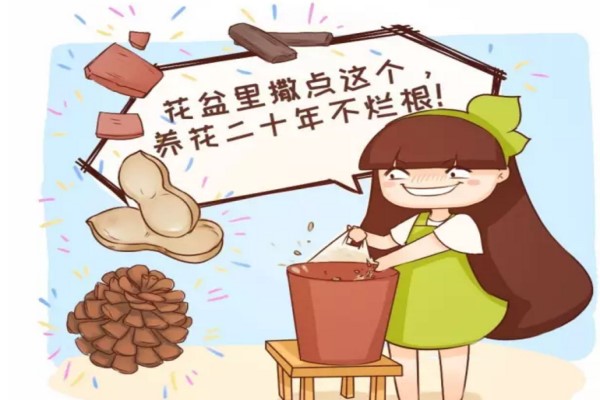
If a flower's roots rot, it's doomed - sprinkle a little of this in the pot and it can live for 20 years!
Sprinkle a little loofah sponge in the Christmas cactus pot - no root rot and shiny leaves!
Loofah sponge is most commonly used for washing dishes - eco-friendly and handy. Its loose, porous structure also makes it great for lining the bottom of pots!
How to use:
1. Dry the loofah sponge in the sun, then cut it into small pieces according to the size of the pot.
2. When repotting, place the loofah sponge at the bottom of the pot, then fill with potting soil and plant the flower.
3. With the loofah sponge lining the bottom, drainage in the pot is excellent. Even flowers with weak roots like the Christmas cactus won't get root rot. And as the loofah sponge decomposes in the soil, it turns into fertilizer - two benefits in one!
Sprinkle a few pine cones in the money tree pot - lush branches and leaves with no yellowing!
Pine cones are common in the mountains. They have lots of gaps in their shape and are also great material for lining the bottom of pots.
How to use:
1. Pine cones collected from the mountains may carry fungi, so it's best to soak them in potassium permanganate solution to disinfect them first.
2. After disinfecting, dry the pine cones in the sun and they're ready to lay at the bottom of the pot. Because they're fairly large, pine cones are better suited for deeper pots, such as those for money trees, ZZ plants and so on.
3. Big plants like money trees and happiness trees dread waterlogging and root rot the most. With a layer of pine cones at the bottom, this problem won't occur, and the leaves stay healthy and green!
Sprinkle peanut shells in the clivia pot - strong roots and glossy leaves!
Flower lovers who enjoy nuts can also collect some peanut shells and walnut shells to sprinkle in the pot.
How to use:
1. Peanut shells and walnut shells must be plain/unflavored ones, otherwise the shells will carry salt, which is bad for the flowers. Just sprinkle them directly at the bottom of the pot.
2. With peanut shells lining the bottom, the potting soil becomes more breathable, and the shells themselves are also a great fertilizer. Once absorbed by the clivia, the leaves become thick and green.
Sprinkle a few clay pebbles in the succulent pot - plump and chubby with no root rot!
Succulent pots are usually small, so you should choose small items to put at the bottom. Clay pebbles are perfect for succulents.
How to use:
1. First, cover the drainage hole with a layer of gauze to prevent soil loss. Then spread a layer of clay pebbles.
2. After laying the clay pebbles, fill in your prepared soil, gently press it down with a trowel, and finally plant the succulent in.
3. With clay pebbles at the bottom, the soil's drainage improves a lot, so moisture-fearing succulents won't drown, and the chance of black rot is greatly reduced.
Sprinkle a few pine needles in the rose pot - new shoots sprout like crazy!
Everyone knows pine needle soil is very fertile - it's natural nutrient soil. Actually, pine needles can also be sprinkled directly at the bottom of the pot, and their breathability is top-notch!
How to use:
1. Dig up some pine needles from under a pine tree. Choose the ones from the bottom layer with a darker color. These pine needles are basically already decomposed and are best for growing flowers.
2. After bringing the pine needles home, scald them with boiling water first, then dry them in the sun before use. Spread them 2-3 cm thick in the pot, then fill in the potting soil.
3. With pine needles lining the bottom, the rose pot drains well and also absorbs the nutrients from the pine needles. When the growing season comes, new shoots keep sprouting nonstop.
Sprinkle a little sawdust in the camellia pot - more green leaves!
Whether it's leftover sawdust from home renovation or wood shavings bought for keeping hamsters, both can be used at the bottom of the pot to make the soil loose and breathable.
How to use:
1. Since only a small amount of sawdust is used at the bottom of the pot, you can just spread a layer directly. But if you want to use it in large amounts, it's best to decompose it first.
2. For flowers like camellias that like moisture but fear waterlogging, sprinkling sawdust in the pot lets excess water drain out faster. That way, you don't have to worry about overwatering causing root rot in camellias.
Sprinkle some pine bark in the orchid pot - strong roots and upright leaves!
The biggest fear in growing orchids is root rot. If the roots rot completely, the whole orchid is done for. Sprinkling some pine bark at the bottom of the pot can prevent this problem.
How to use:
1. Pine bark from the mountains may harbor fungi and insect eggs, so it needs to be disinfected before use. Find an old pot you no longer use, put the pine bark in, add clean water and boil it.
2. After the pine bark is thoroughly dried, place a few pieces at the bottom of the pot - don't add too many. Then add the other potting media and plant the orchid.
3. With pine bark at the bottom of the pot, orchids are less prone to root rot. As the pine bark slowly decomposes, it also provides plenty of nutrients for the orchid, making its leaves stronger and more shapely!
That's all for today's flower-growing tips.
As long as you master them, your flowers won't get root rot anymore!
If you find this useful, share it with more flower lovers!