Reasons and solutions for wilting leaves on Kalanchoe daigremontiana (mother of thousands)
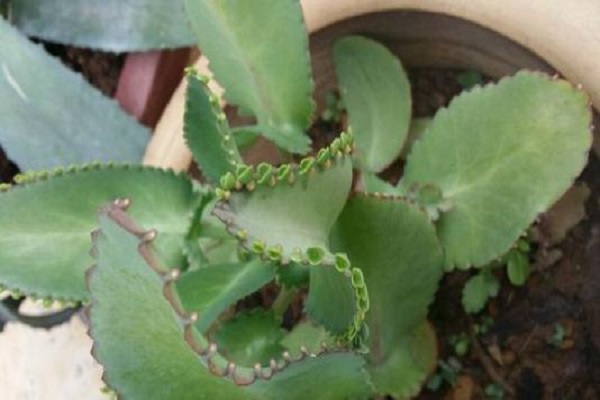
1. How to handle it
1. If the cause is too much water, you should stop watering immediately and place it in a windy, shaded area, without exposing it to direct sunlight, and after some time it will recover.
2. If the cause is low temperature, place it in a heated room and adjust the temperature, keeping it at least above 10 degrees, with the ideal temperature around 15 degrees. This is because it grows best in an environment of 13-19 degrees, and if it is not warm enough, the leaves will wilt.
3. If the cause is water and fertilizer, care for it according to its habits, and because the seasons differ, different techniques should be used. During hot periods it grows relatively fast and needs more water and fertilizer, while when severe winter arrives and the temperature drops sharply, you should wait until the soil is dry before adding water and reduce the amount of flower fertilizer applied.
4. If it is kept indoors without sufficient light, its growth will also be affected, causing the leaves to grow poorly and wilt. At this time, move it to a bright location.
2. Growth habits
If you want its leaves to grow emerald green and full of energy, you must care for it according to its habits. It belongs to the Crassulaceae family, can live for many years, and has very plump leaves with thick flesh. It can grow into a subshrub, and two opposite leaves can grow from the leaf edges. If there is enough humidity, it can grow aerial roots. It originates from the island of Madagascar in Africa, generally growing on small hills or in areas with water. It tends toward warm and moist areas, is not afraid of drought or severe winter, and prefers relatively acidic areas.
When growing it, we had best prepare a thick, slightly acidic medium and give it a bright growing environment of 13-19°C, watering it in time, so that it will grow very well and be less prone to disease.