Are copper coin grass and pennywort the same plant?
1. What is copper coin grass
It is a plant in the Apiaceae family and the Hydrocotyle genus. It has many other names, such as "money grass", "creeping Jenny", "opposite-leaf grass", and so on. The names differ from region to region. For example, in Sichuan Province, it is also called "a string of coins", and in Jiangxi Province, it is called "temporary rescue", and so on. It is mostly found along roadsides or in grassy patches on hillsides. It is very widely distributed in all provinces of mainland China. Its leaves are round or kidney-shaped, with fine hairs on the underside. It also blooms, with white petals and a yellow corolla. Its flowering period is around April. It can be planted in the open ground or placed in water bodies such as ponds.
2. What is pennywort
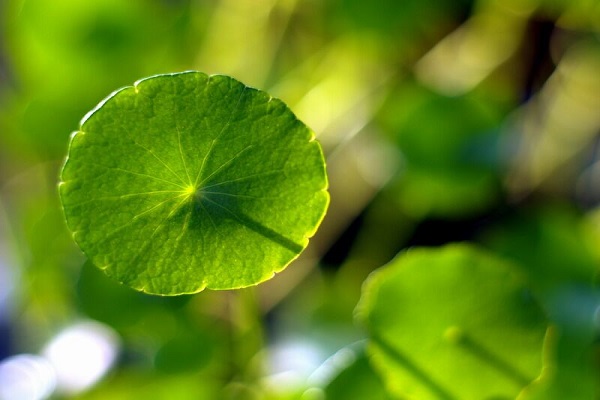
It also belongs to the Apiaceae family and the Hydrocotyle genus. Its other names include "copper coin grass", "money lotus", and so on. Its leaves are round and peltate, grass-green in color. It produces small white flowers in umbel-like inflorescences. Its flowering period is from June to August. It is also a good aquatic ornamental plant, suitable for placing in water bodies, and can also be placed indoors as greening material for water features, such as aquariums and the like.
3. Whether they are one plant
From the introduction above, we can see the connection between them. Besides both being aquatic ornamental plants, and besides the differences in appearance, the most obvious thing is that the other names of "pennywort" include "copper coin grass". But strangely, the other names of "copper coin grass" do not include "pennywort", and their appearances are not completely the same either.
In many places, they are considered to be one plant. However, if you buy them in the market, the former has large leaves and long stems and leaves. But the latter has very small leaves and shorter stems and leaves, so they are not one plant.