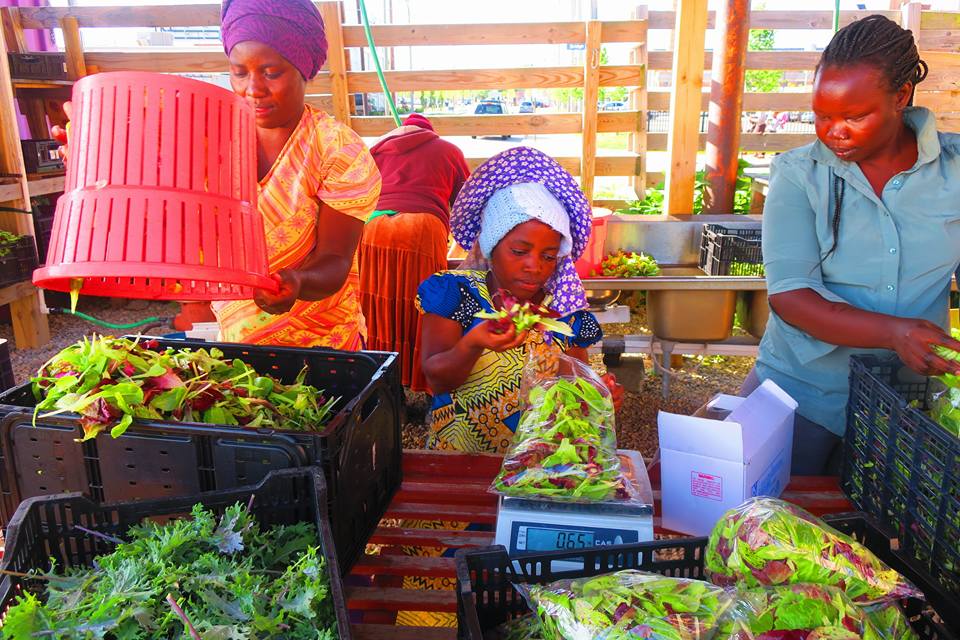
Urban agriculture in the United States resettles refugees, heals trauma, and demonstrates social resilience
After taking office, U.S. President Trump ordered a ban on entry for certain refugees, warning that refugees from some countries could pose domestic security threats, suddenly making the United States an unwelcoming country. There are currently about 65 million refugees worldwide, and European and American countries are facing an unprecedented refugee wave. In Switzerland, about 2 in every 100 people are refugees; in France and Canada, about 1 in every 200 people is a refugee; the number of refugees accepted by the United States is less than one-thousandth of the national population.
The United States once counted the number of refugees it admitted in 2016 at about 85,000. After Trump took office, the number was greatly reduced to half. Most refugees are women and children, and more than 70 percent come from countries such as Congo, Syria, Myanmar, Iraq and Somalia.
According to a report in Handelsblatt, the refugee problem in the United States is not as serious as Trump claimed, nor is it as dangerous. Refugees do not necessarily burden the U.S. economy; in some cases, accepting refugees even helps community development and brings substantial benefits to local residents.
A 2012 study investigated the subsequent development of refugees in Cleveland, Ohio. The study pointed out that refugees are often able to overcome language barriers and find work within the first five months. Many of them have a business-minded approach and start their own businesses, and their employment situation is more stable than that of many economic migrants. In that year, for example, Cleveland spent about 4.8 million USD on refugee resettlement, while in the same year refugees contributed as much as 48 million USD in economic benefits to the local area.