How to care for hydroponic anthuriums in winter? A detailed guide to winter care methods
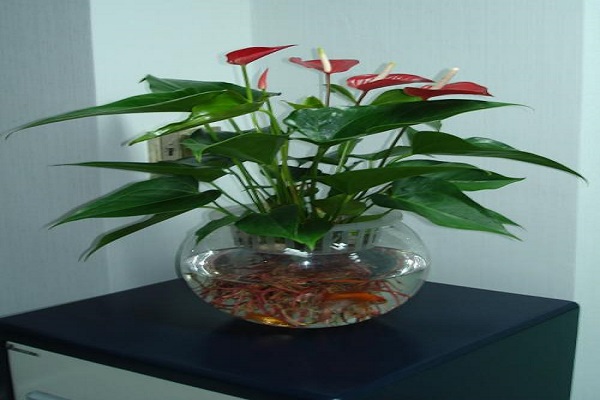
1. Changing the water
Its roots are very vigorous and respire strongly, so when grown in water, it must be given water on a regular schedule, the green algae and duckweed-like growth on the roots must be cleaned off, and its dead roots must be removed; generally this is done once every 2 or 3 days.
In the depths of winter, it can be changed once every seven days. Each time the water is changed, a little nutrient solution can be added; the nutrient solution should first be left in the sun so the chlorine can evaporate off.
Note that when growing it in water, only half of the roots need to be submerged, with the rest exposed to the air to help it breathe. If the dissolved oxygen level is insufficient, it easily suffers root rot.
2. Light and temperature
It prefers warm, shady areas, so do not expose it to harsh sunlight. When growing it in water, it should be placed in a good spot with air movement and no strong light. In winter it must not go below 14 degrees; if it is too low, it will suffer cold damage, so be sure to raise the temperature to keep it warm. Air humidity is best at around 80 percent, and the anthurium must never be taken outside, otherwise it will suffer cold damage.
3. Adding oxygen
This flower often faces a dilemma: once the oxygen in the water is too low, its roots easily rot. So when growing it in water, be sure to pay attention to its oxygen content. The most convenient method is to shake it: hold the flower with one hand and gently sway the container with the other, about ten times or so; this method can increase oxygen by about 30 percent. If conditions allow, a tiny bit of hydrogen peroxide can also be added to the nutrient solution, using only a 1 percent proportion, or a small oxygen pump can be used to add oxygen for it.