What are the care methods for Cymbidium sinense during its flowering period?
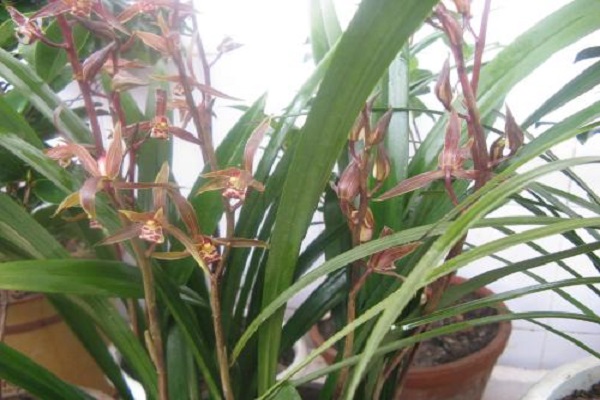
I. When does it bloom
This flower blooms only once a year, and because temperatures vary, the timing of its bloom is earlier or later. If it is in the Guangzhou area, you can see its flowers around the Spring Festival. If it is in the Zhejiang area, its flowering period is the same as that of Cymbidium goeringii.
However, there are also varieties that bloom in autumn, and varieties that bloom in late winter and early spring. Exactly when it blooms depends to a large extent on temperature. Its flowers are especially strongly fragrant, and the color varies greatly, usually purple, but also white, peach-red, or yellow-green.
II. How to care for it during the flowering period
1. Temperature. During its flowering stage, it is best to keep the temperature above 12 degrees Celsius. If you want it to bloom again the following year, it needs more sunlight. The usual indoor temperature should not be too high, otherwise it will easily become diseased when spring comes.
2. Fertilizing. When it is flowering, you can use a special flower fertilizer to spray fertilizer on its leaves once every ten days, and water a fertilizer solution onto its roots once every half month. This can help its pseudobulbs become stronger and fuller, and store enough nutrients. It can also improve its ability to withstand severe winter, the quality of the flowers will be better, and the chance of producing seedlings will also be greater. After the flowers appear, use more phosphorus and potassium fertilizer; 10-15 days after flowering, the flower stems can be cut off.
3. Water and soil. The growing medium should be a mixture of leaf mold, peat, and garden soil, and then composted. When adding water, use clean water, and do not use tap water directly. For routine care, water once a day during high temperatures, and once every four or five days in severe winter.