What are the care methods for a clivia before it blooms?
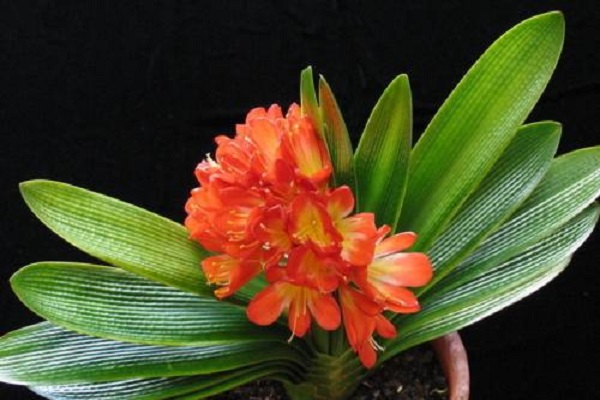
I. Blooming time
The season when it blooms most abundantly is June to July, the period at the turn of spring and summer. Its blooming period is very long, and sometimes it can even bloom all year round.
II. Pre-bloom care
1. Fertilizer
If you want its flowers to be brightly colored and its petals plump, you can add things like animal offal when fertilizing, so that the roots and stems can absorb more nutrients. Of course, the most important fertilization is during the blooming period; be careful not to apply too much nitrogen fertilizer, but to apply phosphorus and potassium fertilizer, which is the correct approach. Only one to two applications are needed, and the flower buds will bloom normally.
2. Light
Before it blooms, give it plenty of light, so that the leaves can begin respiration and its blooming time can be extended. Of course, during its blooming process, pay attention to the intensity of the light: if the light is too strong, the flower color will be deeper but the flowers will fade more quickly; if the light is weaker, the blooming time will be longer but the petal color will be paler. So light is a very important factor. Depending on whether you prefer deep or pale flower colors, you can adjust the light accordingly.
3. Water
Water is indispensable throughout its life, and before blooming it needs more water than usual, and the surrounding humidity should not be lower than 60%. Water is indispensable to all plants from development to decline. Whether the nutrients in the soil can be successfully absorbed by the clivia depends on whether these nutrients can be dissolved by water. You can drop a magnet into tap water; such water enables the roots to absorb better and prompts it to grow faster.
4. Temperature
If it is winter, shield it from sunlight from 10 a.m. to 2 p.m.; if it is a very hot summer, cover it with a protective shade to scatter the light and reduce the sun's intensity. During the day, the temperature should be 20-25°C, and at night, the temperature should be 13-18°C.