Care Methods and Precautions for Dianthus (Dianthus chinensis) During the Flowering Period
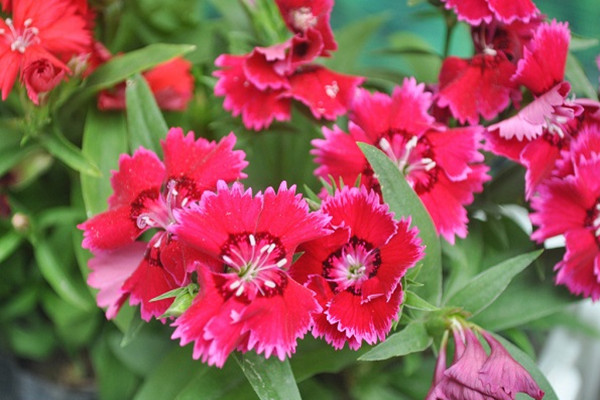
1. Flowering time
This flower does not bloom at a fixed time period, because it can be sown in spring and in autumn, and its blooming time also differs because of north-south differences, so generally speaking it actually blooms during the two periods of May to June or September to October.
2. Watering
It does not love moisture, but during flowering we need to water it in time, because at this time water is very necessary, so that it can grow more beautifully and its nutrients can keep up. In addition, its soil must not become compacted, and during the rainy season remember to loosen the soil, so that it will not develop poorly.
3. Ventilation
During flowering it has relatively high requirements for ventilation, because if ventilation is poor at this time, its roots are very likely to develop problems.
4. Temperature
During flowering the temperature should be kept between 15 and 20, and only within this range can it grow luxuriantly. In addition, we also need to regulate its humidity well; only when these two are perfectly combined will it grow outstandingly.
5. Light
During the flowering period, we also need to provide the light it needs, and generally we set the duration at six to eight hours. Of course, we cannot let it stay under the scorching sun for too long, otherwise problems are very likely to arise.
6. Fertilizing
Its requirements for fertilizer are actually quite high as well. The fertilizer it needs is decomposed manure water, which must not be too concentrated; it is best if it is thin and diluted. Generally the interval between fertilizations is ten days. In addition, if we cut the flowers, we also need to apply additional fertilizer.
7. Pests and diseases
If it suffers pest damage during the flowering period, we need to treat it according to the specific cause. Generally, there are several common diseases it gets, and the one more likely to be encountered during the flowering period is red spider mite, and at this time we generally use dimethoate emulsion.