How Does Foxglove Propagate? A Detailed Guide to Propagation Methods
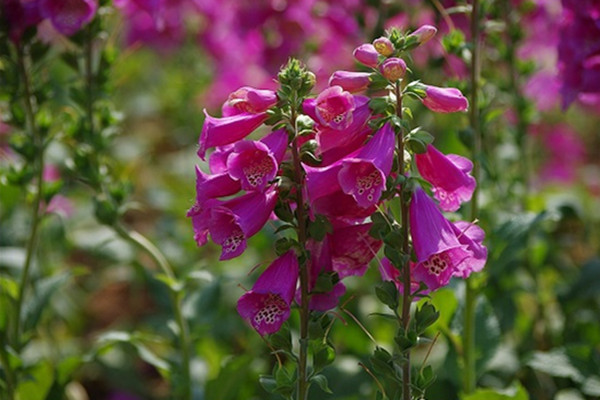
1. Direct sowing
Generally, the method we use is sowing seeds. Before sowing, some preparation is needed, including collecting its seeds and preparing the seedbed and the growing medium. The seeds are collected when the fruit is ripe; at this stage we also need to use certain methods to store them, such as threshing. Before sowing, we also need to soak them to speed up germination.
After that, we need to prepare the growing medium for the seedbed. The soil is best if fertilizer has been added, and attention should also be paid to aeration and drainage conditions.
As for the sowing method, direct sowing is fairly suitable, because it saves quite a lot of effort. We scatter it on the soil at a certain spacing, then scatter some rare earth on top. We only need to keep it moist and water it often. It takes only about ten days for it to grow well and sprout. During this process, we can use straw to keep it moist.
With direct sowing, one point we need to pay attention to is timing: in the north it is done in April or November, while in the south it is done in late autumn.
2. Raising seedlings
We can also use the seedling-raising method to propagate it. Generally, south of the Qinling Mountains-Huaihe River line we choose flat beds or raised beds, while in the north we choose sun-facing beds. In the north, the base fertilizer used is mostly decomposed horse manure.
Generally, we need to mix the fertilizer and soil thoroughly and then even it out. After that, we sow the seeds at the beginning of March, and then we need to cover them with mats to achieve a moisture-retaining effect. Generally, we open the mats at ten in the morning and cover them again at four in the afternoon. Then in May it will grow a few leaves, and at that point we plant it out into the field, of course at a certain spacing, and after planting it out into the field we need to water it.
Once it has grown a bit more, we can grow it in the normal way. When doing these steps, we need to keep water and fertilizer well controlled, and we must not be penny wise and pound foolish, causing the final result to fail.