Grow chrysanthemums like this in spring, and the blooms will be as big as a fist, and 1 pot can become 100 pots
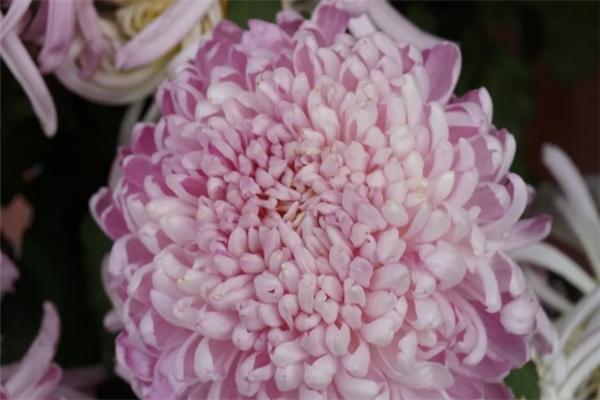
For chrysanthemums to bloom abundantly and large, it all comes down to 3 key tricks!
The chrysanthemum cultivation method I'm showing today is "single-stem chrysanthemum": thin out the excess flower buds and side branches, keeping only one flower bud per branch.
1. Bud thinning
Anyone who has grown chrysanthemums knows that a single chrysanthemum branch will produce a great many flower buds, and if you let them all bloom, you'll end up with "small flowers" and "blooms that aren't beautiful"!
So we need to pick them off until only one remains. Generally, the bud at the very top is the plumpest, so we can keep the top bud and remove the other buds on this branch.
First keep two buds, and after the two buds have grown for half a month, see which one is growing better and keep that one. This can avoid the situation where one bud unexpectedly withers and there are no flowers to enjoy.
In this way, nutrients are concentrated into a single flower, so it can produce a large bloom.
When removing the buds, you must be careful not to break the flower bud off~
▲Before bud thinning
▲After bud thinning
2. Pruning excess branches
What are excess branches? They are the branches that have nothing to do with cultivating a single-stem chrysanthemum. What we need is one sturdy, pest- and disease-free thick branch, not a thin, weak, feeble one.
I have a simple method: for a 15-20cm flower pot, it's recommended to keep 6-8 branches. Select the sturdy, pest- and disease-free thick branches in the pot, and cut away all the rest!
For each thick branch you keep, you should also remove the side branches growing on it. The reason is simple: to concentrate the nutrient supply.
▲The branches cut off
3. Water and fertilizer management
Bud thinning and branch pruning alone are not enough; you also need to combine them with water and fertilizer management.
Right after pruning the branches, you need to "withhold water and withhold fertilizer", controlling watering and stopping fertilization. This can restrain above-ground growth, favor below-ground development, and prepare ample nutrients for bud formation in the future.
Specifically, after pruning the branches, during this month you should water only when the leaves start to wilt, and fertilization must stop.
Once flower buds appear, you can water once every 3 days, apply urea to the roots once a week, and spray the leaves with monopotassium phosphate once every half a month.
Until the flower buds open, stop fertilizing, and change the watering schedule to once every 2 days.
Now here's a set of comparison photos: the one above is a manually managed single-stem chrysanthemum, and the one below is the naturally grown state.
Once you've mastered these three steps, it isn't hard to grow elegant and graceful chrysanthemums.
Spring is exactly the time for cuttings; with clever cuttings you get perfect seedlings!
What is a perfect seedling? Personally, I think it's the "foot shoot" growing from the base of the plant. This foot shoot grows best and blooms most true to standard! If you pay attention when raising the seedlings, you can get even more graceful chrysanthemums.
1. First, cut pest- and disease-free branches into 5cm sections, keeping 2-3 leaves.
2. Insert them diagonally into ordinary nutrient soil. Place in a shady spot and water as needed.
3. After about a month, a sturdy shoot will emerge from the bottom of the branch; this is the "foot shoot" we want.
4. After another ten days, it will take root. Once rooted, it can be transplanted into a flower pot to establish. After planting, the foot shoot will grow into a branch, and by autumn and winter it will begin to form flower buds; at this point you can start "bud thinning", "branch pruning" and "withholding water and withholding fertilizer".
That's all for today!
Fellow flower lovers might as well take advantage of spring,
and hurry up and give it a try!