How to grow lucky bamboo in water right after bringing it home
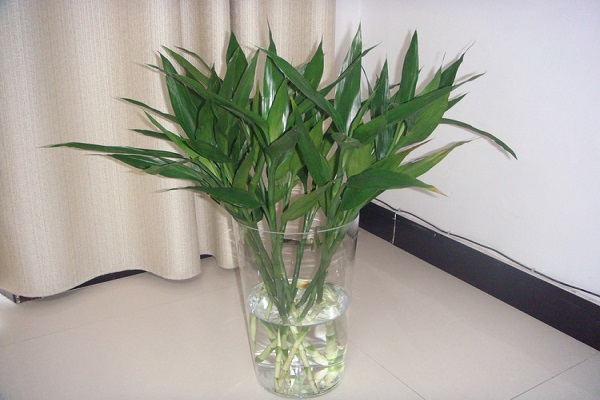
1. Key points for water culture
(1) Before inserting it into a glass bottle, cut off the leaves at the base of the cutting, and at the same time make a smooth diagonal cut at the base to increase the contact surface with water and ensure the supply of water and nutrients. Lucky bamboo also has requirements for water quality. Tap water cannot keep it alive. Tap water contains oxygen, so you need to wait until the water has settled and the chloride concentration has decreased. Generally, overnight tap water or cooled boiled water is fine.
(2) During the rooting period, change the water every three to four days on average. A small piece of charcoal can be added to prevent rot. Do not change its position within ten days. After about half a month, fibrous roots will grow. After roots appear, stop changing the water, because it likes stale water. Frequent water changes can cause the leaves to turn yellow or even the whole plant to wither. If the water level decreases, remember to top it up in time.
(3) After rooting, add a small amount of compound fertilizer to the water, generally once every three to four weeks. To prevent leggy growth, it is best to drip a few drops of brandy into the bottle every three weeks, then add a small amount of nutrient solution to promote lush green leaves. If no fertilizer is added for a long time, its stems will become weak and the leaves will turn yellow.
(4) In terms of placement, also note that it dislikes drafts and cannot tolerate too-high temperatures. It is best to keep it away from TVs, air conditioners, and electric fans, otherwise the leaf tips and leaf edges will dry out. Generally, it grows well between 20 and 28°C. If the temperature is too low, it will suffer cold damage. It likes shade, so avoid placing it at windows or on balconies. In summer, be careful to avoid overly strong light and to keep it cool./p>
2. What to do about yellow leaves
For this phenomenon, you can start from two aspects: first, water quality. Observe whether the roots are fresh. If the roots are rotting because the water quality is poor, replace it with cooled boiled water in time. Second, the light at the placement location. In a dim, stuffy, dry, and poorly ventilated environment, the leaves will turn yellow. Intense sun exposure and overly strong light can also cause the leaves to turn yellow.