Smear a bit of this on the roots of your clivia, and the clustered clivia will fill the pot, blooming stunningly
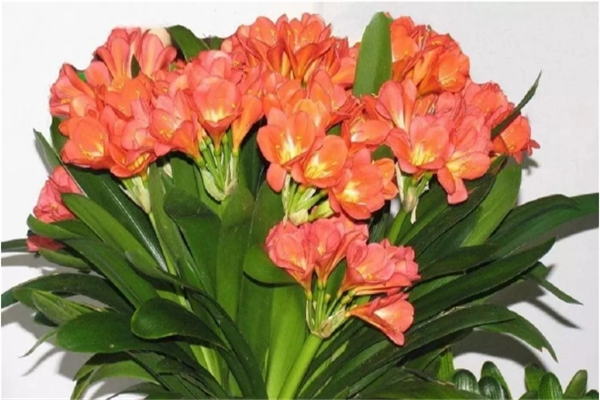
Behead a wilted clivia and turn it into a spectacular clustered clivia!
The first method to grow clivia into a clustered clivia is to use the "beheading" method, forcing the clivia to "push out" new shoots. This method is suitable for clivia whose leaves have spots and have turned yellow, but whose root system is intact. If it is a healthy large clivia, then Huahua does not recommend using this method!
Steps:
1. Prepare a sharp blade and disinfect it with alcohol.
2. Take the clivia with rotten leaves out of the pot, use the knife to cut off the top, cutting off all the leaves.
3. Trim the old roots and hollow roots, then soak the clivia roots in a potassium permanganate solution; if you do not have it, you can use gentian violet instead. Soak for 5 minutes, then take them out and dry them in the shade.
4. Prepare the soil by mixing 4 parts coarse river sand, 3 parts soft pine needles, and 3 parts leaf mold. Sun the soil for a few days before potting to reduce bacterial infection.
5. Bury the old roots of the clivia in the soil, with the cut surface of the roots exposed above the soil. Water sparingly at ordinary times; the soil only needs to be slightly moist, and never waterlogged.
6. The process of forcing shoots takes a relatively long time, at the fastest three months, and at the slowest about half a year for shoots to appear. The small green dots growing on the roots are the new shoots.
7. This top-cutting method is the fastest way to cultivate a clustered clivia, and the shoots appear at relatively uniform times, with evenly sized leaves and blooming times that are not far apart.
8. Overall, this method requires patience. If your clivia is in poor condition or growing poorly, with diseased leaves, you can give it a try. Beginners who have just started growing clivia should not try it rashly!
When a clivia is well grown, it bursts with small shoots, crowding the whole pot!
After a clivia has grown for three or four years, if cared for properly, it will also produce some side shoots, and if not divided into separate pots, it will eventually grow into the form of a clustered clivia. Clivia is a fertilizer-loving plant, and to produce small shoots, nutrition must keep up, so how should you fertilize?
Steps:
I. Applying base fertilizer
1. When repotting, first cover the bottom of the pot with a layer of soil 2 to 3 cm thick, then sprinkle on some cooked melon seeds or hemp seeds, then cover with soil again; about 20 seeds at a time is enough.
2. For the clivia that loves to "crack" melon seeds, melon seeds are an excellent slow-release fertilizer. Over the next six months to a year, the fertilizer effect of the melon seeds will be released slowly and gently.
II. Topdressing during the growing season
1. Collect the pork bones, chicken bones, and so on left over from everyday meals, add clean water and boil them to remove the salt. Then take them out, let them dry, and put them in the sun to bake for 3 to 5 days.
2. Use a hammer or a garlic pounder to smash the dried bones, grinding them as fine as possible. When using, dilute with 20 times clean water, and use 1 to 2 times a month.
That is all for the methods of turning a clivia into a clustered clivia.
As long as you have patience and slowly accumulate experience,
your flowers will surely be grown better and better!