How do you care for gloxinia (Sinningia speciosa) so it blooms in a spectacular full pot?
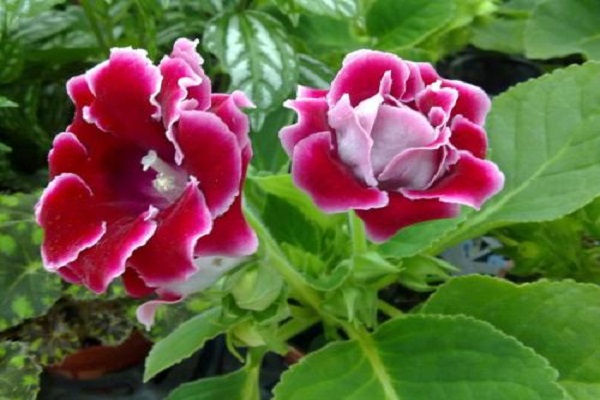
1. Growing medium
If you want it to fill a pot with blooms, first the growing medium must be done well. The soil in the pot can be made by mixing some rotted leaves, animal manure and soil. If you have perlite, you can add that in too.
2. Watering
If you want good blooms, you also need to water well. Normally do not put in too much water, otherwise the roots and stems rot easily, the leaves wither, and in serious cases the whole plant dies. In summer, when the weather is hot, water once or twice a day, and sprinkle the water evenly. During the flowering period, do not let rain fall on it. In winter, the soil in the pot should be on the dry side, not too wet.
3. Light
Always maintain good light, so the flowers bloom well. It does not like very intense sunlight; half sun is enough, so during its growing period do not let strong light scorch it. In summer, place it somewhere with shade, and make sure it is well ventilated, otherwise the leaves wither and the flowers it produces do not look good. The temperature it likes is 10 to 25 degrees, but the temperature it needs differs by season: from January to October it is 18 to 25 degrees, and from October to January of the following year it needs 10 to 12 degrees. Only when the temperature suits it can it grow emerald-green leaves and brilliant flowers.
4. Fertilizing
It loves fertilizer. From the time its leaves emerge until it blooms, apply fertilizer once a week; you can use an organic liquid fertilizer. Once the flower buds appear, add phosphorus fertilizer. When adding fertilizer, do not contaminate the leaves; after each fertilizing, rinse the leaves with water to keep them clean.
5. Pinching
Before it blooms, prune the branches and leaves, cutting off the topmost shoot, so more side branches grow and more flowers form. Pinching should be done early, so it does not affect the opening and shaping of the flowers. After flowering, if the leaves around the flowers affect the flowers' growth, you can also cut off leaves as needed, which can make the plant fill the pot with blooms and look even better. After pruning, the plant can produce around 18 flowers, and that is a pot bursting with blooms, very stunning and beautiful.