How can Gloxinia be grown to extend its flowering period?
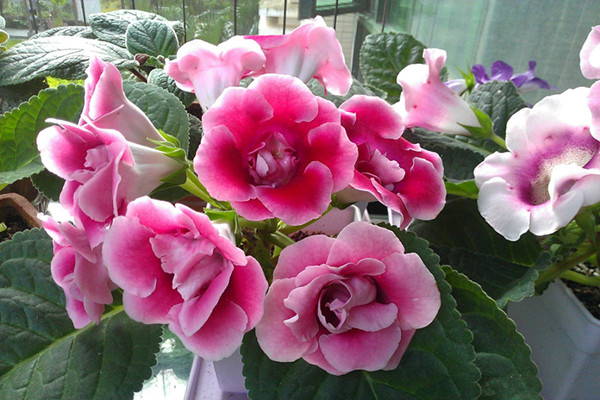
1. Temperature:
Generally speaking, this flower needs an ambient temperature between 18°C and 25°C from January to October, and after October it needs an environment of 10°C to 12°C. Accordingly, during its flowering period we can give it a growing environment of 18°C to 25°C, allowing it to grow more comfortably, and the flowering time will naturally be extended.
2. Light:
This plant normally needs shading as it grows and cannot adapt to overly strong light. During its flowering period, we should increase the shading time to avoid it receiving too much light, which would prevent normal growth. This practice can effectively prevent the flowers from withering quickly, thereby extending its flowering period.
3. Growing medium:
To extend its flowering period, its roots must be well cared for during cultivation. Its root system is relatively delicate, appearing fibrous, and cannot adapt to soil that is too wet or very sticky and heavy, so during cultivation the soil should already have been changed to loose soil with good drainage, irrigation, and aeration. We can use a mix of leaf mold, vermiculite, pine needles, and fully decomposed mushroom compost to grow it. This can also effectively provide nutrients for the development of its flower buds.
4. Fertilizing:
This flower needs a large amount of fertilizer when it blooms, and if the flowering period is to be extended, then even more nutrients will be consumed, so we must replenish nutrients in time. From the time its leaves unfold until before it blooms, thin cake fertilizer water must be added every week, and when the flower buds form, bone meal or phosphate fertilizer should be applied.