Turmoil over the Matoushan landfill: Shouting "satoyama" while dumping waste in the countryside
At the junction of Qishan, Neimen and Tianliao in Kaohsiung, there stands a lone hill that resembles a galloping horse, hence its name Matoushan (Horse Head Mountain). It is the center of faith for local farmers, who call it the "White Horse General."
In June 2015, a 28.7-hectare valley on the east side of Matoushan became the subject of a development application by the waste disposal company Fujun Company to build a Grade B waste landfill. All at once, the current fault conditions in the Matoushan area, whether groundwater exists in the badlands geology, whether water sources could be polluted, and just how great an impact the landfill would have on the ecological environment all became focal points of public concern. Many figures spoke out publicly, including Chen Yu-feng, an academic giant in the field of ecology, Liu Hung-chang, a world-renowned scholar of terrestrial crabs, and renowned directors Wang Shaudi and Ko I-cheng, all calling for caution, saying that Matoushan is rich in ecology and should not be developed rashly.
Yet what the residents who have lived in Matoushan for generations fear most is that when the overall ecology is threatened and the farming environment is polluted, the agricultural culture accumulated over the past will be unable to continue, their way of life will be disrupted, and rural development in the future will be out of the question. So will farmers still have a chance to live and work in peace and contentment in Matoushan?
Seventy-six-year-old Xue Mei (left) lives right next to the landfill site. If the development project is approved in the future, the area behind her traditional three-sided courtyard house will be separated from the landfill by only a single wall. For Xue Mei, farming is the meaning of life. It was only when the landfill development project appeared that she realized she might lose the work of farming that has been her life's occupation.
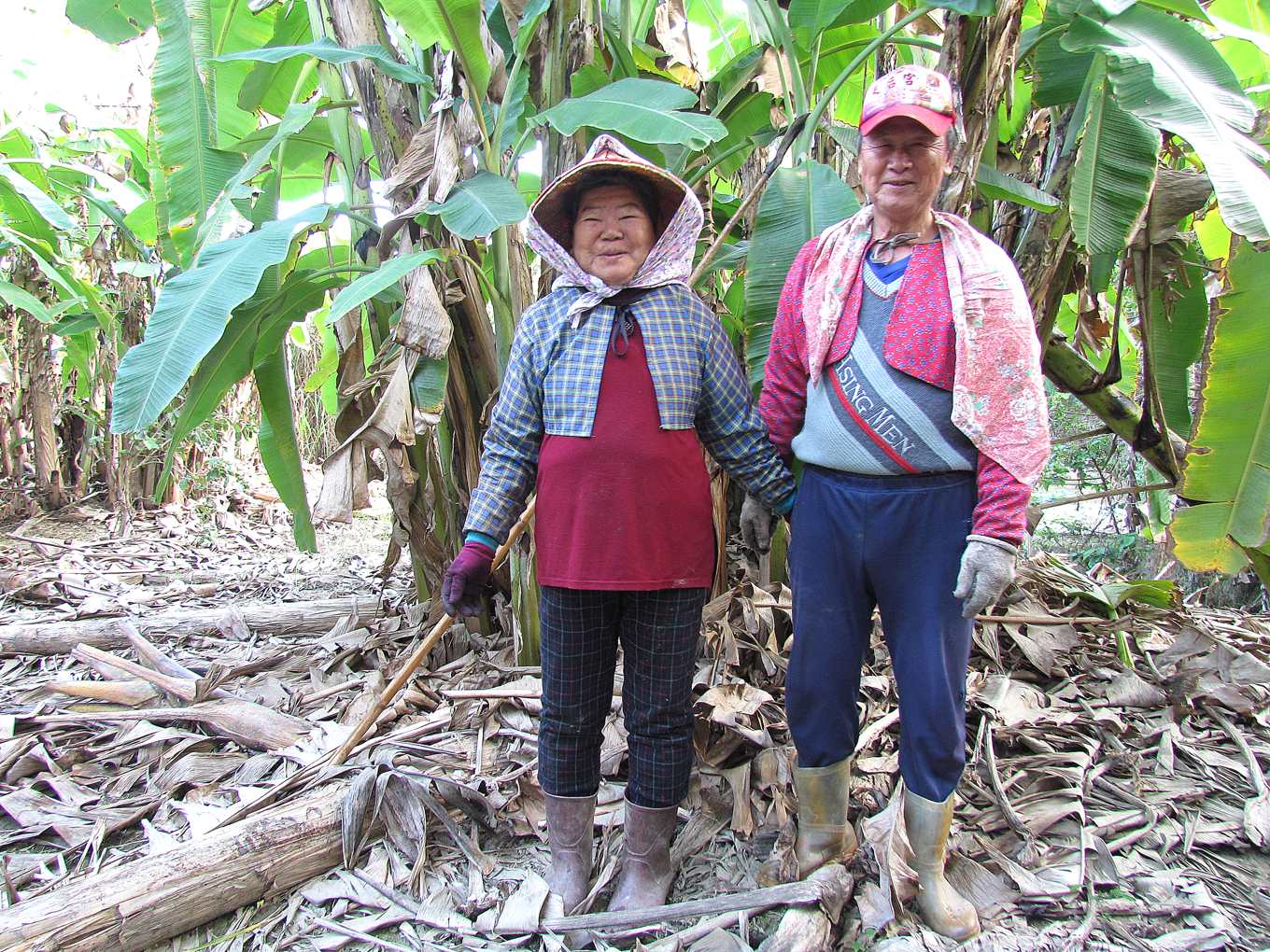

Fujun Company's Grade B industrial waste landfill development project has already entered the stage of the environmental impact assessment conference. At 2 p.m. on March 2, the Kaohsiung City Environmental Protection Bureau will continue to convene the environmental impact assessment review committee. Since the current controversy over the landfill mainly centers on four themes - "the current fault conditions at the site," "whether groundwater exists in the badlands geology," "whether groundwater could be polluted," and "just how great an impact the landfill would have on the ecological environment" - for the farmers who keep watch every day at Mayun Temple, the possible environmental impact of the landfill is not merely a matter of scientific data experimentation and analysis.
Farmers worry that when the overall ecology is threatened and the farming environment is polluted, the agricultural culture accumulated over the past will be unable to continue and future rural development will stagnate or even disappear. So will farmers still have a chance to live and work in peace and contentment in Matoushan?