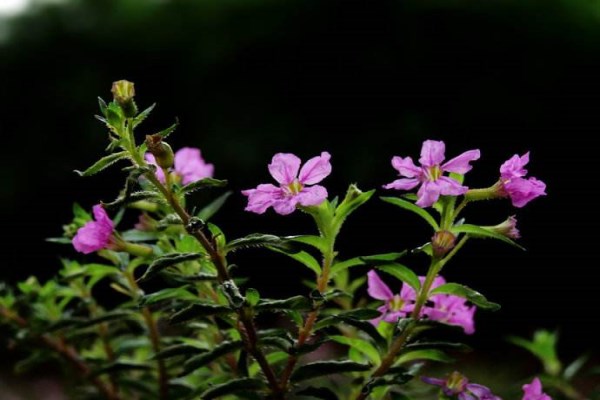
How do you grow Cuphea hyssopifolia (false heather) so it bursts into a full pot?
1. Potting soil
Generally, if the potting soil chosen is good, the plant will grow more vigorously and easily burst into a full pot, because all nutrients need to be absorbed from the soil. The potting soil for growing it generally needs to be sandy soil, and its drainage needs to reach a certain level, otherwise it can easily cause its roots to rot and wither and die. Then there is air permeability, which also needs to be good, so the roots can breathe at all times and grow more easily.
2. Light
Suitable light conditions can let it grow more vigorously and burst into a full pot more easily.
It does not have very high requirements for sunlight; generally full-day exposure or half-day exposure is fine, and it can also grow in shade. But if it receives too much sunlight, its growth and development will be more vigorous. So in spring and autumn, try to give it full-day sunlight, because the sunshine in these two seasons is not too strong and will not scorch it. But in summer, it needs to be properly shaded to avoid wilting from the sun. In winter, full sun is also fine, so that it is in a relatively warm environment. Its growth is relatively slow in winter itself, so this can appropriately speed up its development.
3. Pruning
If it grows wildly and looks messy, or its shape is different from what you expect, you can prune it, which can promote the growth of other branches and produce more flowers, thus bursting into a full pot. Generally in spring, the whole plant can be pruned once uniformly, and at other times small pruning can be done as you like.
4. Temperature
Maintaining the correct environmental temperature helps its growth, and you will then grow a Cuphea hyssopifolia that bursts into a full pot. Generally this flower likes a relatively warm environment, and a temperature of 25°C is most favorable for its growth, so try to maintain this temperature to speed up its growth rate. In winter, the flower can be moved indoors to avoid frost damage.
5. Fertilizing
Generally, fertilizing needs to be done from March to May each year to lay the foundation for more flowering in summer, which makes it easiest to burst into a full pot.