Detailed Explanation of Pest and Disease Control Methods and Techniques for Sambucus javanica
1. Specific Diseases
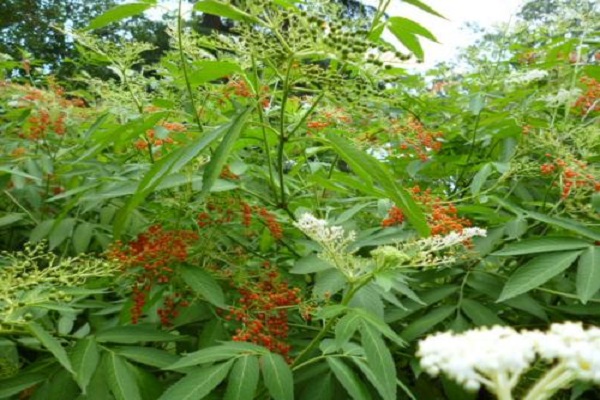
Because most Sambucus javanica that people had seen before was growing in the wild, no one had paid close attention to it. Since a large area of Sambucus javanica was planted in Jiangxi, everyone has begun to study the pest damage affecting Sambucus javanica.
According to research, we have learned that the roots of Sambucus javanica are constantly rotting, and the specific pathogen causing the rot is Fusarium. Fusarium is a fungus that can be both parasitic and saprophytic, and it can cause rot in multiple parts of many plants. Generally speaking, the occurrence of root rot is actually caused by three factors working together: first, the plant itself; second, the pathogen; and third, environmental conditions. Because the factors are very complex, treating it is quite a headache.
2. Treatment Methods
Because the pests and diseases of Sambucus javanica are caused by several factors working together, if we want to treat it, we must target the causes and formulate scientific countermeasures in order to effectively prevent and control this disease.
In fact, we have several methods that can relieve Sambucus javanica from its predicament. One is to use plants for control, because certain plants contain specific substances that can inhibit the production of pathogens. We can also produce pesticides made from microorganisms to inhibit this fungus.
In addition, we can also use some chemical pesticides to treat this disease. Generally, we use carbendazim and dexon, among others. Besides these, several other pesticides can also play a fairly good role in this regard, such as mancozeb and chlorothalonil.