What is the difference between Picrorhiza kurroa and Coptis chinensis? Learn to tell them apart correctly
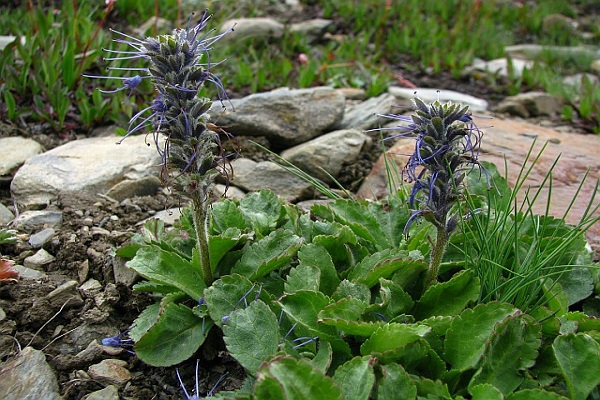
1. Genus and family
This is arguably the most fundamental difference between them, since genus and family are the basic criteria by which we distinguish different plants. The first plant belongs to the family Scrophulariaceae and the genus Picrorhiza; the second belongs to the family Ranunculaceae and the genus Coptis. The first plant is also known as "Hu lian" and "Ge gu lu ze"; the second is also known as "Wei lian", "Chuan lian" and so on. Differences in genus and family determine their differences in many respects.
2. Distribution areas
First, let us talk about the difference in their elevation ranges. The former is mainly distributed at elevations of 3,600 to 4,400 m, growing among rocks or stone piles in alpine regions; the latter is distributed at much lower elevations by comparison, mainly within the range of 1,500 to 2,300 m, mostly in dense forests. Next is the difference in their distribution areas: the first type of plant is especially abundant in India and Indonesia; while the second type is very widely distributed in China, mainly in Sichuan, Guizhou, Hubei, Hunan and other provinces.
3. Medicinal value
This is not to say that one is more valuable and the other less, but that they differ in their main therapeutic effects. For example, the first plant is mainly used to reduce deficiency heat, while the second is used to purge stomach fire and clear heart fire, and can also be used to remove toxins.
4. Appearance
The main difference between them is in the leaves. The former has spoon-shaped leaves; the latter has ovate-triangular ones.
5. Flowering and fruiting periods
The first type flowers in June and fruits in July; the second blooms from February to March and bears fruit from April to June.