Grow succulents this way for plump, rosy-red leaves and no root rot for 10 years
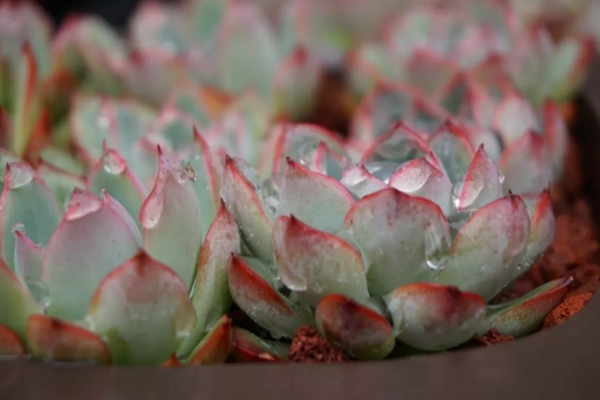
Mix succulent soil this way to prevent root rot for 10 years!
The reason succulents have such strong drought tolerance is thanks to their water-rich leaves and stems, which can provide moisture during waterless seasons.
But this also creates a problem - they are naturally rich in water, so if the soil retains too much water or watering is done improperly, they can easily die from excess moisture.
Therefore, to grow succulents well, you need to start with the soil mix!
Succulents are loved by flower enthusiasts for their brilliant colors, strong drought tolerance and easy care. They are a lazy person's plant - they can still grow very well without watering for months!
1. What types of soil mixes are there?
Succulent soil mixes can be divided into two categories: granular soil and peat/coco coir types.
Granular soil is the collective name for volcanic rock, green zeolite, maifan stone, akadama and the like. They are a kind of mineral ore that can drain water, prevent root rot and release trace elements.
I like to use volcanic rock and green zeolite because they are inexpensive and affordable. Generally, volcanic rock:green zeolite can be used at 2:1.
Green zeolite:
Volcanic rock:
The peat/coco coir type is a mixture of peat and coco coir. I mix and use them at a ratio of peat:coco coir 2:1. It can absorb nutrients and retain water.
2. How to mix soil for succulents?
I am in Fujian, where summers are hot and rainy, and the growing environment is a terrace. This requires configuring soil with very good drainage, and at this time you need to add more granular soil. This is because granular soil can drain water quickly, thereby avoiding death caused by water accumulation.
In an environment like a balcony, where moisture evaporates slowly, you also need to increase the granular soil in the mix.
My suggestion is a ratio of granular soil:peat/coco coir type 2:1. This soil mix drains well, and even if you accidentally overwater, it can drain in time. If you are in a northern region with little rainfall, you can reduce the proportion of granular soil and grow them at a 1:1 or 1:2 ratio.
Grow succulents this way for plump, rosy-red leaves!
I wonder if any flower enthusiast would say: Oh dear, why are other people's succulents so beautiful, while mine are all green! Actually, this is because your care is improper, which is why they are all green!
To grow succulents with brilliant colors, you can sum it up with a formula: temperature difference + water control + long sunlight = brilliant colors. As long as everyone grows succulents according to this formula, even in Fujian you can grow them beautifully.
1. Temperature difference
Temperature difference refers to the difference between day and night temperatures. The greater the temperature difference, the easier it is for succulents to become beautiful. Generally, in autumn, winter and spring the day-night temperature difference is large, so basically succulents can only have brilliant colors during this period. This is related to chlorophyll and chromoplasts, which involves cell microstructure and is unrelated to this article, so I will not elaborate here.
2. Water control
Water control means controlling watering. Succulents originate from South Africa, where it is dry and rains little. Succulents have adapted to the local environment, and only in a dry environment can they grow beautifully, so you must control water!
So how should you control water? With a soil mix like the one I described above, you can water once every half month. When watering, a sunny afternoon is best, and you must water thoroughly. When moisture is controlled, succulents grow compactly and have high ornamental value.
When it rains, you must shelter them from the rain, otherwise they are prone to black rot after heavy rain! If you cannot shelter them from the rain when it rains, then dry the water on the succulent leaves and keep them out of sunlight for two days.
3. Long sunlight (more than 5 hours)
In autumn, winter and spring the temperature is low. Give succulents long sunlight, and with the combined effect of temperature difference and water control, chlorophyll synthesis in the succulent body slows down, and chromoplasts display brilliant colors.
At this time, place the succulents in the spot with the best sunlight and quietly wait for them to "color up"!
That is all for today's introduction!
Do any flower enthusiasts still have questions?
Why not leave a message to Huahua for advice right away!