Reserved Japanese vs. Warm Taiwanese: OMIJIKA's Adventure, Paddling with All Their Might
In Journey to the West, Tang Sanzang and his companions travel to the Western Heaven to obtain the sacred scriptures, an adventure whose outcome is unknown and fraught with danger. For three people from Japan - Yasumasa Endo, Mao Ikeda, and Kumi Kono - Journey to the West is the perfect metaphor for their own journey west to Taiwan to seek the scriptures. "Even now, when I pass by stinky tofu, I still have to pinch my nose. Only when I can adapt to that smell can I become a true Taiwanese," one says. "Taiwanese people are very 'hot' - they will help you with tremendous enthusiasm, but when they get angry, they're terrifying too." "The language barrier really does make daily life inconvenient, but after living in Taiwan for a year, I can roughly understand Chinese now." This adventure has not yet reached its destination, and the three continue heading west.
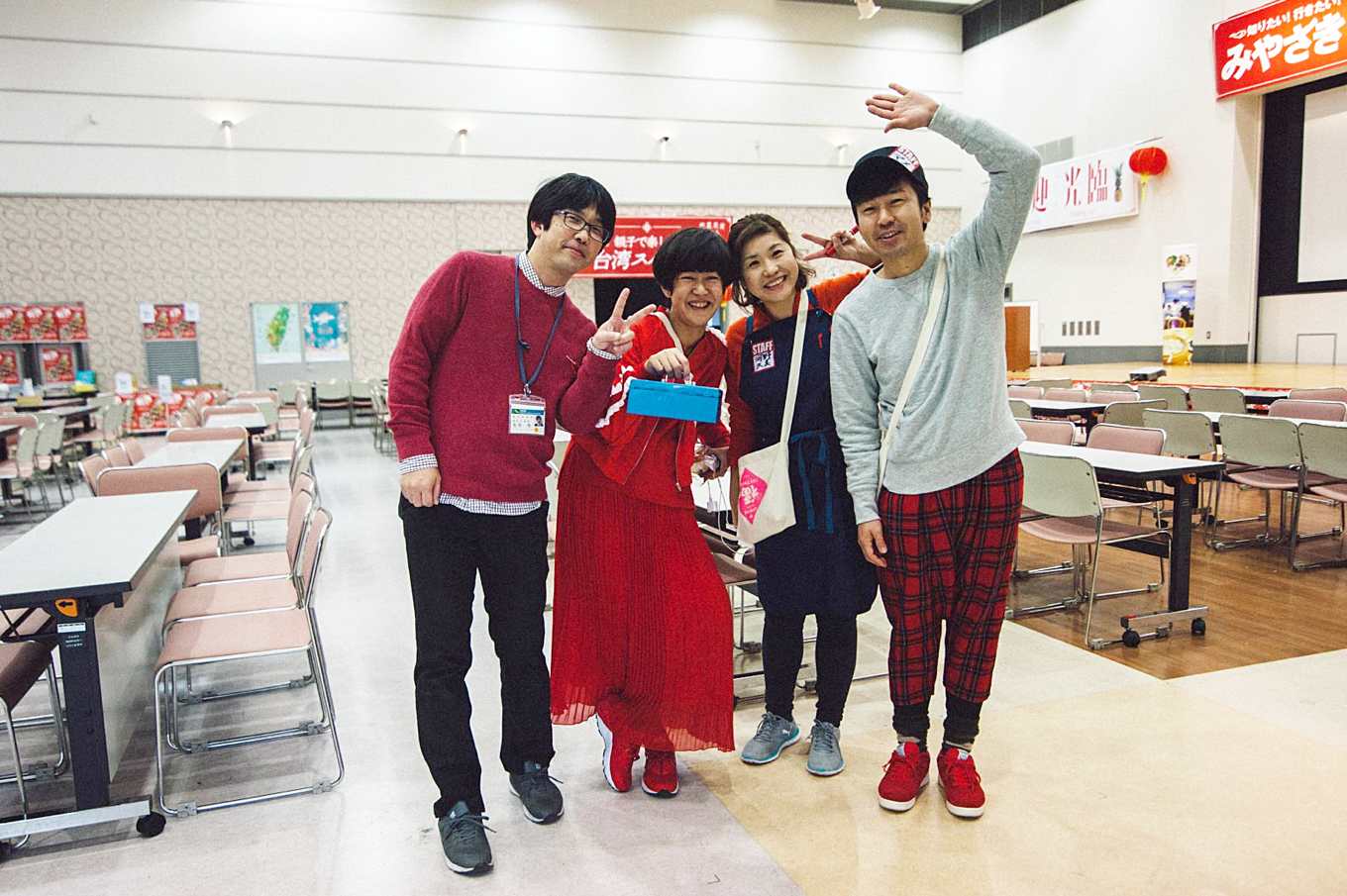

Japan has strong organizational norms; Taiwan has resilient grassroots strength
The visit to Yilan also left a deep impression on Yasumasa Endo's wife, Mao Ikeda. "Japan is relatively an organizational society. Take organic agriculture, for example - the government sets out all the regulations one by one: who you can sell to, what price is good. It's a top-down regulatory form of agriculture." But when they went to Shengou Village in Yilan, they discovered that Taiwan's friendliness and organic agriculture were very interesting. Although the Taiwanese government also has regulations, "farmers scattered everywhere, besides following the rules, also come up with many ideas. Everyone wants to do a little more, and the spontaneity is very high. This kind of grassroots, land-friendly action from civil society is very different from Japan's top-down approach, and it was a huge stimulus."
Taiwan and Japan share deep historical ties. The Yilan County History Museum even records that Saigo Kikujiro, who once served as the head of the Yilan Prefecture, was the son of Saigo Takamori, a famous hero of Japan's Meiji Restoration. Saigo Takamori once came to Su'ao in Yilan to gather military intelligence, and even lived with a local woman and left behind an illegitimate child. Kumi Kono says, "After coming to Taiwan, I discovered many things about Japan that I didn't even know myself. Starting from our own country's history, I found that there were things not recorded in history textbooks - that our ancestors did these things! Because of these historical stories, I feel that my heart has grown a little closer to Taiwan."
Taiwan's strong human warmth has its own unique colors
"For me, going to Taiwan doesn't feel like going abroad - it feels more like going somewhere near Miyazaki. I feel a special affection for it," Kumi Kono says with a smile. "Taiwanese people and the land are both very 'hot.' Taiwanese people are usually warm as fire - when you need help, they'll help you until you're overwhelmed, with an friendliness that can't be explained. This would absolutely never happen in Japan. But when they get angry, they're especially terrifying too."
Mao Ikeda, who previously worked in the design and fashion industry, also says Taiwan has unique colors and human warmth. "In the past I often went to Tokyo, Paris, New York and other places. The people's colors, expressions, and atmosphere in those places are all much the same. But Taiwan has its own unique characteristics - not only is it close to nature, it even has a unique warm atmosphere. These are all Taiwan's own colors. Especially Taiwan's human warmth - they help beyond helping, and get angry beyond angry. Japan has already lost, or rather never had, this kind of human warmth. This is something Japan very much deserves to learn from Taiwan, to make life warmer and richer."
The trio's studio OMIJIKA continues to promote Taiwanese culture
This unique Taiwanese human warmth melted the reserved Japanese way of doing things. The trio's studio, OMIJIKA, carries on the energy of the Taiwan Juku and keeps promoting Taiwanese culture. Mao Ikeda says that when the one-year Taiwan Juku program ended, many participants felt it was a pity the activities were over. These people formed the "Taiwan Gang," hoping to continue the Taiwan Juku, to increase the momentum of civil society exchange - and that is how the Taiwan Culture Festival came about, as the first step in exchange. Kumi Kono also says, "During my participation in the Taiwan Juku, I met many friends. In my past work I had never encountered so many interesting people. Through the process of exchange, I gained confidence, and the connections between people created a multiplier effect - it felt like there was nothing we couldn't do."
The power of heart-to-heart exchange also led the three to decide to keep promoting Taiwan Culture Festival 2.0 and 3.0. Kumi Kono says, "Although the project is exhausting, the task isn't finished yet. There were many things we couldn't fit into this Taiwan Culture Festival, so I hope we can keep holding it." Mao Ikeda says that this Taiwan Culture Festival still leaned toward a Taipei show - all things you can see in Taipei. But the many warm people they saw in Taoyuan and Yilan in the past, and the special flavor of the countryside - these couldn't be included this time. She hopes next time they can showcase characteristics beyond Taipei.
Taiwan's inclusive heterogeneous culture sparks different chemistry
"Culture is really about expanding the space of your imagination, seeing different worlds. Different cultures aren't about opposition and conflict - they can combine with each other to become a more complete culture." Yasumasa Endo points out that Japan has a history that has been reorganized, with a unified, singular culture. But on such a small island as Taiwan, there are Minnan, Hakka, indigenous peoples, and mainlander ethnic groups, each preserving their own food, culture, religion, and customs. Taiwan also has corresponding positive responses, actively promoting these different cultures. "Japan, on the other hand, tends toward making everyone the same, not standing out with distinctive features."
Regarding inclusiveness toward different cultures, Mao Ikeda also says, "These differences and characteristics stimulate each other, creating diversity and inclusiveness. This is the greatest meaning of culture - it can stimulate you to appreciate different things." Kumi Kono says, "When cultures clash, many unexpected chemical reactions happen. It's very exciting."
Paddling with All Their Might on the Adventure
"The ship of adventure has already left the harbor. Now we're just paddling with all our might. We may be paddling in a mess. After moving to Taiwan, it feels even more like being at the center of a whirlpool. But where exactly are we paddling to?" Mao Ikeda can't help but feel confused about this. Yasumasa Endo, as the company president, sees this adventure as Journey to the West. "Taiwan is the West we must explore. Through exchange, we connect the two sides, bring Taiwan's treasures back to Japan for exchange. This kind of stirring, adventurous, exchange-filled journey is what I truly want to do."
Are Yasumasa Endo and Mao Ikeda, the couple at the center of the whirlpool, still adapting to life as immigrants in Taiwan? "I don't like stinky tofu. I must work hard. One day, when I can walk past it without pinching my nose, that's when I'll be a true Taiwanese." Mao Ikeda says with a smile that after immigrating to Taiwan, most of what they've encountered has been goodwill and positive things. Because of Taiwanese people's enthusiasm and friendliness, they were able to integrate into society quickly. "Except that people here don't drive very much in accordance with traffic rules - I often feel my life is under threat." Yasumasa Endo also says, "There's nothing I'm particularly unaccustomed to. As for language, although expressing myself in Chinese is difficult, my listening comprehension is gradually improving."
After the interview, Yasumasa Endo hurriedly stuffs his paper and pen into his large backpack, puts on a young-style flat cap, shoulders his backpack, and heads out to Chinese class like any ordinary student, constantly walking on the road to seek the scriptures.