How to grow potted azaleas and key points to note
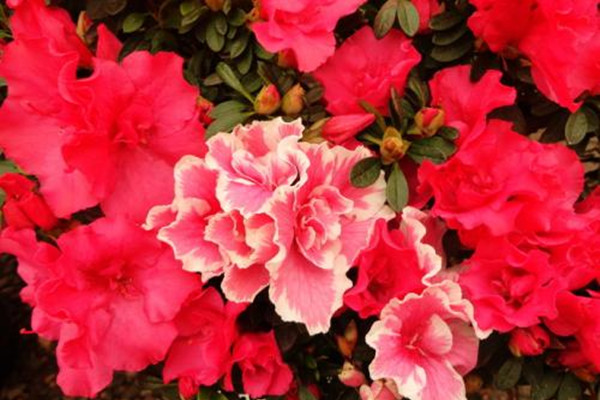
1. Growing medium:
Because this plant's roots are very fine and delicate, when choosing a growing medium it is best to pick something loose, with soil that drains and retains water freely; generally a finer-grained medium such as leaf mold or peat soil is mixed with a coarser-grained medium like perlite, stirred evenly together to make the growing medium for the plant. Before transplanting into a pot, a little bone meal can be placed on top of the medium as a base fertilizer, then some old dead branches should be pruned away, which helps new roots to sprout.
2. Ventilation:
The pot should be placed outdoors in a spot with good air circulation, not in a stuffy place with poor ventilation, and not in a closed room, otherwise the plant's leaves will turn yellow and then drop off until it dies.
3. Light:
This flowering plant does not need overly intense light; indirect scattered light is fine. In addition, when the temperature is above 35 degrees, be sure to shade it.
4. Fertilizer and water:
1. Because its roots are rather fine and weak, and it fears waterlogging, yet cannot tolerate a lack of moisture either, soil that is too dry or too wet will both cause poor growth. So water only after the potting soil has dried out; if it is not dry, leave it alone. In winter it enters dormancy, so the supply of water and fertilizer should be stopped; if the temperature is higher, water once every 3 to 5 days. When flowering, water once a day. In summer, besides replenishing water, also mist the branches, leaves and the ground. In autumn, just keep the potting soil moist.
2. When fertilizing, mainly use organic fertilizer; during the peak growing season, add a light fertilizer once a week, and when flower buds are forming, spray a special solution to make the flower colors more vivid. In summer and during flowering, fertilization should be stopped, and after flowering add phosphorus and potassium fertilizer twice.
5. Pruning:
It grows rather slowly, so when young it does not need pruning, but after a few years, when the branches have grown numerous, we need to prune away the weak, overly long, and diseased branches in early spring, and cut off the axillary buds around the flower buds so that nutrients are concentrated. Every year after the flowers have bloomed, help it prune away the spent flowers to ensure nutrients are retained, which benefits flowering the following year.