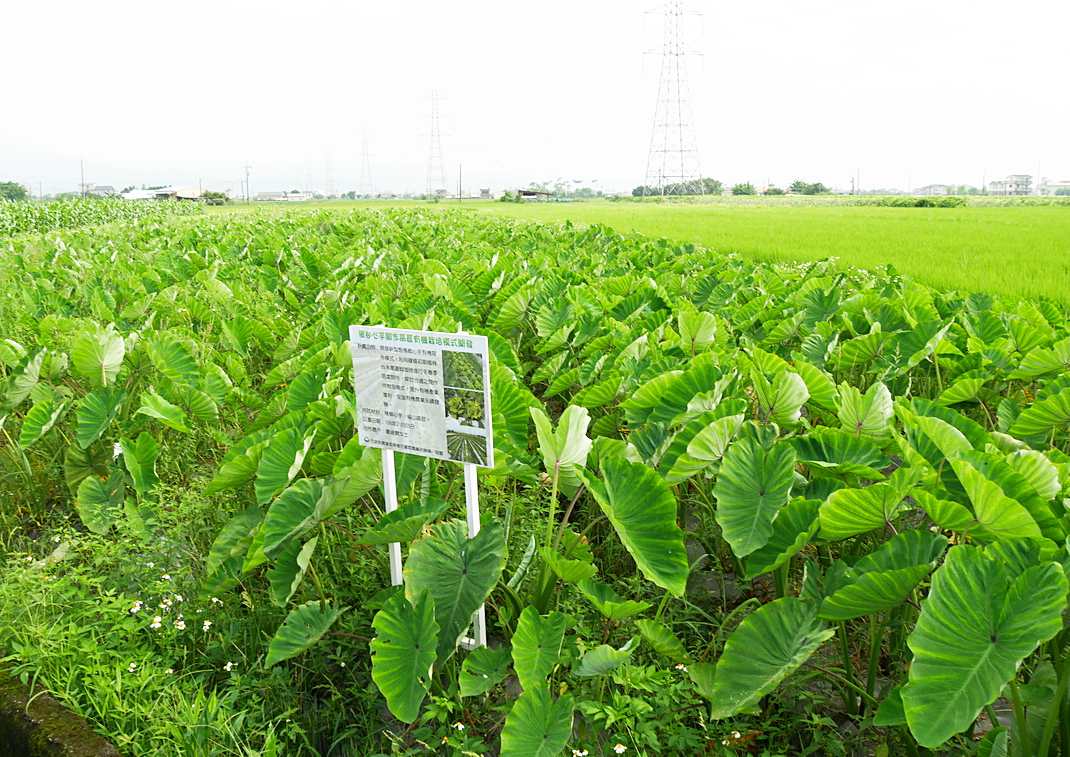
Two harvests from one field! Growing organic betel-nut taro and Fu Shan lettuce together, both grow well without extra fertilizer
Xingjian Organic Village in Sanxing Township, Yilan County is a well-known organic settlement, and in recent years it has even tried organic cultivation of betel-nut taro. However, pesticides cannot be used in the organic taro cultivation process, pest and disease management is not easy, and organic fertilizer is not as fast-acting as chemical fertilizer, so the taro grown is one size smaller than conventionally grown taro that uses pesticides and chemical fertilizers, causing farmers to hesitate to try it lightly. The Hualien District Agricultural Research and Extension Station developed the "organic taro-lettuce intercropping cultivation model," which allows lettuce to be harvested while taro is being grown, not only improving farmland use efficiency but also increasing farmers' income.
What is the "organic taro-lettuce intercropping cultivation model"? It means "intercropping" taro with Fu Shan lettuce, growing two crops in the same organic field to increase farmers' returns. Lin Wenhua, assistant researcher at the Lanyang Branch Station, pointed out that in the Yilan area betel-nut taro is mostly planted in November and harvested in August of the following year. When the taro seedlings are first planted they are still very small, and the remaining space on the ridge surface is still quite spacious. At this time, using the space to plant Fu Shan lettuce, commonly known as "mainland A-choy," not only does not affect the growth of the taro seedlings, but can also greatly improve the use efficiency of the organic field area.