Why do the cherry blossoms at Hutoushan shed tears? Chen Xingzong on human expectations overriding plant needs
On the morning of the first day of the Lunar New Year, I took some time to stroll and soak up the sun at Hutoushan, and once again received a lesson from nature.
Walking onto the cherry blossom trail, just hearing its name stirred up expectations, but as I walked on, it was truly disappointing. It felt as if I could hear every cherry tree crying out and pleading for help.
The cherry trees here are very unhealthy. In mild cases, the bark is dull, the branches are thin and weak, and the flower buds are not plump.
In severe cases, steel cables are needed to help hold them upright, and there are many rotting tree hollows, as well as dead branches severely infected with saprophytic fungi, which ultimately cannot escape the fate of heavy pruning and felling.
In short, it would not be an exaggeration to rename this cherry blossom trail a cherry blossom cemetery.
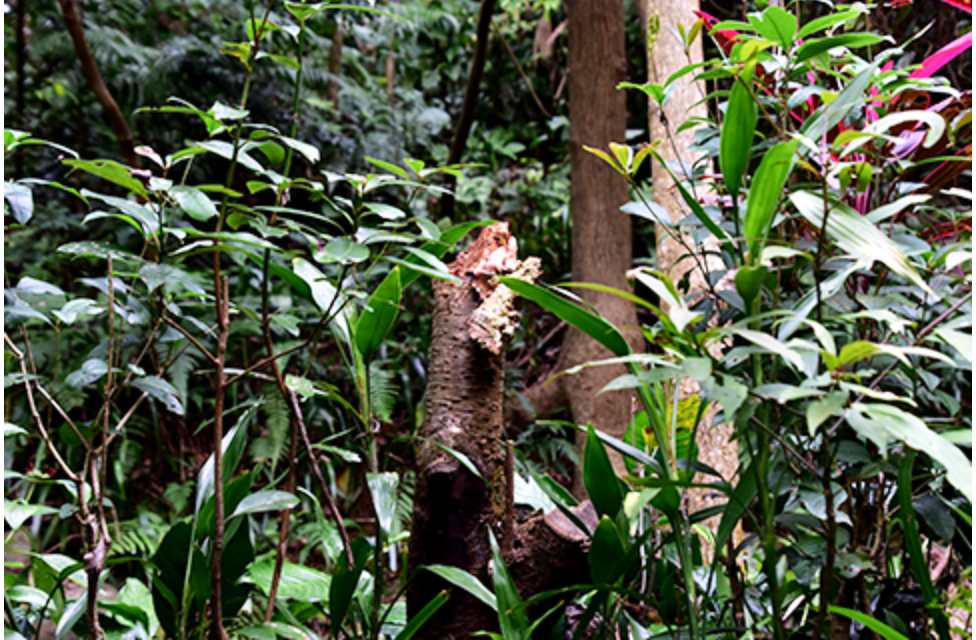
After the cherry blossom craze of the past, who hears the voices of the cherry blossoms?
Taiwan once had a cherry blossom craze. In every corner of the island, it seemed that local officials all had images of falling cherry blossoms in their minds.
So at that time, cherry trees were planted in many places.
Ou Xikun and Chen Qiling pointed out that Taiwan's native Taiwan cherry (Prunus campanulata) is distributed in broadleaf forests from 500 to 2000 m across the island, and requires 190CU to complete dormancy. Therefore, the warmer the region (including lower latitude or lower altitude), the relatively harder it is to satisfy 190CU.
After nearly twenty years, many cherry trees have died. In the case of Hutoushan, insufficient sunlight and insufficient chilling accumulation should be the most fatal pressures borne by the cherry trees here.
When human expectations override the needs of plants
The plants or crops around us may be planted, for our specific purposes and in the ways we envision, in the spaces we expect.
We ignore their reasonable needs and think only of our beautiful expectations. When these plants or crops deviate from our expectations, or even die, that is also a reasonable process.
Recently, I have been thinking about the issue of biological disturbance. It seems that when considering the health of our crops and soil, the impact of human activities cannot be ignored. When looking at ecology, human influence must also be factored in.
(Reference: Ou Xikun, Chen Qiling (2002): Assessment of chilling requirements of Taiwan's native Taiwan cherry. Chinese Agricultural Research, 51(1): 25-32. Taichung: Agricultural Research Institute)