How do you practice sustainable aquaculture? Mai Jiahao shares his internal skills
Text/Mai Jiahao
Do you still remember that in 2015, with Taiwan under global scrutiny, the European Union issued a yellow card to express dissatisfaction with Taiwan's distant-water fisheries management? Two years later, this glaring yellow card is still a hot potato for Taiwan's fisheries authorities. In 2017, the Fisheries Agency rolled out the "Distant Water Fisheries Act" and the other two fisheries laws, hoping that by raising relatively stricter distant-water fisheries management standards and increasing fines, it could get the European Union to nod and agree to withdraw the yellow card, but during the EU's return visit, it was questioned whether enforcement was actually being carried out.
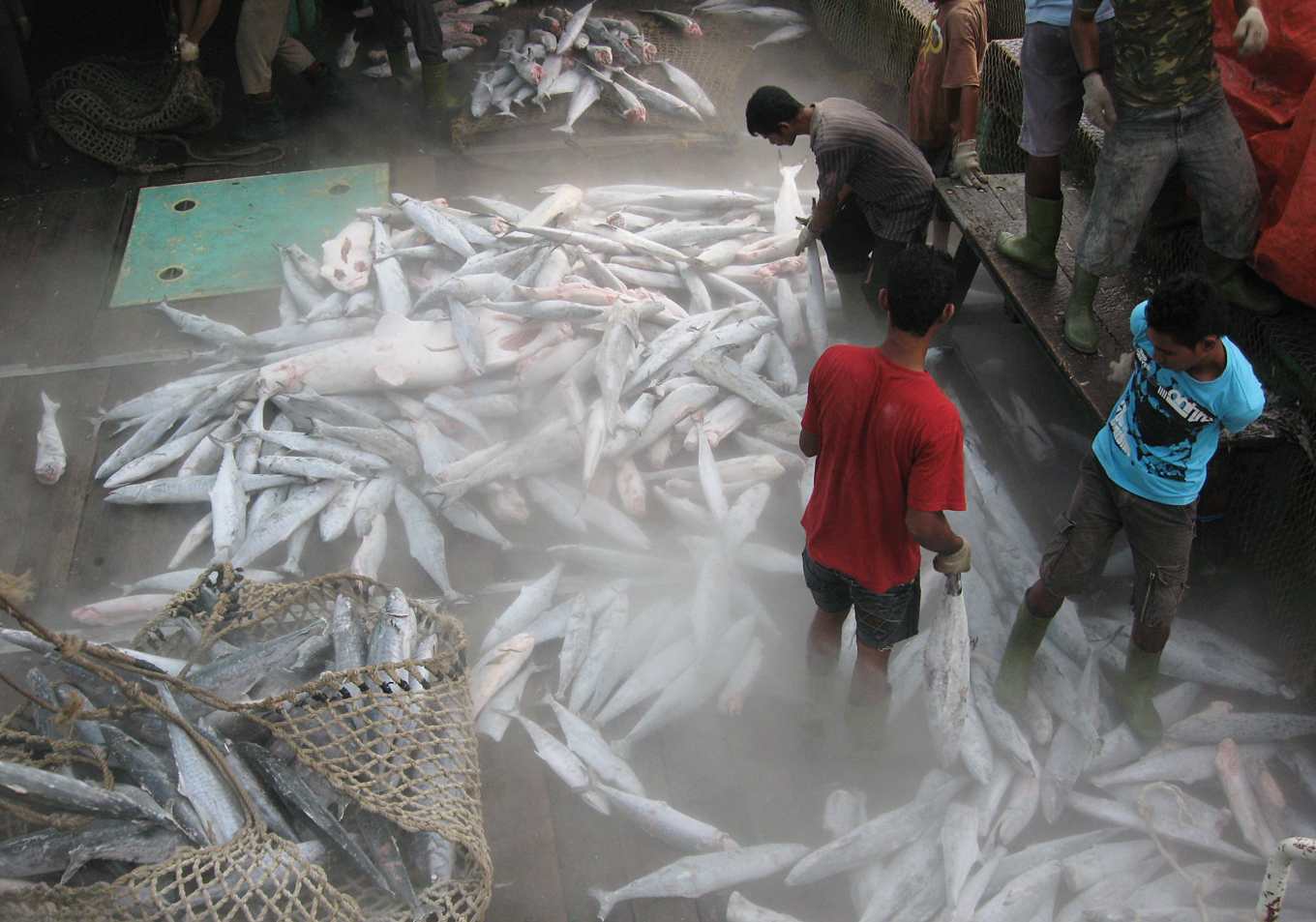
In fact, Taiwan's powerful fishing fleet, if you call it powerful and outstanding, is based on the number of vessels and advanced equipment, using quantity to offset quantity; more boats means more catch. In the past era when fishery resources were abundant, this was an obvious logic: build boats, make money, then build even more boats, not to mention that the government at the time strongly supported it, so the number of vessels doubled and multiplied, creating what is now the largest yet most fragile hand behind the world's distant-water fisheries.

Only at the end comes "coercion by force." The government should formulate regulations based on diverse factors such as international trends, scientific evidence, and local culture, and implement the laws, requiring operators to actually comply so that it does not become an empty slogan. Likewise, the policy-making process should, as mentioned above, involve the participation of all schools of thought, all kinds of experts, and even all stakeholders' opinions to avoid making decisions behind closed doors, so that policy becomes the backing of stakeholders rather than an issue of mutual harm.
Taiwan is a maritime power and should not take the easy way out
You who are in Taiwan, or even a member of the Earth, have you opened your heart to accept the evolution of the times? When conversations at dining tables abroad have moved beyond whether something tastes good or is cheap, and now add "Where does it come from?" and "Is this seafood caught in an environmentally friendly way?", when faced with such questions, do you still cling to the old mindset, letting operators try every possible way just to obtain "cheap goods" to satisfy our consumption habits?
When operators abroad have already begun thinking about how to effectively "trace sources" and then introduce certification systems, or even "blockchain technology," are Taiwan's coastal and offshore fisheries, distant-water fisheries operators, and companies in the seafood supply chain... still only concerned with how to take the easy way out and with small immediate profits? As a maritime power, Taiwan's fleet not only operates in Taiwan's coastal and offshore waters but also ventures into the three major oceans. If you do not practice a few more moves, how can you compete with others?
Mai Jiahao
Master's degree in Science and Technology Policy, University of Sussex, United Kingdom
Currently Fisheries Project Manager at Bureau Veritas Certification, Taiwan Weili International Quality Assurance Certification Co., Ltd.