Detailed Guide to Asparagus Planting Techniques and Seasonal Timing
Plant asparagus once and harvest for 20 years - you will surely want to grow it too! Let's talk about whether to start from seed or from crowns, and how to plant them.
It is a plant that yields for many years, and the key points of planting are to dig deep holes and use plenty of compost;
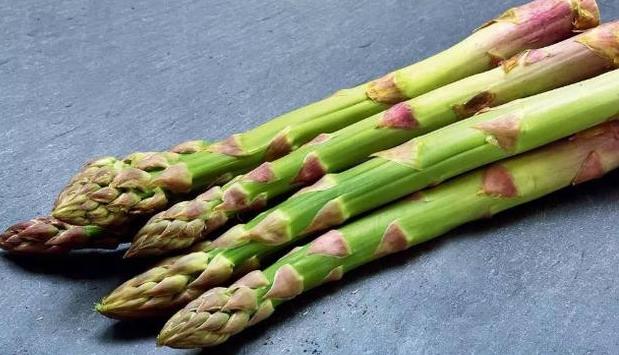
The asparagus seed coat is very thick, so the seeds must be soaked to promote germination and treated with chemicals before sowing. Sowing: Generally, the method of raising seedlings and then transplanting is chosen, as this gives a better emergence rate and better seedling quality, and can shorten the root-crown growing period in the field. Planting out: This is a very important step in the growing process. Before planting out, the land must first be prepared. The planting-out time is generally chosen in early May each year, which is more favorable for the growth of asparagus.
Asparagus is a well-known vegetable in spring. Because of its high yield, good sales and high food value, it is deeply loved by people. Many people now also want to increase their income by growing asparagus, so before planting, what everyone is probably more concerned about is its planting techniques and planting time!
Asparagus planting techniques
1. When preparing to grow asparagus, pre-treating the seeds is very important. The asparagus seed coat is very thick because it has a relatively thick waxy structure, which makes it hard for the seeds to absorb water. Therefore, asparagus seeds must be soaked to promote germination and treated with chemicals before sowing. Before sowing, soak them in warm water at 24-30°C for 2-6 days, changing the water 1-2 times each morning and evening. Once the seeds have absorbed enough water, take them out, prepare some fine sand and mix it with the seeds, put the mixture into a container, cover it with a wet towel, and begin promoting germination at 24-30°C, turning it once each morning and evening, 2 times in total per day. After repeating this for 5 to 8 days, they are ready for sowing.
2. Once the seed work is done, comes the actual sowing work. Direct sowing is not a very good option, so we generally choose the method of raising seedlings and then transplanting. This makes it easier to manage the seedlings, and not only is the emergence rate higher, but the seedling quality is also better, and it can shorten the root-crown growing period in the field. For centralized seedling raising, the seeds can generally be sown when about 10% of them have sprouted. Before sowing, sufficient base fertilizer should be applied to the nursery plot, and flat beds about 1.2 m wide should be made. Using the method of sowing individual seeds, the sowing depth is determined by the weather temperature. If sowing early, a spacing of 10×10 cm is generally sufficient.
3. Planting-out technique is a very important step in the asparagus growing process. Before planting out, the land must first be prepared. The planting-out time is generally in early May each year. Open north-south trenches at a row spacing of 1.5 m, with a trench width of 40 cm and a depth of 40 cm. Into the trenches, apply 5000 kg of high-quality organic fertilizer and 50 kg of nitrogen-phosphorus-potassium compound fertilizer per mu, mix with the soil, and water the planting trenches to settle them. When the asparagus seedlings reach 60-70 days of age, with 4-5 sturdy seedlings and a plant height of 15-20 cm, they can be transplanted and planted out. At planting out, a row spacing of 150-160 cm and a plant spacing of 35-40 cm is optimal. This will be more favorable for the growth of asparagus.
When (in which season) to plant asparagus
Generally, for open-field asparagus growing, start raising seedlings in April and May each year, and plant in July and August in summer. If growing asparagus in a greenhouse, you can also raise seedlings in August and September, and plant in October in autumn. So friends who need this must grasp these two best planting times.
The planting time for asparagus is generally in summer or autumn each year. When planting, the land must be well prepared, and then the seeds should be germinated. Management after planting is also very important, and it is also very susceptible to pests and diseases, so work in this area must also be strengthened.