How to fertilize Pachystachys lutea? Learn to master the correct fertilizing method
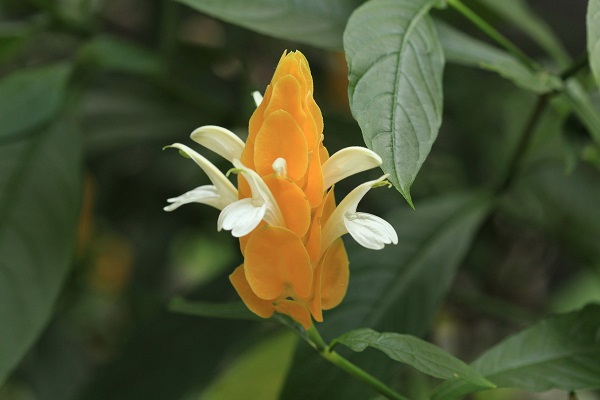
1. Fertilizer requirements
Overall, the demand is relatively high. However, this also changes according to the seasons. In other words, the period of high demand is mainly during its vigorous growth stage.
2. Principles to follow when fertilizing
The first is the concentration of the fertilizer. If it is too concentrated, it will not only fail to promote its growth and flowering, but will instead cause harm. So the number of applications can be appropriately increased, but the concentration must not be too high. In addition, the amount and frequency of fertilization should be specifically adjusted according to changes in time, and also adjusted according to changes in temperature. You cannot apply a one-size-fits-all approach.
3. Specific fertilizing methods
(1) First, let's talk about the season when growth is relatively fast. Organic fertilizer needs to be applied once every half a month or so, and of course the concentration should be relatively dilute.
(2) Then there is the stage after the flower buds appear. Some 0.2 percent (KH2PO4) solution needs to be added to the fertilizer water applied, so as to meet the plant's demand for flower fertilizer during the flowering period.
(3) Then there is the period from late autumn into winter. Because the temperature at this time is relatively low, there is basically no need for fertilizer, so we should gradually reduce the amount of fertilizer at this time, and by winter we can simply stop fertilizing.
(4) Another thing to note is that if the temperature is higher than 35 degrees or lower than 15 degrees, fertilization should be suspended.
4. Precautions
(1) When actually fertilizing, be careful not to get the fertilizer water on the plant's leaves, otherwise it will cause some diseases.
(2) If the leaves appear yellow, you can add some (FeSO4) to the fertilizer water, which helps to alleviate it.