-

How to Grow Dawn Redwood (Metasequoia): Planting Methods and Care Essentials
A detailed guide to dawn redwood planting methods and care techniques, including how to grow dawn redwood, soil preparation, light and watering, propagation methods, fertilizing and pruning, pest and disease control, and other practical information.
-
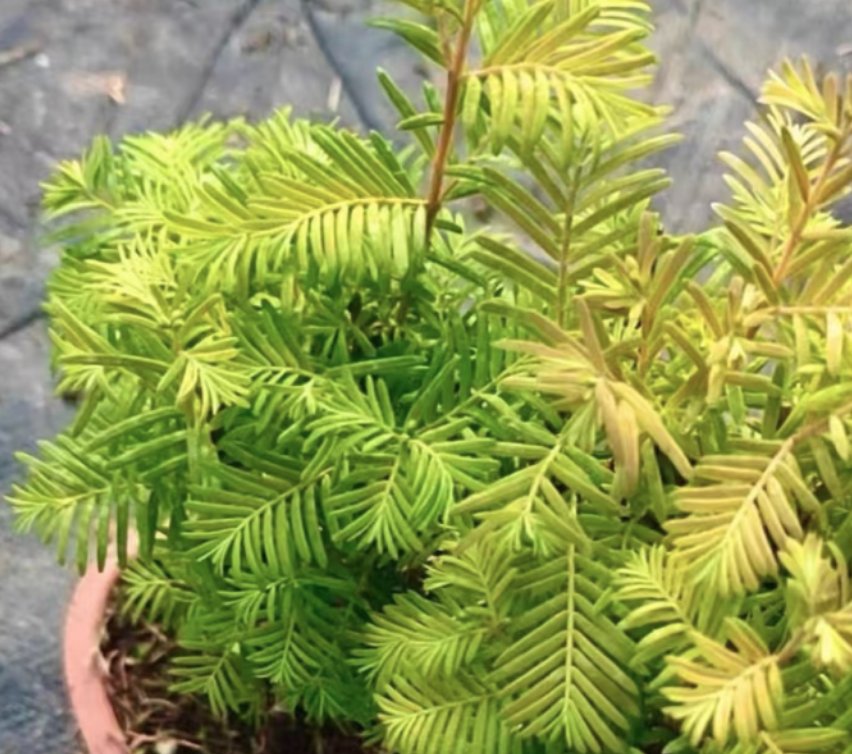
The symbolic meaning of the Metasequoia glyptostroboides
Today, let's talk about the ancient and rare plant "Metasequoia". It belongs to the genus Metasequoia in the Cupressaceae family. In appearance, its leaf color
-
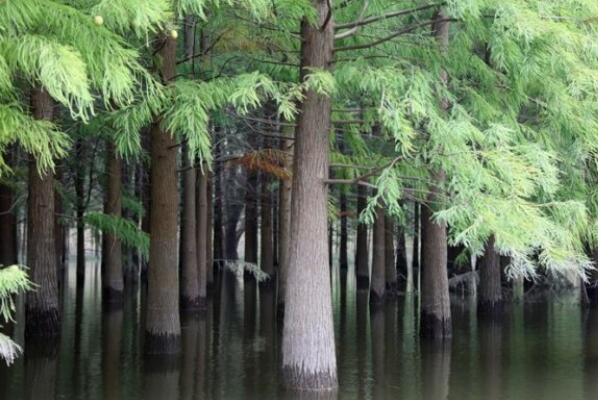
When does the rare tree species Metasequoia glyptostroboides shed its leaves? Its medicinal value and bonsai pruning and care
The dawn redwood (Metasequoia glyptostroboides), also known as the water fir, is a tall deciduous tree reaching up to 35 m in height. It has a graceful form and is also a famous garden tree species. So when does it shed its leaves? What medicinal value does it have? How do you care for and prune a bonsai? According to Taxodiaceae data, the leaves of the dawn redwood are arranged in two rows on lateral branchlets, feather-like, and fall together with the branches in winter.
-
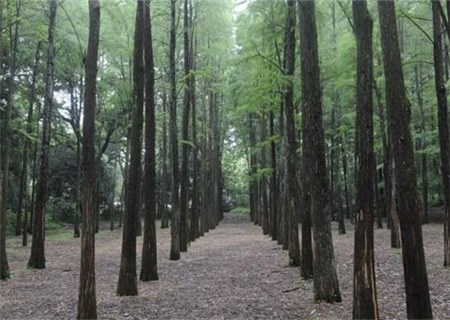
How do you care for a dawn redwood (Metasequoia glyptostroboides) bonsai? How much does one cost? What are its future prospects?
The dawn redwood is highly adaptable, prefers moist conditions and grows quickly, and is cultivated everywhere south of Beijing. Its wood is light and soft, its uses are wide-ranging, and its tree form is graceful, making it an ornamental garden tree. So do you know how to care for a dawn redwood bonsai? How much does one cost? What are its future prospects? In the dawn redwood trading market we learned the current latest prices of dawn redwood
-
What are the key management techniques for Metasequoia (dawn redwood) seedlings?
The management method for Metasequoia (dawn redwood) seedlings is as follows: after the seedling survival stage comes the young seedling stage. From mid-July to mid-September is the rapid growth period of the seedlings, and fertilizer and water management should be strengthened, with topdressing about once every 20 days, which is beneficial to seedling growth. Water promptly during drought, and in rainy areas pay attention to drainage. In the seedling nursery, pay attention to timely loosening of the soil and weeding. In the same year, the seedlings can reach 50 to 90 cm in height, with a ground diameter of 0.8 to 1.2 cm, and can be released from the nursery for afforestation.
-
What are the cultivation regions of the dawn redwood (Metasequoia glyptostroboides)?
The cultivation regions of the dawn redwood (Metasequoia glyptostroboides) are: the dawn redwood is naturally distributed within an area of about 600 square kilometers in the mountainous region where Lichuan County in Hubei, Shizhu County in Sichuan and Longshan County in Hunan adjoin one another. At present, it is cultivated in all the provinces and regions of China from the Great Wall and southern Liaoning in the north to the Sichuan Basin in the west. It has also been introduced to more than 50 countries and regions in Asia, Africa, Europe, the Americas and other continents.
-
What are the main pests and diseases of dawn redwood (Metasequoia glyptostroboides)? A full analysis of control methods
Damping-off (seedling blight): after leaf fall in autumn, promptly clear away and dispose of fallen leaves, then spray the ground with 3-5Be lime-sulfur mixture. Dawn redwood red blight: immediately after the plum rain season ends, spray the canopy with 1% Bordeaux mixture 4-5 times, once every 10-15 days, to control the occurrence of the disease. Tortricid moths: the best control period is the early stage of damage when the larvae emerge from overwintering (early to mid-April); 50% fenitrothion, 40% dimethoate, 80% dichlorvos and pyrethroid insecticides can be used; in dry seasons (July and August) when outbreaks occur
-
What are the control methods for Metasequoia red blight?
Control methods for Metasequoia red blight: 1. Strictly enforce plant quarantine, prohibit the introduction of diseased seedlings into new areas, and immediately remove and burn any diseased seedlings found. 2. Do not plant seedlings too densely. Ensure ventilation and light penetration, reduce air humidity, apply more phosphorus and potassium fertilizer, and less nitrogen fertilizer, to promote robust seedling growth and improve disease resistance. 3. During the disease period from April to May and September to October, spray 1:1:200 Bordeaux mixture, or 50% Tuzet wettable powder at 500 to 1000 times dilution, 25% carbendazim
-
How is artificial supplementary pollination carried out for dawn redwood (Metasequoia glyptostroboides)?
The artificial supplementary pollination method for dawn redwood (Metasequoia glyptostroboides) is: the dawn redwood has unisexual flowers and is monoecious; when the male cones turn from green to yellow, select individual trees that are robust and bear many inflorescences, pick inflorescences with branches and cultivate them indoors to collect pollen. Cut the flowering branches into lengths of about 20 cm, whittle the base into a straight cross-sectional cut, tie every 20 to 30 branches into 1 bundle, align the bases of the branches, attach 1 ball of absorbent cotton soaked in nutrient solution to the cut surface of the branches, wrap the outside of the cotton ball with plastic film (to prevent the nutrient solution from evaporating), hang the bundled inflorescences indoors, lay white glossy
-
Cultivation Techniques for the Suitable Tree Species Metasequoia in Jiangxi Province
Metasequoia (Metasequoia glyptostroboides) is an ancient and rare tree species native to Hubei, China, and has been listed as a national first-class protected tree species. It is fast-growing, light-demanding, cold-tolerant, and highly adaptable, and has been introduced and cultivated throughout both northern and southern China. In its place of origin, it is distributed at an elevation of 900-1500 m, mainly growing in well-drained gullies, streamside areas and mountain hollows with deep, fertile soil. However, it grows poorly in low-lying wet sites where the water table is too high and water accumulates for long periods. When introducing it, alluvial soil along rivers in the plains is generally preferable, while in hilly and mountainous areas it grows vigorously on mountain yellow soil, and mountain hollows and relatively moist gentle slopes at the foot of mountains are more suitable.
条件筛选