-

Eight Key Points for Late-Season Wheat Sowing to Achieve High Yield
Generally, late-season wheat has less accumulated temperature before winter, fewer roots, fewer leaves, fewer tillers, small and weak seedlings, and a rapid development process in spring. To ensure high and stable yields of late-season wheat, sowing must adhere to comprehensive cultivation techniques focused on increasing fertilizer application, selecting improved wheat varieties suitable for late sowing and early maturity, and increasing seeding rate. The following eight points should be emphasized: 1. Early clearing of stubble: Without affecting the yield of autumn crops, strive to clear stubble early, prepare the soil early, and sow early, speeding up sowing progress and reducing the loss of accumulated temperature. For
-
How to skillfully manage late-season wheat? These technical points must be mastered
Ensure sufficient soil moisture and base fertilizer. For late-season wheat, never rush to sow by seizing moisture; on the premise of ensuring adequate soil moisture, apply heavy base fertilizer, and where conditions permit, apply 3-5 cubic meters of high-quality farmyard manure per mu; at the same time, according to yield requirements, mix 2/3 of the total nitrogen, phosphorus and potassium chemical fertilizers invested throughout the growth period with farmyard manure, spread them on the surface and plow them into the soil. Choose the right variety and increase the seeding rate. Late-season wheat is suitable for semi-winter varieties, which can be selected according to local conditions. At the same time, determine the actual number of days of late sowing according to local autumn temperatures. Generally, it is advisable to increase the seeding rate by 0.5 kg for each day of delayed sowing, and never
-
Improve late-season cotton ripening to enhance cotton quality and profitability
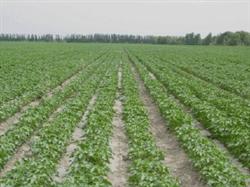
The fundamental measure to prevent premature senescence in cotton is to start with strengthening the basic construction of the cotton field, that is, deep plowing and thorough harrowing of the cotton field, increasing the application of organic fertilizers, and maintaining the balance of various soil elements. Once cotton enters the late growth stage, only the following remedial measures can be taken: 1. Fertilizer and water management should be based on the condition of the cotton plants...
-
What are the common late-season fruit diseases of walnut trees?
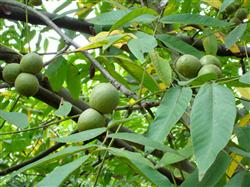
What diseases affect walnut tree fruit in the late season? The following diseases affect walnut tree fruit in the late season: 1. Walnut anthracnose. Disease symptoms: after the fruit is infected, brown to dark brown round or nearly round lesions appear on the rind, with a sunken center and small black dots, sometimes forming concentric rings. When air humidity is high, the lesions bear...
-
Purchasing Enters Final Stage, Late-Season Mid-to-Late Indica Rice Fluctuates Narrowly
Currently, mid-to-late indica rice purchasing in the main producing areas has entered its final stage. Supported by the minimum purchase price policy, mid-to-late indica rice purchase prices in the main producing areas remain relatively firm. Policy-based purchasing entities maintain purchase prices at 1.38 yuan/jin, while other purchasing entities offer slightly lower prices. Because
-
Early indica rice prices slide, yet 2014 mid- and late-season rice transaction volume climbs
From June 26 to July 2, the 2013 government-supported early indica rice auction in Hubei Province saw zero transactions, while the auction of 2012-produced early indica rice from local reserves showed a downward price trend, with the June average transaction price having fallen from 2,380 yuan/ton in January to 2,158 yuan/ton, a drop of 9.3%. Purchase prices for 2014-produced early indica rice in various regions also ran below the government support price, with the average purchase price of ordinary early indica rice in Wuhan, Jingzhou, Xianning and Huanggang ranging from 1.25-1.29 yuan/jin, and the average purchase price of high-quality early indica rice at 1.32-1.35 yuan/jin. In contrast to the sluggish early indica rice market, the 2014-produced government-supported mid- and late-season indica rice in Hubei Province saw active transactions. On June 30, Wuhan planned to sell 200,944 tons of 2014 mid- and late-season indica rice, with an actual transaction volume of 122,323 tons, a transaction rate of 60.87%, and an average transaction price of 2,813 yuan/ton.
-
Stepped-up efforts in mid- and late-season rice pest and disease control to ensure rice production safety
Website news: At present, mid-season rice is at the heading and grain-filling stage, and late-season rice is at the tillering to jointing stage, which is a critical period for the occurrence, development and damage of pests and diseases. In order to effectively control the damage of major rice pests and diseases and strengthen prevention and control measures, on August 20, the National Agricultural Technology Extension Service Center of the Ministry of Agriculture, together with the Department of Crop Production Management, held a national on-site meeting on the prevention and control of major rice pests and diseases in Nanchang, Jiangxi, observing a demonstration site for green prevention and control of late-season rice pests and diseases, holding discussions on progress in rice pest and disease control, mobilizing and deploying the prevention and control of major mid- and late-season rice pests and diseases, further implementing the Ministry of Agriculture's action to prevent disease and control pests to win a bumper autumn grain harvest, and ensuring rice production safety.
条件筛选