-
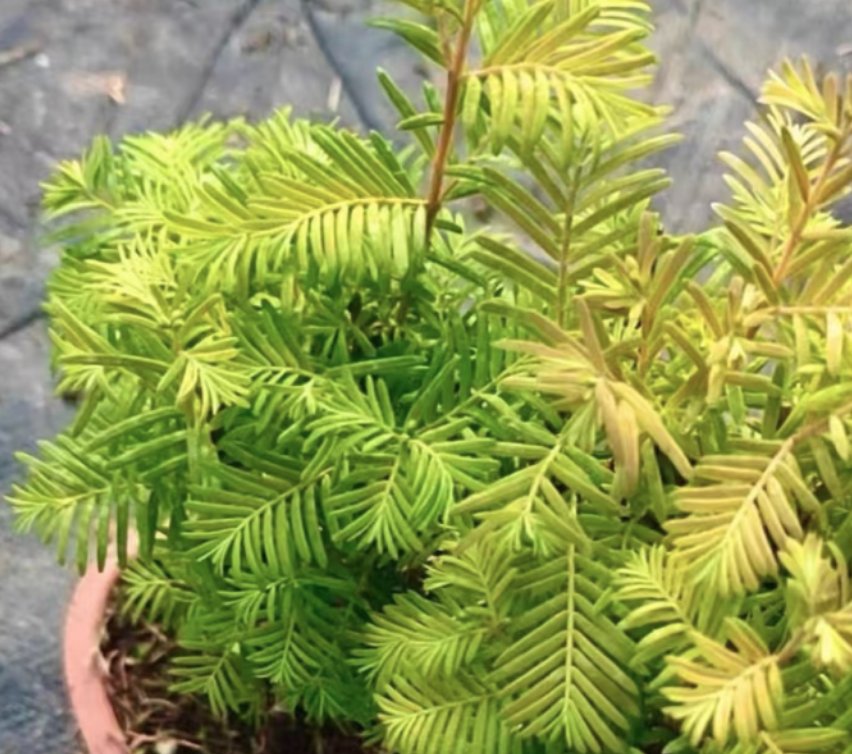
The symbolic meaning of the Metasequoia glyptostroboides
Today, let's talk about the ancient and rare plant "Metasequoia". It belongs to the genus Metasequoia in the Cupressaceae family. In appearance, its leaf color
-
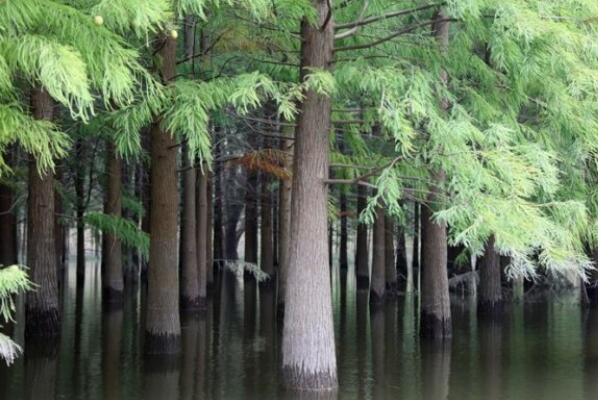
When does the rare tree species Metasequoia glyptostroboides shed its leaves? Its medicinal value and bonsai pruning and care
The dawn redwood (Metasequoia glyptostroboides), also known as the water fir, is a tall deciduous tree reaching up to 35 m in height. It has a graceful form and is also a famous garden tree species. So when does it shed its leaves? What medicinal value does it have? How do you care for and prune a bonsai? According to Taxodiaceae data, the leaves of the dawn redwood are arranged in two rows on lateral branchlets, feather-like, and fall together with the branches in winter.
-
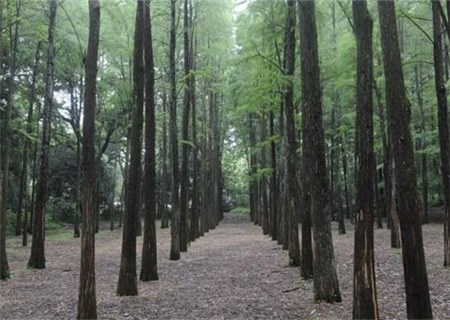
How do you care for a dawn redwood (Metasequoia glyptostroboides) bonsai? How much does one cost? What are its future prospects?
The dawn redwood is highly adaptable, prefers moist conditions and grows quickly, and is cultivated everywhere south of Beijing. Its wood is light and soft, its uses are wide-ranging, and its tree form is graceful, making it an ornamental garden tree. So do you know how to care for a dawn redwood bonsai? How much does one cost? What are its future prospects? In the dawn redwood trading market we learned the current latest prices of dawn redwood
-

What are the cultivation regions of the dawn redwood (Metasequoia glyptostroboides)?
The cultivation regions of the dawn redwood (Metasequoia glyptostroboides) are: the dawn redwood is naturally distributed within an area of about 600 square kilometers in the mountainous region where Lichuan County in Hubei, Shizhu County in Sichuan and Longshan County in Hunan adjoin one another. At present, it is cultivated in all the provinces and regions of China from the Great Wall and southern Liaoning in the north to the Sichuan Basin in the west. It has also been introduced to more than 50 countries and regions in Asia, Africa, Europe, the Americas and other continents.
-
What are the main pests and diseases of dawn redwood (Metasequoia glyptostroboides)? A full analysis of control methods
Damping-off (seedling blight): after leaf fall in autumn, promptly clear away and dispose of fallen leaves, then spray the ground with 3-5Be lime-sulfur mixture. Dawn redwood red blight: immediately after the plum rain season ends, spray the canopy with 1% Bordeaux mixture 4-5 times, once every 10-15 days, to control the occurrence of the disease. Tortricid moths: the best control period is the early stage of damage when the larvae emerge from overwintering (early to mid-April); 50% fenitrothion, 40% dimethoate, 80% dichlorvos and pyrethroid insecticides can be used; in dry seasons (July and August) when outbreaks occur
-
How is artificial supplementary pollination carried out for dawn redwood (Metasequoia glyptostroboides)?
The artificial supplementary pollination method for dawn redwood (Metasequoia glyptostroboides) is: the dawn redwood has unisexual flowers and is monoecious; when the male cones turn from green to yellow, select individual trees that are robust and bear many inflorescences, pick inflorescences with branches and cultivate them indoors to collect pollen. Cut the flowering branches into lengths of about 20 cm, whittle the base into a straight cross-sectional cut, tie every 20 to 30 branches into 1 bundle, align the bases of the branches, attach 1 ball of absorbent cotton soaked in nutrient solution to the cut surface of the branches, wrap the outside of the cotton ball with plastic film (to prevent the nutrient solution from evaporating), hang the bundled inflorescences indoors, lay white glossy
-
How to grow Dawn Redwood (Metasequoia glyptostroboides) from seed? A full breakdown of the key techniques
The techniques for growing Dawn Redwood from seed are: 1. Seed collection: Dawn Redwood flowers in early to mid-March, and the cones reach maturity from mid-October to early November of the same year. When the cone scales turn from green to yellowish-brown, crack slightly, and a small amount of seed falls out, the seeds are ready to collect. After the cones are collected, spread them out to air-dry or expose them briefly to the sun; the scales open and the seeds fall out. 2. Seed treatment: Before sowing, soak the seeds in cold water for 3 to 5 hours so they absorb water and swell fully, which aids germination and ensures even emergence. 3. Sowing: From late March to early April,
-
Dawn Redwood (Metasequoia glyptostroboides) Cutting Propagation Methods and Key Technical Points
Dawn redwood propagation by cuttings: from late March to early April, take cuttings and insert them immediately. Cut cuttings from 1- to 2-year-old seedling stock plants or from new shoots sprouted in the current year. Treat the lower end of the cuttings with naphthaleneacetic acid at a concentration of 0.5 per 10,000 (0.005%), soaking for 20 to 24 hours to promote rooting and improve survival. Insert about 120 cuttings per sq m. After insertion, keep the seedbed moist. New roots sprout in about 40 days; apply diluted human urine and manure once every 10 days, for 3 to 5 consecutive applications. In June, nitrogen fertilizer may be applied in small amounts several times, at 3 to 4 kg of urea per mu, diluted with water and poured on. In early August, apply phosphorus and potassium fertilizer once; per mu use
条件筛选