-

How to Grow Bird's Nest Fern in Water? Master Temperature, Light, and Water Change Techniques
How to grow bird's nest fern in water? This article introduces the key care points for water-cultured bird's nest fern, including how to select plants and wash the roots, temperature and light requirements, misting and moisture retention techniques, adding nutrient solution, and water change frequency, to help you easily grow a bird's nest fern with glossy green leaves.
-
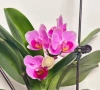
How often should you water a Phalaenopsis in autumn? Master the frequency and techniques to grow orchids in autumn without root rot!
Many friends who grow Phalaenopsis start worrying when autumn arrives: as temperatures gradually drop, they fear root rot if they water too much, but worry about drying out the plant if they water too little. So how many days apart should watering be? In fact, watering Phalaenopsis in autumn has its own rules: you cannot blindly fix a set number of days, and you also need to adjust based on its growth state. Below, we cover the autumn watering frequency, timing
-
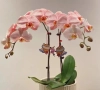
When growing Phalaenopsis (moth orchid) semi-hydroponically, water along the edge of the pot to prevent root rot; how should the watering frequency be set?
If there is a "lazy person's blessing" in Phalaenopsis care, semi-hydroponics definitely counts as one! You do not need to painstakingly remove the old potting medium, nor do you need to repot frequently, and the Phalaenopsis can still grow vigorously, making it especially suitable for beginners who dislike hassle. How exactly do you do it? It can be done in just a few steps, so let's go through it slowly. First, prepare these materials, all of which are common household items: none
-

Which potted plants do not need sunlight? Four small potted plants with low watering frequency
Insufficient indoor light and low watering frequency? These four potted plants do not need frequent sunlight, nor do you have to constantly remember to water them. They are suitable for busy people or beginners, and are simply a blessing for renters and overtime workers. Even if you occasionally forget to take care of them, they can still live quite vigorously. Small-leaf red nanmu: Small-leaf red nanmu (Syzygium buxifolium) looks especially delicate, with small oval leaves that are glossy green, and from a distance it looks like a mini forest. The best part is that it is not picky about light, so it can be placed in a corner of the living room or beside a desk, as long as it is not completely pitch-black. Watering is even more worry-free; water only after the soil has dried out completely, about once every ten days or so is enough, in summer when evaporation is fast at most once a week, and in winter once every half month is no problem. I once kept one, went on a business trip for half a month without tending it, and when I came back it still looked vigorous, just a little wilted leaves, and after a bit of water it perked up the next day, very easy to keep.
-

How to water a Phalaenopsis orchid? The correct soaking time and frequency
Experienced growers all know that the hardest part of keeping plants is watering. Although this seems like a simple issue, doing it wrong can easily cause irreversible "root rot," and the Phalaenopsis orchid (Phalaenopsis spp.) is the prime example. Many people just water it as a matter of course, paying no attention to the plant's condition, and in the end it drowns
-

Watering Methods and Frequency for Phalaenopsis Orchids Grown in Bark
When choosing a growing medium for Phalaenopsis orchids, bark has become the top choice for many growers thanks to its good air permeability and water retention. However, when growing Phalaenopsis in bark, getting the watering frequency and method right puzzles quite a few people. Water too much and the roots rot easily; water too little and the plant suffers from lack of water. Precisely mastering watering techniques is the key to growing Phalaenopsis well.
-

Fertilizing Methods and Watering Frequency for Phalaenopsis After It Spikes
When a Phalaenopsis sends up a flower spike, it signals that beautiful blooms are about to open. However, improper care at this stage can affect flower quality and how long the blooms last. Does a Phalaenopsis still need fertilizer after spiking? How many days apart should you water it after it spikes? Handling fertilizing and watering scientifically and sensibly plays a decisive role in the flowering quality and the length of the bloom period of a Phalaenopsis.
-
A Detailed Guide to the Flowering Mechanism of Phalaenopsis and Watering Frequency Through the Four Seasons
Many flower lovers regard the Phalaenopsis as the white moonlight of their hearts, because it comes in diverse varieties and, once in bloom, resembles the shape of a butterfly, looking lively and endearing. However, the issues most often mentioned in its care are yellowing leaves, drowning, or simply dying outright. In fact, the Phalaenopsis originates in tropical rainforests, and its care is inherently different from that of ordinary flowers.
-

How do you choose the right watering tools for Phalaenopsis orchids and control watering frequency and amount?
For Phalaenopsis orchids to grow healthily and produce captivating blooms, watering is a key step. And within that, choosing the right watering tools and precisely controlling watering frequency and amount are the secrets to successful care. Choosing watering tools: Long-spout drip kettle: A long-spout drip kettle is an ideal tool for watering Phalaenopsis orchids. Its unique design
-

What are the suitable fertilization frequency and fertilizer ratio standards for Phalaenopsis orchids?
The Phalaenopsis orchid is an elegant and beautiful flower, and fertilization is a crucial part of its care. Proper fertilization frequency and accurate fertilizer ratios can not only promote the healthy growth of Phalaenopsis orchids, but also make their flowers more brilliant and eye-catching. The fertilization frequency for Phalaenopsis orchids varies depending on their growth stage and seasonal changes.
条件筛选