-

Why Is Your Phalaenopsis Orchid Poor at Absorbing Nutrients? A Look at the Causes
Many flower lovers complain: "Why does my Phalaenopsis always look droopy, and it doesn't grow even when I fertilize?" Nine times out of ten, this is a nutrient absorption problem! Just why does a perfectly healthy Phalaenopsis end up poor at absorbing nutrients? Understanding the reasons behind it is the only way to treat the right cause. The most common reason - potting medium. Phalaenopsis is different from other flowers
-

Is More Flower Spikes Always Better for Phalaenopsis Orchids?
People often ask: when a Phalaenopsis at home suddenly puts out several flower spikes at once, is that a good thing or a bad thing? Does more flower spikes mean a more spectacular bloom? Many people growing Phalaenopsis always assume that more flower spikes is better, symbolizing a profusion of blooms, but the reality is not that simple - the number of flower spikes needs to be considered from multiple angles.
-

Lazy Person's Guide to Phalaenopsis: Choosing Between Bark and Sphagnum Moss and Their Differences
Growing flowers is all about avoiding hassle! Many lazy friends want to grow Phalaenopsis (moth orchid) but worry it takes too much effort, especially when it comes to choosing potting medium: should you use bark or sphagnum moss? Is the difference between them big? Today, from a "lazy person's perspective," let's talk about how to choose so that growing flowers is easy and worry-free! First, let's talk about sphagnum moss. Sphagnum moss absorbs water like
-
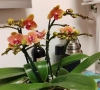
How to repot a Phalaenopsis orchid after blooming? The simplest method
After the Phalaenopsis orchid finishes blooming, repotting is a key step to make it burst into bloom again! Everyone, follow these super detailed steps to give your Phalaenopsis a comfortable "new home." 1. Preliminary preparation. Choosing a pot: a transparent plastic pot makes it easy to observe the state of the roots; a root-control pot helps root growth; a terracotta pot has excellent breathability. Remember, the pot must definitely
-
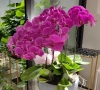
Reasons Why Phalaenopsis Plants Grow Crooked and How to Fix It
As an extremely popular indoor ornamental flower, Phalaenopsis (moth orchid) often grows crooked due to phototropism and its soft stems. Here is how to effectively correct the plant's shape and enhance the ornamental value of your Phalaenopsis. 1. Correction methods. Pot-turning method: after the flowers fade, rotate the pot 180 degrees, making use of the plant's tendency to grow toward light
-

Reasons for Tomato Flower Drop and Simple Solutions
Have you ever experienced the frustrating moment when your tomato plant is covered in flower buds but they keep dropping like crazy? Don't worry! Today I'll walk you through solving the flower drop problem step by step, so you can easily enjoy a bumper tomato harvest! Causes of flower drop: pollination failure. Tomatoes are self-pollinating plants, but indoors, without insects or wind to help, the pollen cannot naturally reach the stigma.
-

What plants to grow indoors in summer to repel mosquitoes? Recommendations for easy-care, effective flowers and herbs
In summer, mosquitoes buzz around everywhere. Lighting mosquito coils feels unsafe, and spraying floral water worries you about the strong smell? Actually, growing a few pots of "natural mosquito coils" at home works great! Which plants are both easy to grow and can keep mosquitoes out? When it comes to the champion of pest repellent plants, mint definitely ranks first! This stuff is simply a blessing for lazy people, as long as
-

How to choose a budding stimulant for Phalaenopsis orchids? You need to know the dangers of overuse
Friends who grow Phalaenopsis orchids surely want their plants to sprout lots of new shoots, and that's when they start wondering: which budding stimulant is actually reliable? And will using too much cause problems? First, let's talk about choosing a budding stimulant. What's common on the market now, like cytokinin-type budding stimulants, is quite popular, since they can stimulate the growth of Phalaenopsis bud points and make the original
-

How to Rescue an Orchid That Is Too Dry and Not Growing Roots?
Many flower lovers have encountered this problem when growing Phalaenopsis orchids: the pot feels bone-dry, and when you dig in, the roots look wilted, with no new roots in sight. Does a Phalaenopsis being too dry really affect root growth? And if it happens, how do you rescue it? Phalaenopsis is different from the common pothos and spider plant; its roots
-

Why is the Phalaenopsis orchid flower spike thin, and does thickness affect blooming?
During Phalaenopsis cultivation, a thin and weak flower spike is a fairly common care problem. The flower spike, as an important organ that carries flower buds and transports nutrients, has a growth state that directly affects the plant's ornamental value. The reasons the flower spike becomes thin are actually mostly tied to daily care. The first reason is insufficient nutrients. Phalaenopsis
条件筛选