-

How do you rescue a Phalaenopsis orchid with yellow leaves caused by overwatering?
Fellow Phalaenopsis growers, do you often run into this situation: an orchid that was perfectly fine suddenly develops yellow leaves that feel soft and limp to the touch, and when you check the potting mix, it is so wet you can wring water out of it - yep, nine times out of ten it is caused by too much watering! Don't panic, this situation is not a terminal illness, and there is still time to rescue it if you act quickly.
-

A Detailed Explanation of the Causes and Contagiousness of Stem Rot in Phalaenopsis Orchids
When it comes to Phalaenopsis orchids, they are truly beautiful beyond words and look especially classy placed at home. But as you care for them over time, you may sometimes find that part of the stem has rotted, and gradually the whole plant wilts. This is what is commonly known as stem rot. Many orchid enthusiasts have encountered this situation. What causes stem rot? The main reason is that fungi are
-

What green plants look good and are easy to care for indoors? Recommended high-appeal varieties
Some people ask: they want to put some green plants at home to add a bit of life, but they are afraid of being a "plant killer" - so what exactly should they choose? Actually, there are really quite a few good-looking and easy-to-care-for green plants. Today I will recommend a few that have proven reliable in practice. Just pick any pot and place it at home; they look great and save you worry. Black Prince: Black Prince - the name sounds really domineering, but it is actually a type of rubber tree.
-

Which flowers are suitable for dry cultivation in summer? An analysis of why fresh flowers wither
We are about to enter the first fu period of summer, when temperatures rise day by day and water evaporates faster at noon than at any other time. Logically, watering flowers should be done more frequently. However, this also depends on the variety, because some flowers are strange: in summer they actually need to be kept dry, and extra watering instead causes problems such as rot, black rot, and root rot
-

Causes and Control Methods of Southern Blight in Phalaenopsis Orchids
Fellow plant lovers probably all know that the flower most prone to disease is the "rose," but even so, many people on the market still like to grow it, because rose blooms have overlapping petals that look beautiful and are very pleasing to the eye when placed at home. In recent years, the market has quietly begun to change, roses have become less popular, and in their place is the "phalaenopsis orchid," for a simple reason: the flower shape is attractive, and it is not very prone to disease.
-

What does "orchid seedling" mean, and what is the difference between commercial orchids and species orchids?
Phalaenopsis orchids have a unique flower form and have become very popular in recent years. After buying one and bringing it home for routine care, how can you avoid unnecessary diseases? In fact, to prevent them you have to start from the source, because choosing a healthy orchid means avoiding many unnecessary problems and thus reducing disease issues. In the flower
-

Do waxy-flowered Phalaenopsis orchids have a long blooming period, and are they worth buying?
Speaking of the waxy-flowered types among Phalaenopsis orchids, they are truly incredibly popular. Many flower lovers strolling through flower shops are drawn in by their glossy, shiny petals. But people also wonder: these flowers look beautiful, but does the blooming period actually last long? Are they really worth buying? The blooming period of ordinary Phalaenopsis orchids generally lasts two to three months, and with good care it can reach four
-

Can a Phalaenopsis still bloom after it grows a new offshoot?
Growers of Phalaenopsis orchids have probably all run into this situation: a perfectly healthy pot suddenly sprouts a small green bud next to the roots, plump and round with tiny leaves - this is a new offshoot of the Phalaenopsis. Many people feel both happy and worried when they see this little offshoot, and there is also the question: if a Phalaenopsis has grown an offshoot, can it still bloom this year? Phalaenopsis
-

Four plants that won't die from winter cold or summer sun, tough and easy to grow, perfect for lazy gardeners
When it comes to plants that won't die from winter cold, won't fear summer sun, and are especially suited for lazy gardeners, Amaryllis, Nandina, Lily of the Valley, and Rainbow Pink definitely make the list. No need to watch over them daily for watering and fertilizing - just leave them there and they'll grow on their own, easy for beginners to handle. Amaryllis: Amaryllis is practically the "tough guy" of the plant world
-
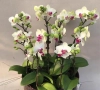
Care Methods and Watering Tips for Phalaenopsis Before Blooming
Always envious of other people's Phalaenopsis blooming into a waterfall? Actually, care before blooming is the key! Master the "golden ratio" of temperature, light, water and fertilizer, and even beginners can grow buds all over the branches. Temperature: Phalaenopsis is extremely sensitive to temperature, and if you want to force blooming you must strictly control the temperature: 26-28°C during the day: warm but not hot, like the spring sun
条件筛选