-

Is silver willow (florist's willow) toxic, and what good omens does it bring when kept at home and allowed to bloom?
In recent years, silver willow has been extremely popular at flower markets, and during Chinese New Year many people have it displayed at home. Today let's talk about it. Silver willow is a kind of deciduous, clump-forming shrub, usually growing to 2-3 m tall, with grayish bark. Its twigs are slender and long, and covered with fine hairs; at first they are pale yellow, and later they gradually turn brown.
-

Will a Phalaenopsis orchid still grow after its flower spike is cut off, and how to deal with soft, collapsed, sticky leaves
The main reason Phalaenopsis orchids are loved by so many flower enthusiasts is that there are many varieties and rich flower colors, with colors ranging from pure white to passionate red to mysterious purple, all fully available in Phalaenopsis. However, after bringing home a flower you love, many times the flowers begin to show various problems, such as buds dropping early, flower stems becoming withered
-

Will a Phalaenopsis die from over-fertilizing? Here's how to correctly remedy it
In the process of caring for Phalaenopsis orchids, improper fertilizing often becomes an "invisible killer" affecting the plant's healthy growth. Over-fertilizing in particular can very likely cause fatal damage to the Phalaenopsis. Will a Phalaenopsis really die from over-fertilizing? And if over-fertilizing unfortunately happens, how should we deal with it? The dangers of over-fertilizing to Phalaenopsis
-
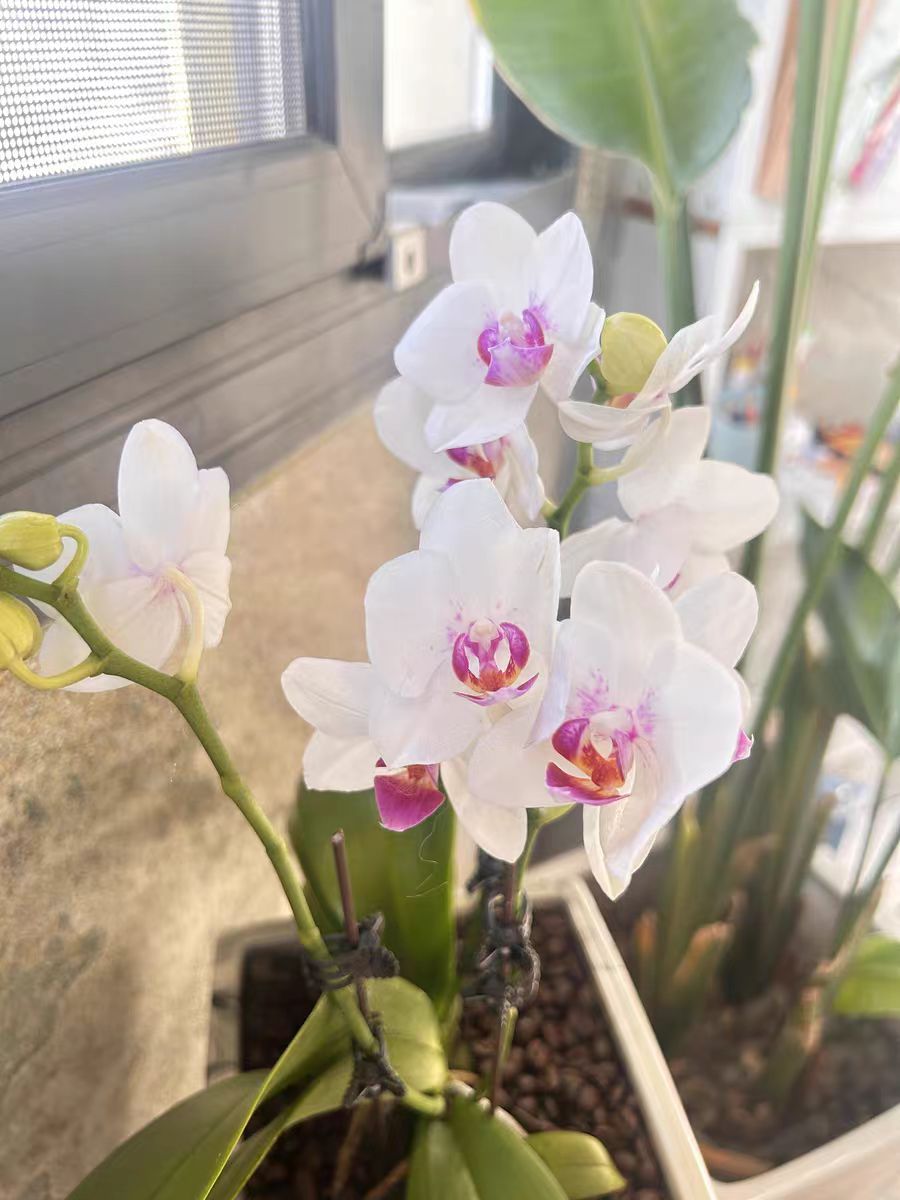
Will the growth of Phalaenopsis be inhibited by low temperature?
Phalaenopsis, a beautiful flower native to tropical rainforests, will indeed have its growth significantly inhibited when the temperature is too low. How
-

How to care for a Phalaenopsis orchid after the flowers fade, and will it bloom again next year?
The Phalaenopsis orchid (moth orchid) is a perennial evergreen herbaceous plant. After the Phalaenopsis orchid's blooming period ends, many flower lovers begin to worry: the flowers have faded, can I still keep my Phalaenopsis orchid healthy? Will it bloom again with beautiful flowers next year? The answer is yes; as long as it is cared for properly, a Phalaenopsis orchid can absolutely bloom again the following year.
-

Will Phalaenopsis freeze at around 10°C? A detailed guide to its ideal temperature
Phalaenopsis (moth orchid) has won the affection of many flower lovers with its delicate, vibrant blooms. As the ideal flower in everyone's heart, you have surely noticed how special Phalaenopsis is at night: in the late hours its leaves seem to sway gently as if waving hello, making it feel wonderfully comfortable. So what is this marvelous phenomenon? Many
-

What to Do After Phalaenopsis Orchid Flowers Fade, and Will It Bloom Again?
Phalaenopsis, a perennial herbaceous plant. However, when the beautiful flowers gradually fade, many flower lovers begin to wonder: what should be done after the Phalaenopsis flowers fade? Is it still possible for it to bloom again? After the Phalaenopsis flowers fade: Pruning the flowers and branches: When the Phalaenopsis flowers fade, the first step
-

Is 15°C too low for a Phalaenopsis, and will 10°C freeze it to death?
I believe the delicate, beautiful blooms of the Phalaenopsis are the dream flower of most gardening enthusiasts. Especially when observing Phalaenopsis late at night, you can see its unique preference for temperature even more clearly, because at late night its leaves seem to sway gently as if greeting you. Below, taking this mystery of the Phalaenopsis as a starting point, let us talk about why it is so fond of temperatures around 15°C.
-

What are the benefits and effects of Acorus calamus? Only with the right care and management will it grow vigorously
Acorus calamus is a perennial herbaceous plant in the genus Acorus of the family Araceae. It has an elegant form, with lush green foliage, dignified and beautiful. There are many species of Acorus calamus, with common ones including Acorus tatarinowii and Acorus calamus. Acorus calamus mostly grows in wetlands, streamside and other environments, preferring a cool and humid climate. The flowering period of Acorus calamus is generally from June to September. The flowers
-

Three flowers that will grow in almost any soil, all with strong adaptability
In the fast-paced modern life, for the "lazy" friends who love greenery but have no time for careful tending, choosing adaptable flowers is undoubtedly the best option. Today, we recommend three flowers that will grow in almost any soil and are especially suited to lazy gardeners. Impatiens Impatiens, also known as henna, its petals can
条件筛选